The Castello district is the easternmost and largest in Venice. Its history and appearance have been deeply marked by the Arsenal, which for centuries concentrated a large part of the Republic's naval activity. The eastern sectors still retain a strong popular and maritime identity. Further west, near San Marco, are some of the district's finest religious and civil buildings.
Castello, from monumental Venice to the city of the Arsenal
Located east of Venice, Castello is the largest of the six sestieri. It extends from the immediate surroundings of St Mark's Square to Sant'Elena and the eastern limits of the city, bringing together very different areas: palaces, large churches, former working-class districts, public gardens and naval installations.
Its name is said to derive from an ancient fortification built in the area of the island of San Pietro, formerly called Olivolo. This area was one of the first religious centres of Venice: the church of San Pietro di Castello was the city's cathedral until 1807, before the title was transferred to St Mark's Basilica.
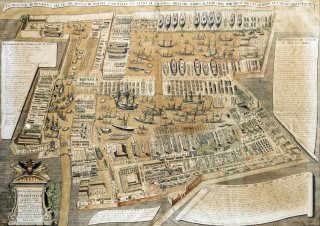
The history of the district is above all inseparable from the Arsenal of Venice, an immense complex of shipyards, workshops and warehouses that for centuries ensured the maritime power of the Republic. A large part of eastern Castello lived directly from this activity: carpenters, caulkers, rope-makers and other skilled workers lived close to their workplace.
The houses in these areas are generally more modest than the palaces of the historic centre. They nevertheless form a precious urban heritage, revealing a popular Venice rarely highlighted in the most prestigious representations of the city.
To the west, near the San Marco sestiere, Castello becomes more monumental. Here you will find San Zaccaria, Santa Maria Formosa, Palazzo Grimani and the vast Campo Santi Giovanni e Paolo, one of the most impressive architectural ensembles in Venice.
Main places to visit
-
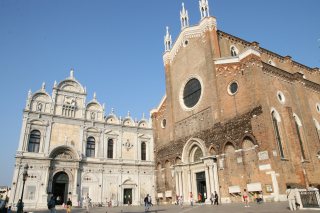
The Basilica of Santi Giovanni e Paolo : called San Zanipolo in Venetian, this huge Dominican Gothic church houses the funeral monuments of many doges and prominent figures. Paintings, sculptures and monumental tombs make it one of the richest religious complexes in Venice.
-
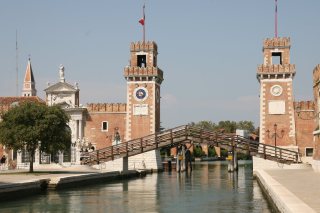
The Arsenal of Venice : for centuries, this immense complex was the heart of the Republic's naval power, capable of building and equipping a fleet on an exceptional scale for its time. Its walls, its basins and its monumental Porta Magna recall the industrial and military past of Venice, even though a large part of the site remains with limited access.
-
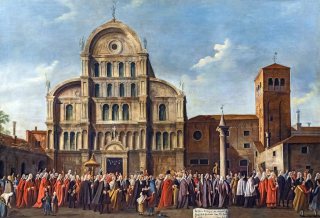
San Zaccaria : located a few minutes from St Mark's, this former monastic church mixes Gothic and Renaissance architecture. It notably preserves the famous Virgin and Child with Saints by Giovanni Bellini, as well as a museum, ancient chapels and a crypt regularly invaded by water.
-
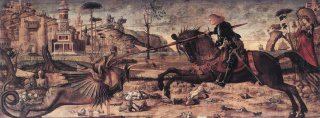
The Scuola di San Giorgio degli Schiavoni : this ancient confraternity of Dalmatians preserves on site the exceptional cycle painted by Vittore Carpaccio at the beginning of the 16th century, devoted in particular to Saint George, Saint Tryphon and Saint Jerome. Its small dimensions and the coherence of its decoration make it one of the most singular artistic visits in Castello.
-
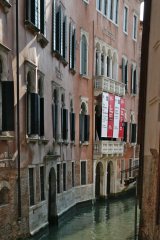
The Querini Stampalia Foundation : housed in the former palace of the Querini family, it combines historic apartments, paintings, furniture and a library. The ground floor and garden redesigned by Carlo Scarpa in the 20th century add a remarkable modern architecture intervention to this Venetian residence.
-
Palazzo Grimani : this Renaissance palace stands out strongly from the traditional Gothic residences of Venice with its architecture inspired by Rome and Antiquity. Monumental staircases, decorated rooms and the former Grimani collection of sculptures bear witness to the humanist culture of a powerful patrician family.
-
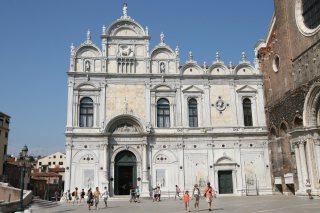
The Scuola Grande di San Marco : founded in the 13th century, this important confraternity occupied a building reconstructed at the end of the 15th century. Its spectacular marble façade, famous for its perspective effects, now forms the entrance to the civil hospital, while several historic rooms are open to visitors.
-
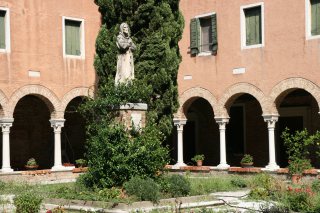
San Francesco della Vigna : this important Franciscan church has a façade designed by Andrea Palladio and a vast convent complex. Its name recalls the ancient vineyards once cultivated on this land, while its chapels preserve several works and monuments linked to the great Venetian families.
-
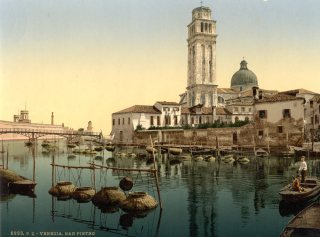
San Pietro di Castello : located away from the most frequented routes, this former cathedral of Venice held a major place in the religious life of the city before St Mark's became the patriarchal seat. Its vast campo, its church and its white stone campanile today form one of the most peaceful ensembles in the sestiere.
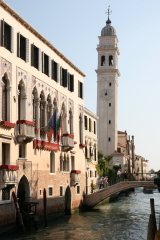
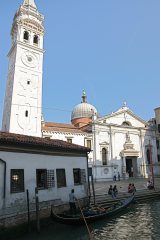
- San Giorgio dei Greci : the church and its leaning campanile bear witness to the importance of the Greek Orthodox community established in Venice from the Renaissance. The complex also includes the icon museum and reveals an essential aspect of Venice's relations with the Greek and Eastern world.
-
Santa Maria Formosa : begun at the end of the 15th century to designs by Mauro Codussi, this large church marks an important stage of the Venetian Renaissance. It notably preserves the famous polyptych of Saint Barbara by Palma Vecchio and borders one of the most characteristic campos in the centre of Castello.
- San Giovanni in Bragora : this ancient church preserves several important works of the Venetian Renaissance and remains closely associated with Antonio Vivaldi, who was baptised there in 1678. Its interior, much richer than its discreet façade, deserves a stop.
-
The monument to Bartolomeo Colleoni : standing in front of San Zanipolo, this equestrian statue designed by Andrea del Verrocchio ranks among the masterpieces of Renaissance sculpture. It is naturally discovered with the basilica and the Scuola Grande di San Marco, which form a particularly remarkable monumental ensemble around the campo.
-
The Giardini della Biennale : laid out during the Napoleonic era, these vast gardens are one of the main green spaces in Venice. Since the end of the 19th century, they have hosted an essential part of the Biennale, with the central pavilion and numerous national pavilions designed at different periods.
-
Via Garibaldi and Sant'Elena : created in the 19th century by filling in a canal, Via Garibaldi is today one of the liveliest and most residential streets in Castello. Continuing eastwards, Sant'Elena offers large green spaces, sports facilities and an atmosphere very different from the monumental centre of Venice.
-
Other notable places:
- L'Ospedaletto (Santa Maria dei Derelitti) : this former charitable establishment housed orphans, the sick and the needy and also became an important musical centre. Its church and historic spaces preserve a remarkable Baroque décor, including works by Baldassare Longhena and several Venetian artists.
-
The church of the Pietà : built in the 18th century next to the former Ospedale della Pietà, it recalls the musical institution in which Antonio Vivaldi taught for many years. Today it remains particularly associated with the Venetian musical tradition.
-
The Naval History Museum : located near the Arsenal, the museum traces the maritime history of Venice and the Italian navy through ship models, boats, weapons and nautical objects. It is a natural complement to a discovery of the Arsenal and the district's naval past.
Castello thus allows one to pass in a few minutes from the official Venice of the doges and the great confraternities to that of the Arsenal workers, small residential squares and shores open to the lagoon. It is one of the best districts to discover a less uniform city, where monumental scenery still coexists with genuine daily life.
Places in Castello
19 places in this district.
 1
Church
Basilica of Santi Giovanni e Paolo
This large Dominican basilica, often called San Zanipolo, is known for the tombs of the doges. Outside, it forms with the Scuola G…
1
Church
Basilica of Santi Giovanni e Paolo
This large Dominican basilica, often called San Zanipolo, is known for the tombs of the doges. Outside, it forms with the Scuola G…
 2
Monument
Venetian Arsenal
Ancient naval complex of the Republic, industrial and military heart, this part of Castello is today partially linked to the Bienn…
2
Monument
Venetian Arsenal
Ancient naval complex of the Republic, industrial and military heart, this part of Castello is today partially linked to the Bienn…
 3
Church
Church of Saint Zachary
A 9th-century church where the doges came every Easter Monday, famous for one of Bellini's masterpieces and the crypt of the first…
3
Church
Church of Saint Zachary
A 9th-century church where the doges came every Easter Monday, famous for one of Bellini's masterpieces and the crypt of the first…
 4
Museum
Scuola Dalmatà San Giorgio degli Schiavoni
Ancient Dalmatian confraternity of Castello, famous for the cycle painted by Vittore Carpaccio.
4
Museum
Scuola Dalmatà San Giorgio degli Schiavoni
Ancient Dalmatian confraternity of Castello, famous for the cycle painted by Vittore Carpaccio.
 5
Museum
Fondazione Querini Stampalia
Museum, library and garden bequeathed in 1869 by the last of the Querini Stampalia family, with a remarkable redesign of the groun…
5
Museum
Fondazione Querini Stampalia
Museum, library and garden bequeathed in 1869 by the last of the Querini Stampalia family, with a remarkable redesign of the groun…
 6
Museum
Palazzo Grimani
Renaissance palace inspired by ancient Roman domus, residence of the Grimani family that became a state museum in 2008, famous for…
6
Museum
Palazzo Grimani
Renaissance palace inspired by ancient Roman domus, residence of the Grimani family that became a state museum in 2008, famous for…
 7
Monument
Scuola Grande di San Marco
Seat of the ancient great confraternity of Castello, it is today linked to the civil hospital and remarkable for its marble façade…
7
Monument
Scuola Grande di San Marco
Seat of the ancient great confraternity of Castello, it is today linked to the civil hospital and remarkable for its marble façade…
 8
Church
San Francesco della Vigna
Franciscan church with a Palladian façade and a vast convent complex, San Francesco della Vigna is a stop between the Basilica of …
8
Church
San Francesco della Vigna
Franciscan church with a Palladian façade and a vast convent complex, San Francesco della Vigna is a stop between the Basilica of …
 9
Church
San Pietro di Castello
Former cathedral of Venice, located in one of the calmest and most eastern sectors of Castello. The large campo, the old patriarch…
9
Church
San Pietro di Castello
Former cathedral of Venice, located in one of the calmest and most eastern sectors of Castello. The large campo, the old patriarch…
 10
Church
Church of San Giorgio dei Greci
Greek Orthodox church with a noticeably leaning bell tower, seat of the Orthodox Archdiocese of Italy and Malta, with its neighbou…
10
Church
Church of San Giorgio dei Greci
Greek Orthodox church with a noticeably leaning bell tower, seat of the Orthodox Archdiocese of Italy and Malta, with its neighbou…
 11
Church
Church of Santa Maria Formosa
One of the oldest churches in the lagoon, rebuilt by Mauro Codussi in 1492, known for its grotesque mascaron and its Polyptych by …
12
Church
Church of San Giovanni in Bragora
Church where Antonio Vivaldi was baptized in 1678, known for its Baptism of Christ by Cima da Conegliano above the high altar.
13
Monument
Statue of Colleoni
Equestrian Renaissance statue on the Campo Santi Giovanni e Paolo, made by Verrocchio, which also recalls the territorial power of…
14
Garden
Giardini della Biennale
Public gardens associated with the Venice Biennale and its national pavilions. The Giardini extend Castello towards a more airy, m…
11
Church
Church of Santa Maria Formosa
One of the oldest churches in the lagoon, rebuilt by Mauro Codussi in 1492, known for its grotesque mascaron and its Polyptych by …
12
Church
Church of San Giovanni in Bragora
Church where Antonio Vivaldi was baptized in 1678, known for its Baptism of Christ by Cima da Conegliano above the high altar.
13
Monument
Statue of Colleoni
Equestrian Renaissance statue on the Campo Santi Giovanni e Paolo, made by Verrocchio, which also recalls the territorial power of…
14
Garden
Giardini della Biennale
Public gardens associated with the Venice Biennale and its national pavilions. The Giardini extend Castello towards a more airy, m…
 15
Museum
Naval History Museum
Museum of the Italian Navy near the Arsenal, tracing Venice's naval history through models, weapons, and historical vessels.
16
Street / Area
Via Garibaldi
Large popular street in Castello, laid out on a filled-in canal and still very lively on a daily basis. It contributes to the popu…
17
Island
Sant’Elena
Eastern tip of Castello, greener and more residential, open towards the lagoon and the large gardens. Sant’Elena can conclude a wa…
15
Museum
Naval History Museum
Museum of the Italian Navy near the Arsenal, tracing Venice's naval history through models, weapons, and historical vessels.
16
Street / Area
Via Garibaldi
Large popular street in Castello, laid out on a filled-in canal and still very lively on a daily basis. It contributes to the popu…
17
Island
Sant’Elena
Eastern tip of Castello, greener and more residential, open towards the lagoon and the large gardens. Sant’Elena can conclude a wa…
 18
Church
Ospedaletto (Santa Maria dei Derelitti)
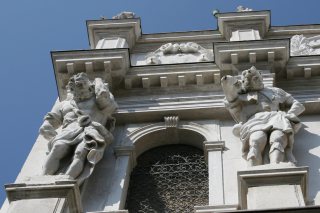
Former orphanage turned church with exuberant Baroque façade by Baldassare Longhena, famous for its past as a music conservatory.
18
Church
Ospedaletto (Santa Maria dei Derelitti)
Former orphanage turned church with exuberant Baroque façade by Baldassare Longhena, famous for its past as a music conservatory.
 19
Church
Church of the Pietà
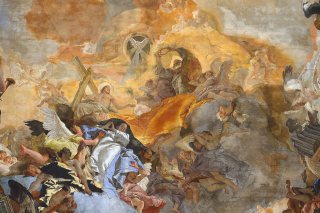
Church famous for its acoustics and its Tiepolo fresco, adjacent to the institution where Vivaldi taught.
19
Church
Church of the Pietà
Church famous for its acoustics and its Tiepolo fresco, adjacent to the institution where Vivaldi taught.