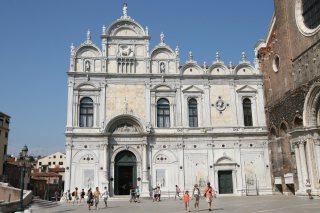
Fondazione Querini Stampalia Museum
Museum, library and garden bequeathed in 1869 by the last of the Querini Stampalia family, with a remarkable redesign of the ground floor by Carlo Scarpa.
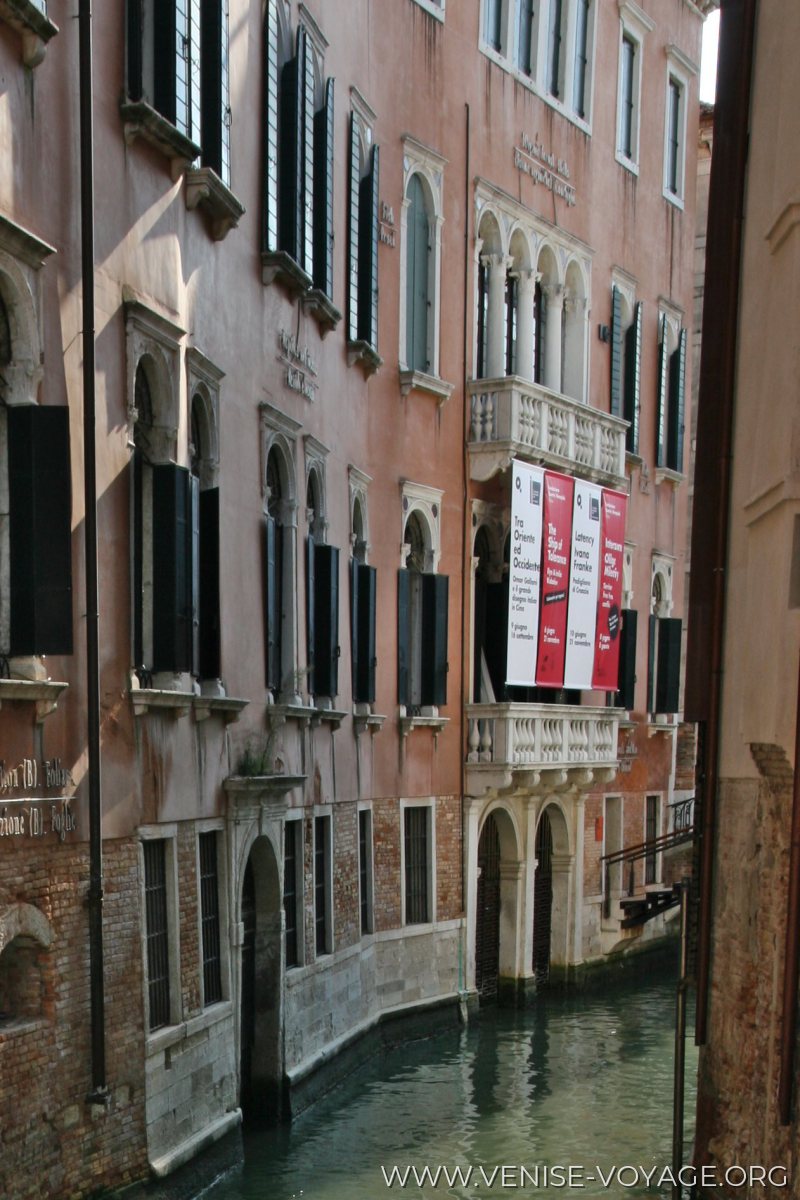
Fondazione Querini Stampalia, museum and library on the water
A stone's throw from Campo Santa Maria Formosa, the Fondazione Querini Stampalia occupies the family palace of the Querini Stampalia, an ancient Venetian patrician family. In his will of 1868, Count Giovanni Querini Stampalia, the last representative of the line, decided to dedicate his estate to an institution intended to “foster the pursuit of good studies and useful disciplines”. On his death in 1869, the palace, library, archives, art collections and furnishings thus remained together and were opened to the public, exceptionally preserving the memory of a Venetian aristocratic residence.
Rio Santa Maria Formosa
The library, rich in nearly 400,000 old and modern volumes, has been nicknamed “the Venetians' library” for over a hundred and fifty years. Its historical holdings include some 1,300 manuscripts, about 42,000 early printed books, as well as maps, atlases and prints. Faithful to Giovanni Querini's wish to have it accessible when other libraries would be closed, it remains open on Sundays and public holidays. Access to the reading rooms is free after registration, from age 16.
On the second floor, the house-museum recreates the atmosphere of an 18th- and 19th-century patrician residence through drawing rooms, furniture, porcelain, objects and decorations. The painting collection spans from the 14th to the 19th century and notably brings together Giovanni Bellini, Palma Vecchio, Giambattista Tiepolo and Pietro Longhi. The Foundation owns nearly thirty paintings by the latter, true snapshots of the leisure activities, customs and social life of 18th-century Venice. Among the major works is also Bellini's Presentation of Jesus at the Temple.
After Scarpa, Valeriano Pastor, Mario Botta and then Michele De Lucchi worked on various spaces of the Foundation. These contemporary developments extend the history of the palace without erasing its ancient architecture, making the building itself one of the main highlights of the visit.
The same desire for openness is found in the contemporary art programme Conserving the Future, developed for more than twenty-five years. Artists are invited to conceive projects in dialogue with the palace, the collections and the architecture: Kiki Smith, Mona Hatoum, Ilya and Emilia Kabakov, Joseph Kosuth or Michelangelo Pistoletto have notably worked in these spaces. The Fondazione thus remains at once a museum, library, archives and place of creation.
Sources and additional information
Fondazione Querini Stampalia - history and mission ; Fondazione Querini Stampalia - library ; Fondazione Querini Stampalia - architecture ; Fondazione Querini Stampalia - opening hours and visit.
Map and route
Near the Fondazione Querini Stampalia and places in the district
 Church
 of Santa Maria Formosa
83 m
Museum
Palazzo Grimani
119 m
Church
Church of Santa Maria Formosa
83 m
Museum
Palazzo Grimani
119 m
 Church
St Mark's Basilica
229 m
Church
St Mark's Basilica
229 m
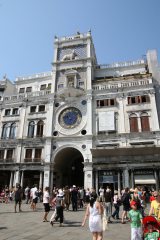 Monument
St Mark's Clock Tower
243 m
Monument
St Mark's Clock Tower
243 m
In the Castello sestiere