Venetian Arsenal Monument
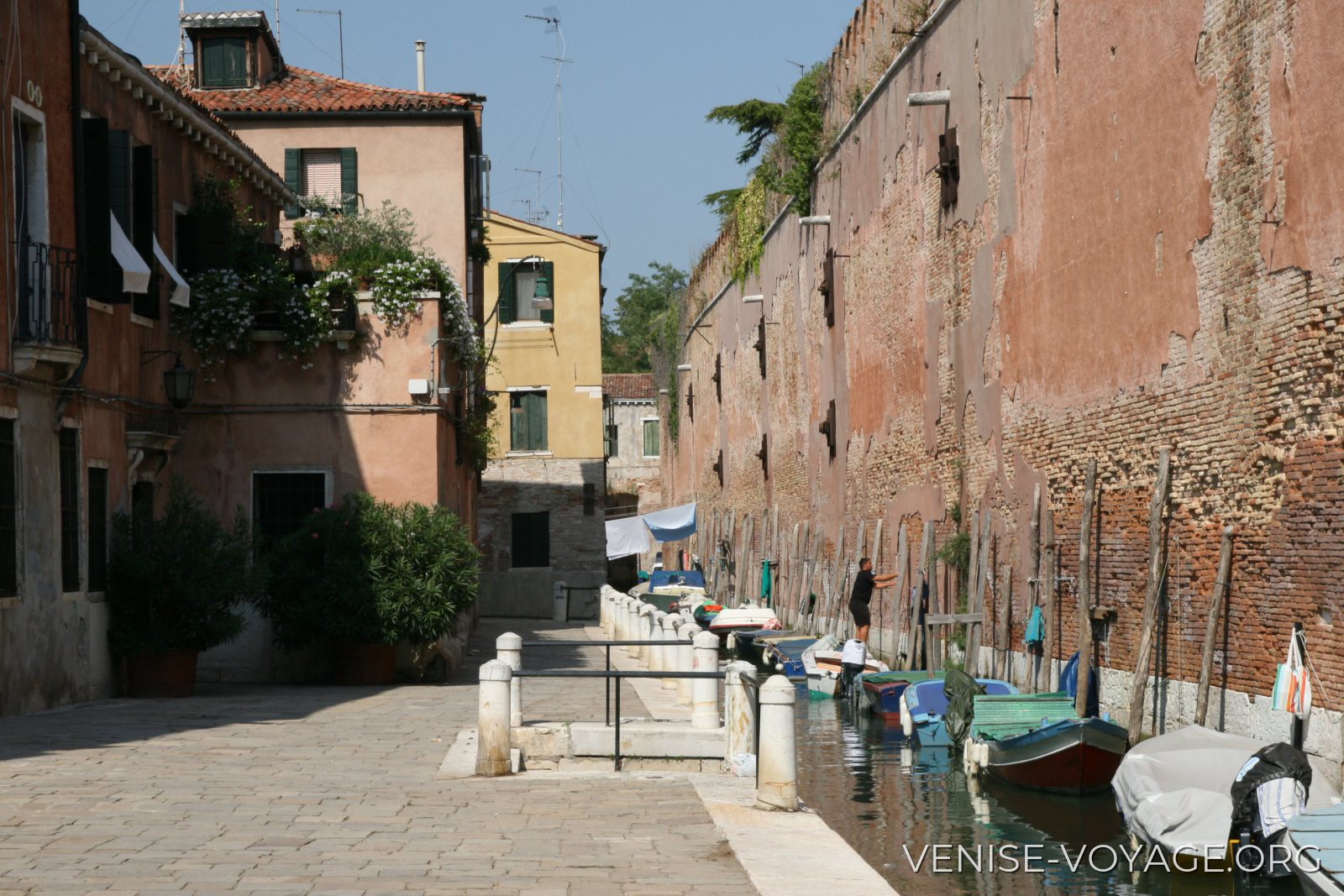
Ancient naval complex of the Republic, industrial and military heart, this part of Castello is today partially linked to the Biennale. Around the walls of the Arsenal developed a working-class neighborhood inhabited by workers, sailors and artisans linked to the fleet. This history still explains the particular atmosphere of eastern Venice, more residential and less aristocratic than the central banks of the Grand Canal.
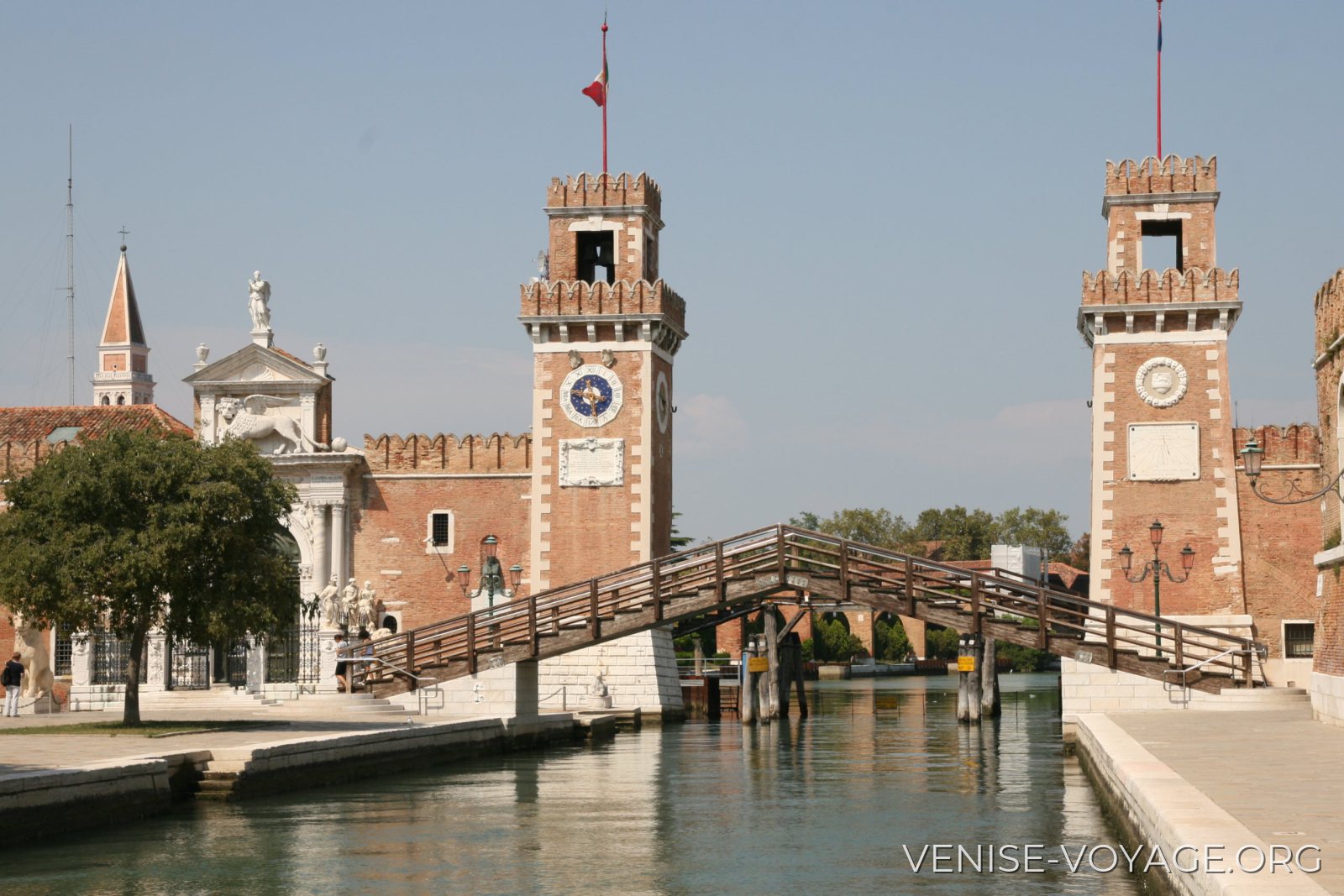
Venetian Arsenal, Maritime Factory of the Republic
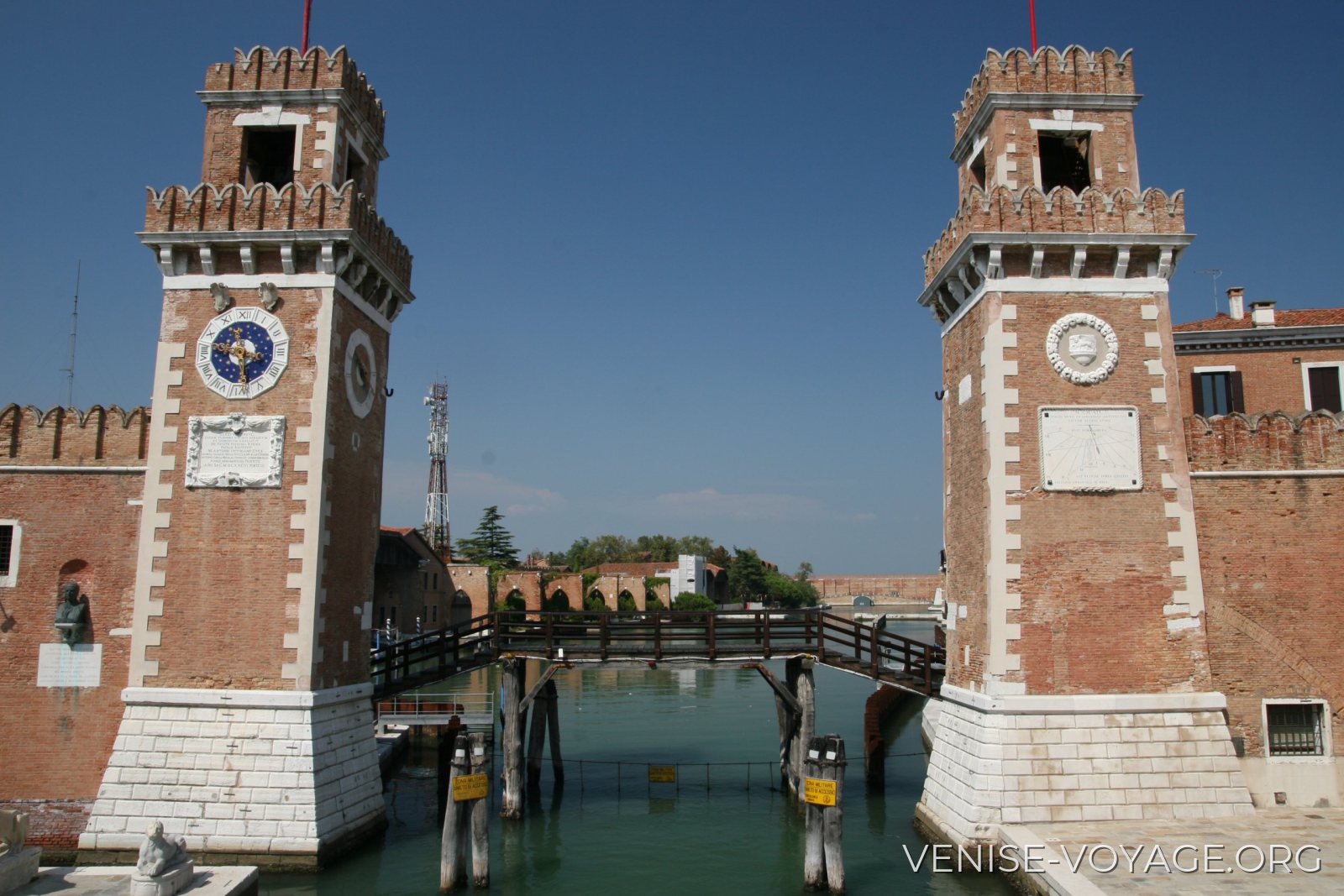
The Venetian Arsenal occupies a huge fortified area in the Castello sestiere. Behind its brick walls stretch basins, internal canals, slipways, warehouses, workshops and long halls once dedicated to shipbuilding. The site is a reminder that Venetian power rested not only on its merchants and palaces, but also on an industrial organization capable of building, arming and maintaining an entire fleet.
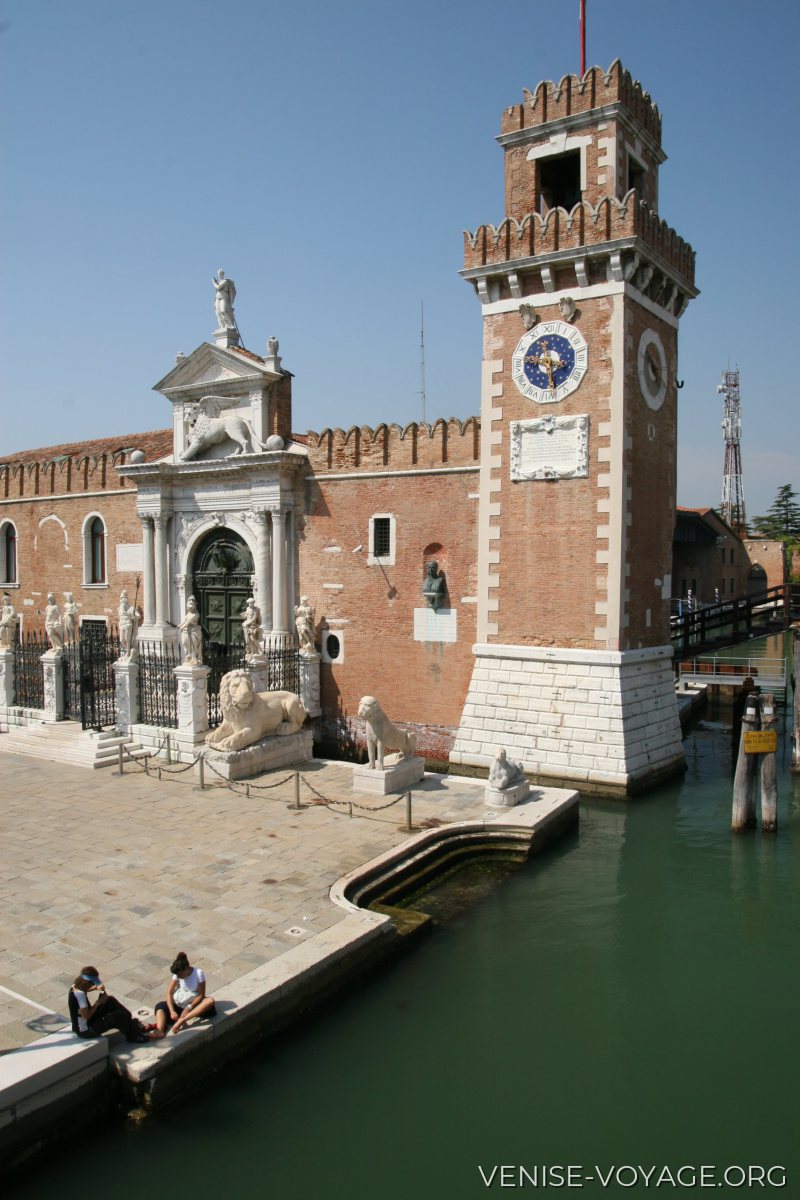
Its origins date back to the early 12th century, although the traditional date of 1104 is not based on certain evidence. The first nucleus was gradually enlarged as Venice strengthened its control over the Adriatic and the eastern Mediterranean. Between the 14th and 16th centuries, the Arsenal Nuovo and then the Arsenal Nuovissimo appeared successively, with new docks and specialized buildings.
The complex eventually formed a veritable city within the city, protected by nearly three kilometers of walls. Access to the workshops was strictly controlled, as construction techniques, timber reserves, weapons and ship plans were directly related to state security. The Arsenal was therefore both a shipyard, a strategic warehouse and one of the Republic's main instruments of power.
A state industry before the industrial era
At its peak activity periods, the Arsenal could employ up to about two thousand workers per day. These arsenalotti formed a skilled workforce organized by trade: shipwrights, caulkers, blacksmiths, oar makers, sailmakers, rope makers or foundry workers. Their status granted them certain privileges, but also special obligations towards the Republic.
The work was distributed among specialized workshops and coordinated on a large scale. The hulls progressed between the different sectors of the yard, where they successively received rigging, oars, ropes, weapons, provisions and crew. This organization did not yet constitute an assembly line in the modern sense, but it already relied on the standardization of many parts, the division of tasks and the building of ready-to-use stocks.
The immense Corderie, rebuilt between 1579 and 1585 to a design by Antonio da Ponte, was used to make the long cables needed for ships. Other buildings were reserved for oars, sails, anchors, cannons, gunpowder or the pitch used to make hulls waterproof. Dante had already mentioned, at the beginning of the 14th century, the boiling pitch of the “arzanà de' Viniziani” in Canto XXI of the Inferno, a sign that the yard's activity was known far beyond the lagoon.
The Arsenal did not, moreover, build all Venetian ships. In the early 15th century, it devoted itself mainly to war and transport galleys controlled by the State, while many larger merchant ships were still produced in private shipyards scattered around the city.
The Porta Magna and the New Faces of the Arsenal
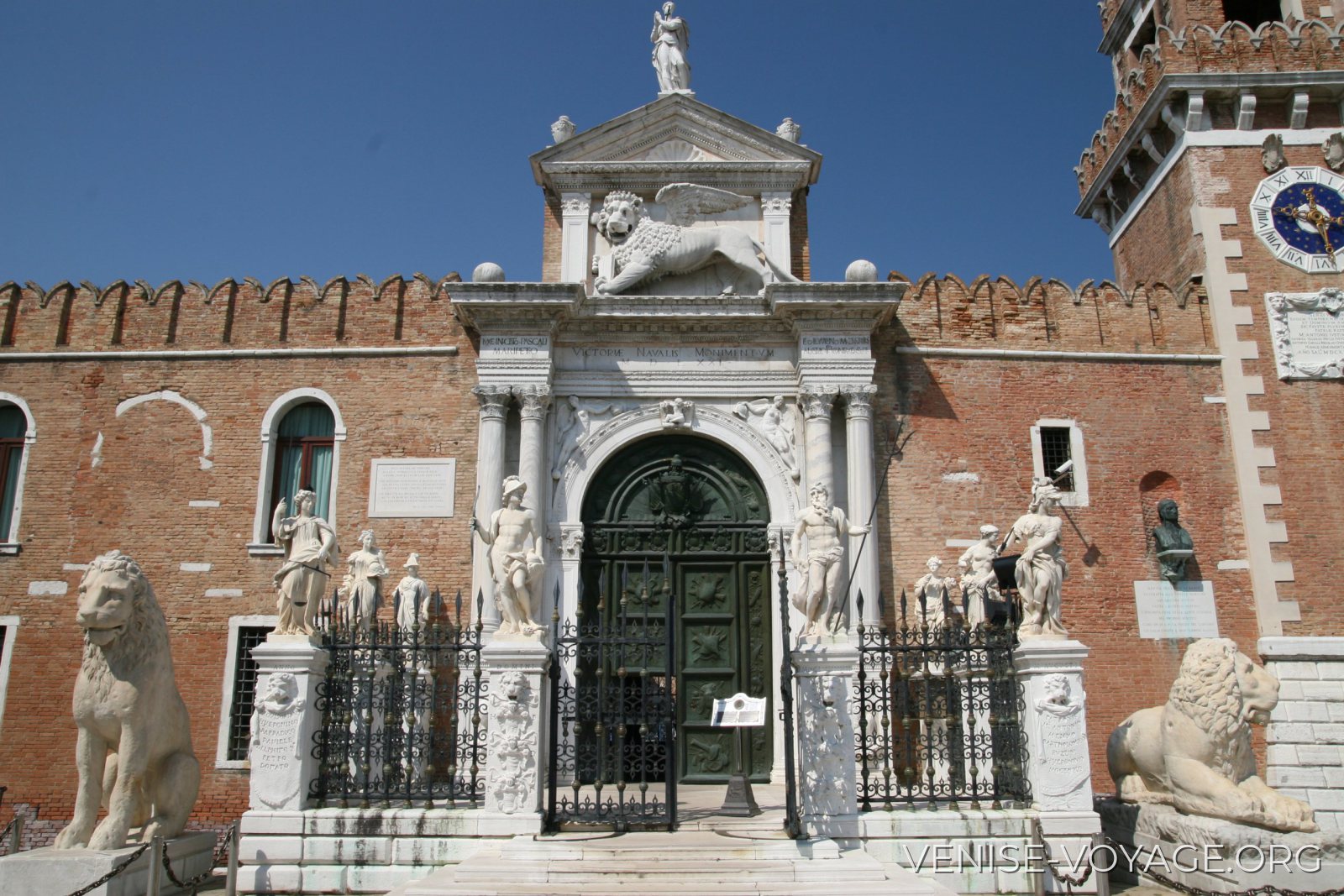
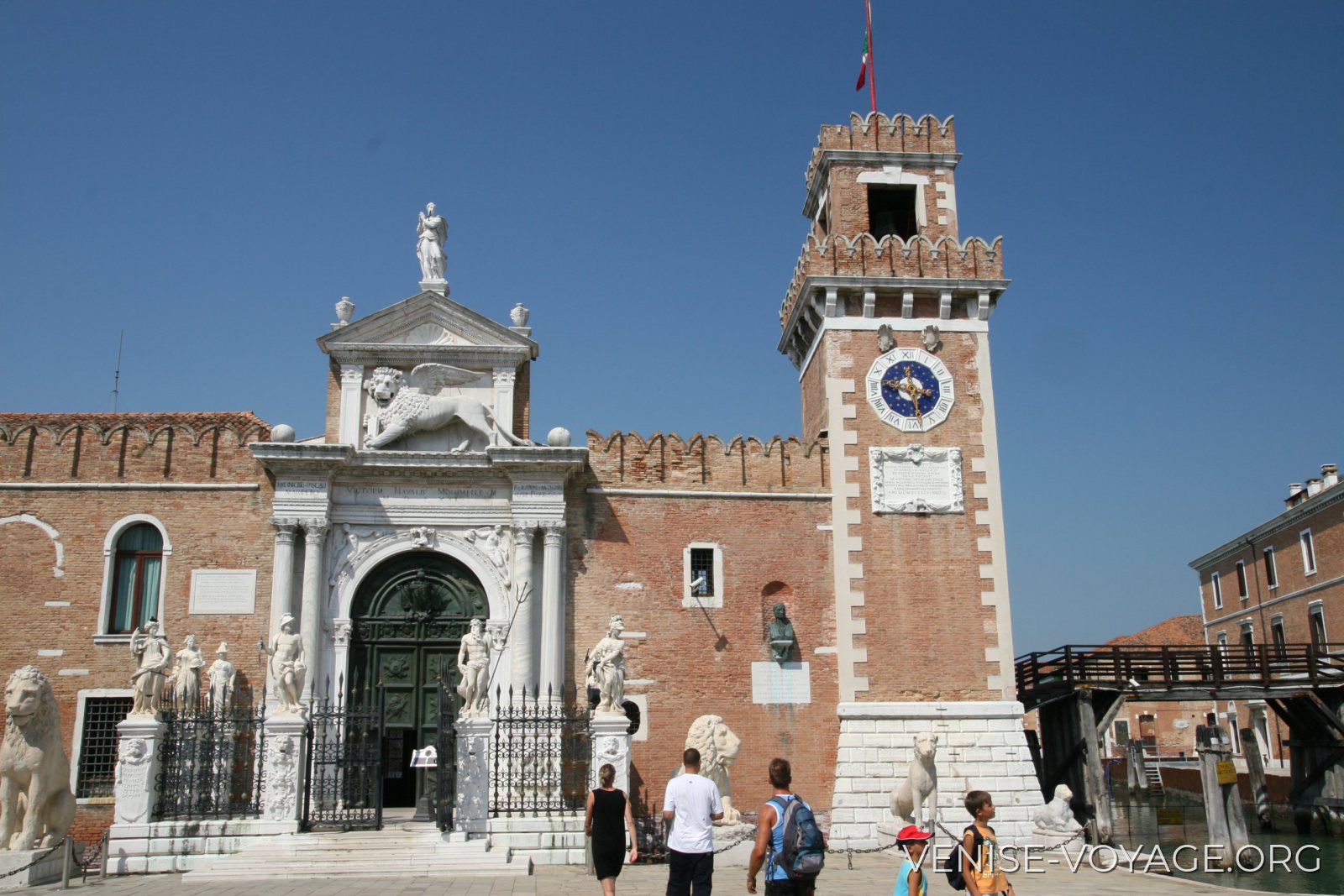
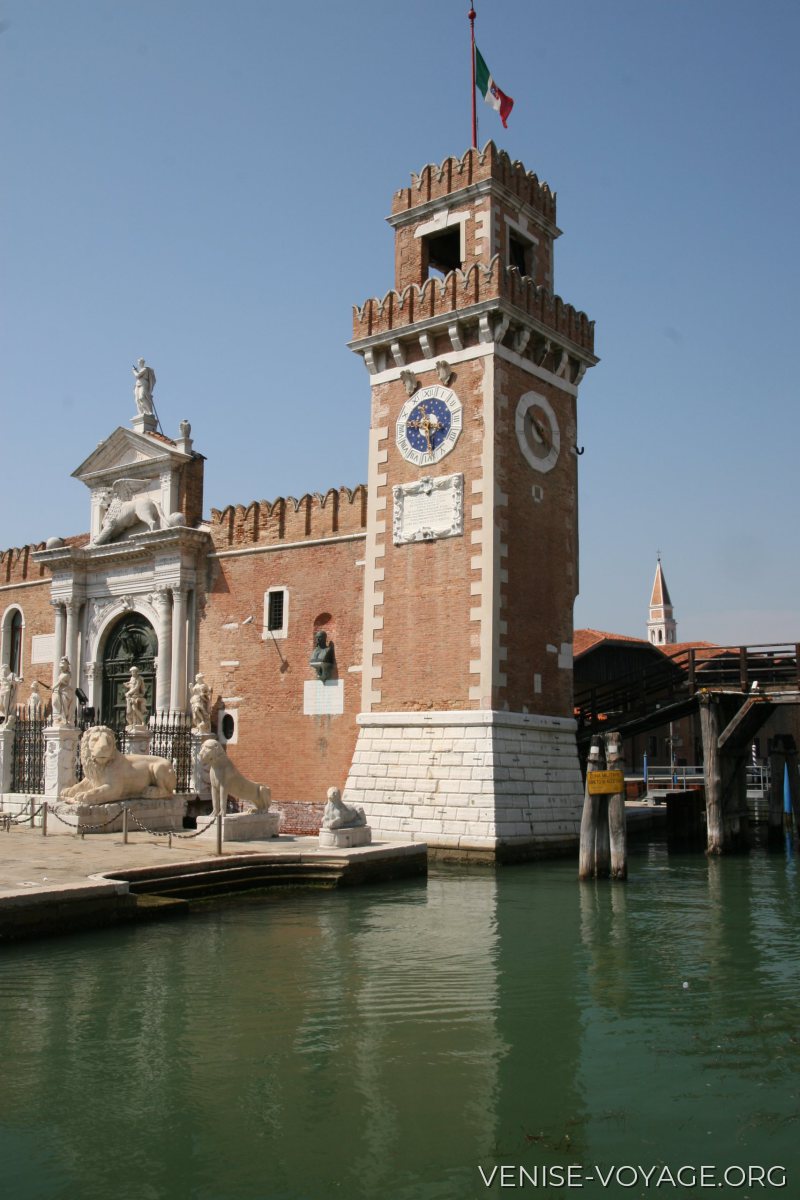
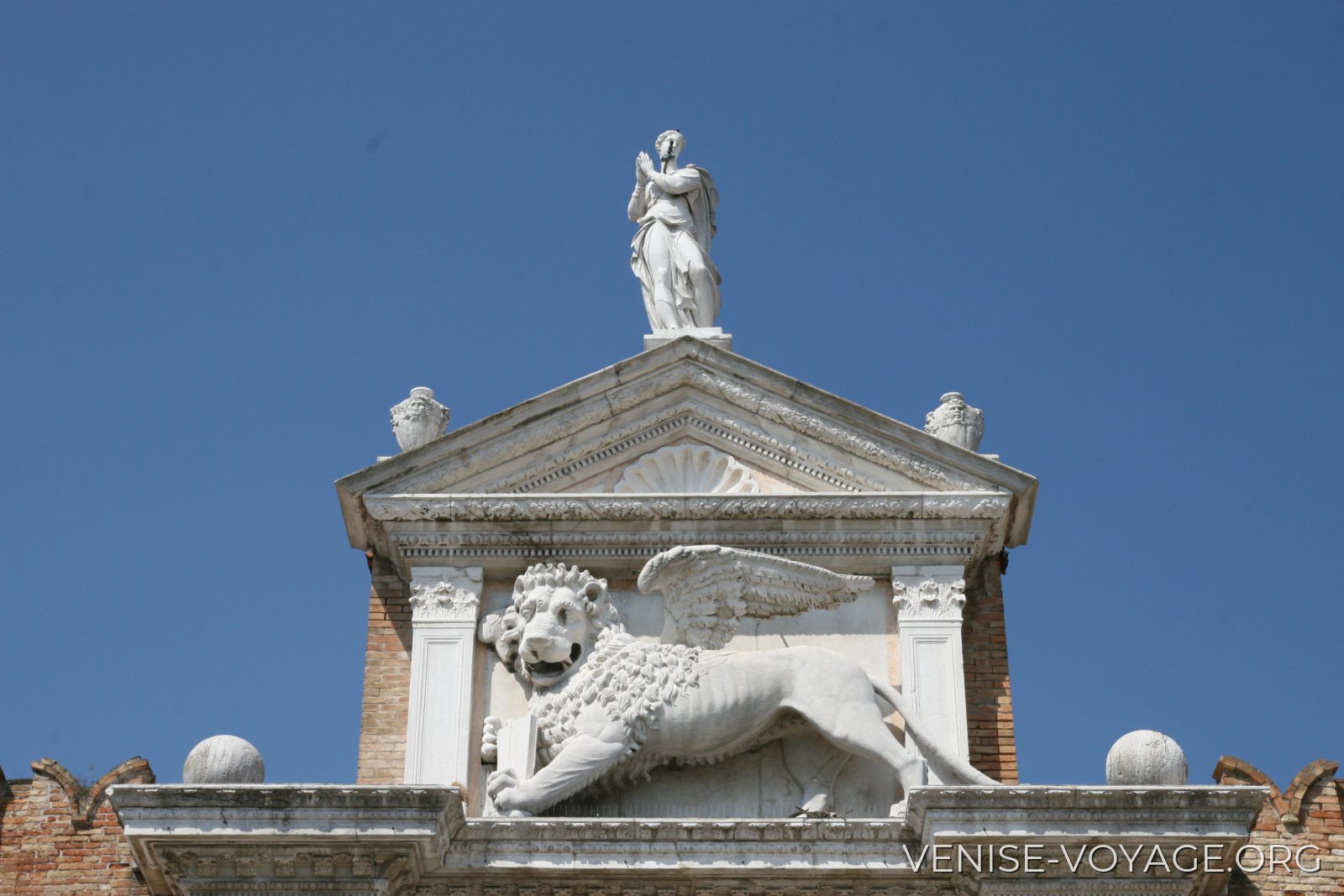
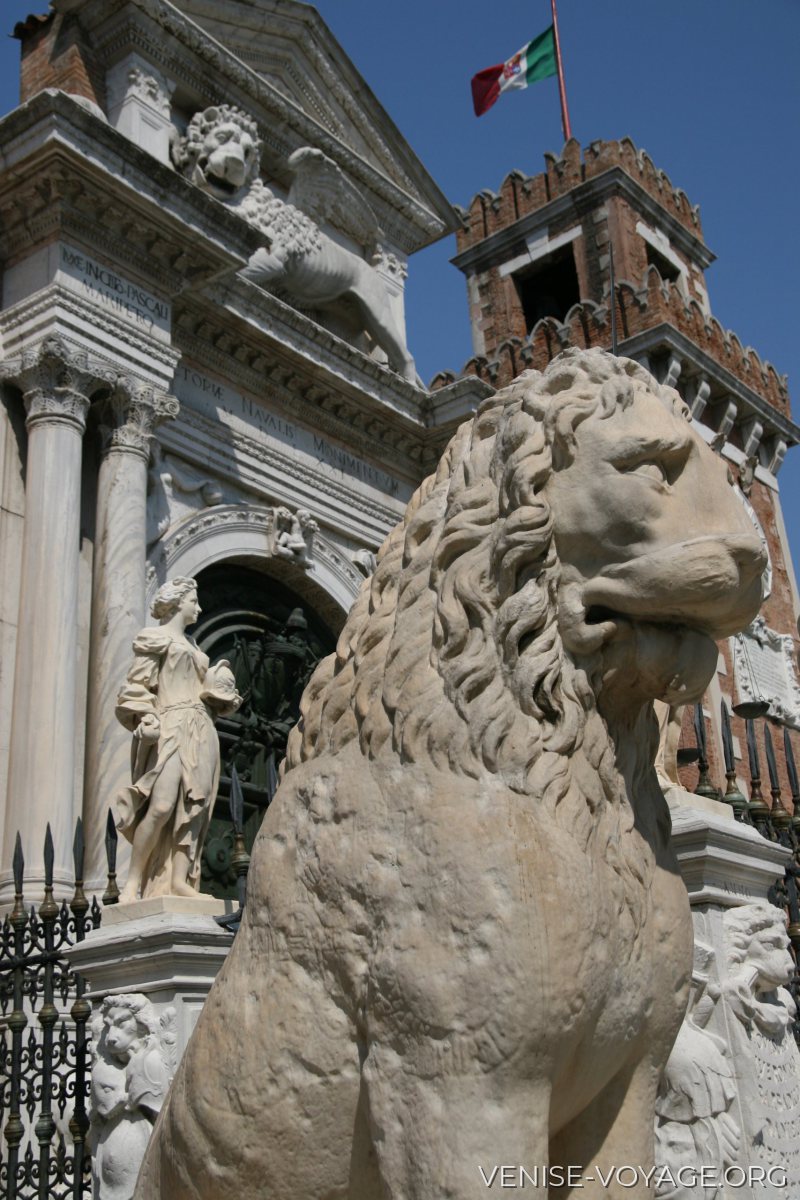
The Porta Magna, or land gate, was erected around the middle of the 15th century. Its marble arch inspired by antiquity is considered one of the first great manifestations of Renaissance architecture in Venice. Placed in front of an essentially productive site, it transformed the yard's entrance into an official representation of the Republic's maritime power.
The stone lions placed in front of the gate reinforce this staging. Several come from Greek territories conquered by Venice. The most famous, brought from the port of Piraeus at the end of the 17th century, still bears on its sides runic inscriptions probably carved in the 11th century by Scandinavians linked to the Byzantine Empire. The entrance thus brings together, within a few meters, Greek antiquity, Viking memory and Venetian propaganda.
After the fall of the Republic in 1797, the Arsenal retained naval functions under French and Austrian domination, then within the Italian Navy. The complex was extensively remodeled in the 19th century to accommodate new basins and larger vessels. Certain parts remain today assigned to military, institutional or technical uses.
Photo gallery
Sources and further information
Comune di Venezia – Storia dell’Arsenale ; La Biennale di Venezia – Arsenale ; Marina Militare – naval heritage of Venice ; Venezia Unica – Castello.
Map and route
In the Castello sestiere