Visiting San Marco is entering the historic and monumental heart of Venice, where the Republic showcased its power with a flair for spectacle. Around St Mark’s Square are concentrated the most famous buildings, but the district does not stop at this exceptional setting. A few streets away, you also discover Baroque churches, theatres, palaces, and quieter squares.
San Marco, the monumental heart of Venice
San Marco is the most famous of the six sestieri of Venice and, unsurprisingly, the most visited. It occupies the political, religious, and cultural center of the former Republic, around St Mark's Square, the St Mark's Basin, and part of the Grand Canal. Yet the district is not reduced to its iconic square: behind the great monuments stretches a dense network of canals, narrow passages, theatres, churches, and often quieter palaces.
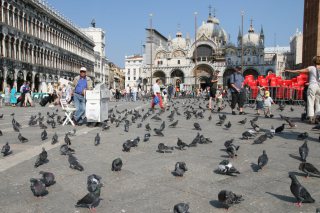
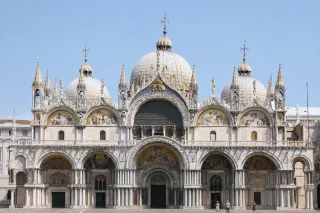
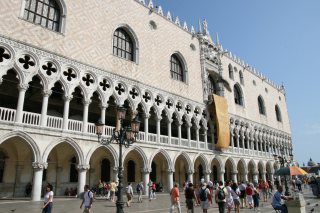
St Mark's Square brings together an exceptional architectural ensemble. The Basilica, covered with mosaics and precious marbles, recalls Venice's close ties with Byzantium and the Mediterranean East. At its side, the Doge's Palace was at once the residence of the doge, seat of government, courthouse, and prison of the Republic. The Clock Tower, the Procuratie, the Museo Correr, and the great campanile complete this setting designed to impress visitors as well as foreign ambassadors.
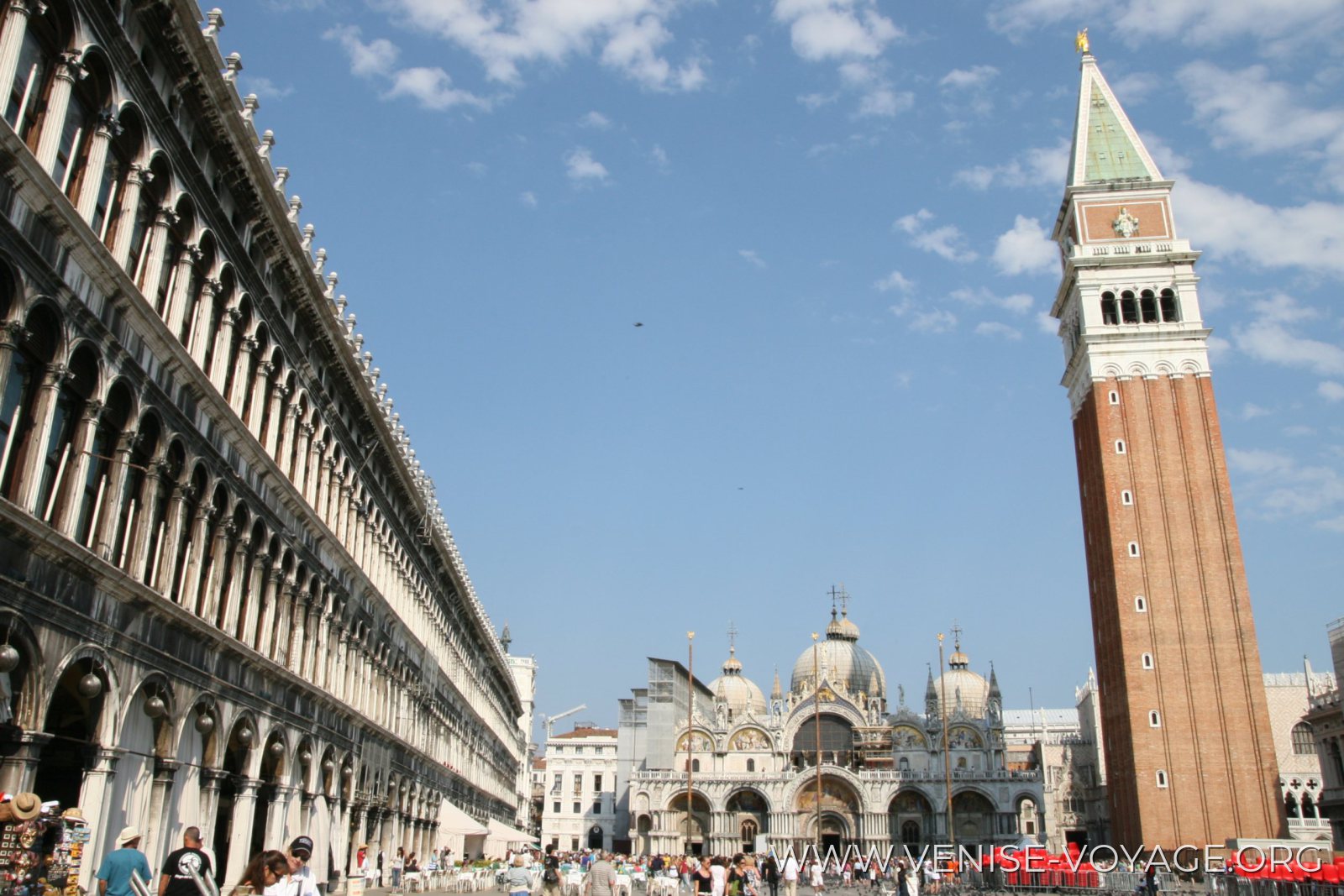
St Mark's Square and campanile
From the Piazzetta, the columns of St Mark and St Theodore open the perspective onto the basin. It was once the official entrance to the city for those arriving by sea. The walk continues along the Riva degli Schiavoni, already located in large part in the neighboring sestiere of Castello, opposite San Giorgio Maggiore, an island that administratively belongs to San Marco.
Moving away from the square, the district reveals a more varied Venice. The elegant shopping streets of the Mercerie lead toward Rialto, while the districts of San Moisè, San Fantin, and Santo Stefano retain palaces, lively campi and several major buildings. Luxury boutiques coexist with discreet courtyards and passages where crowds sometimes thin out within a few dozen meters.
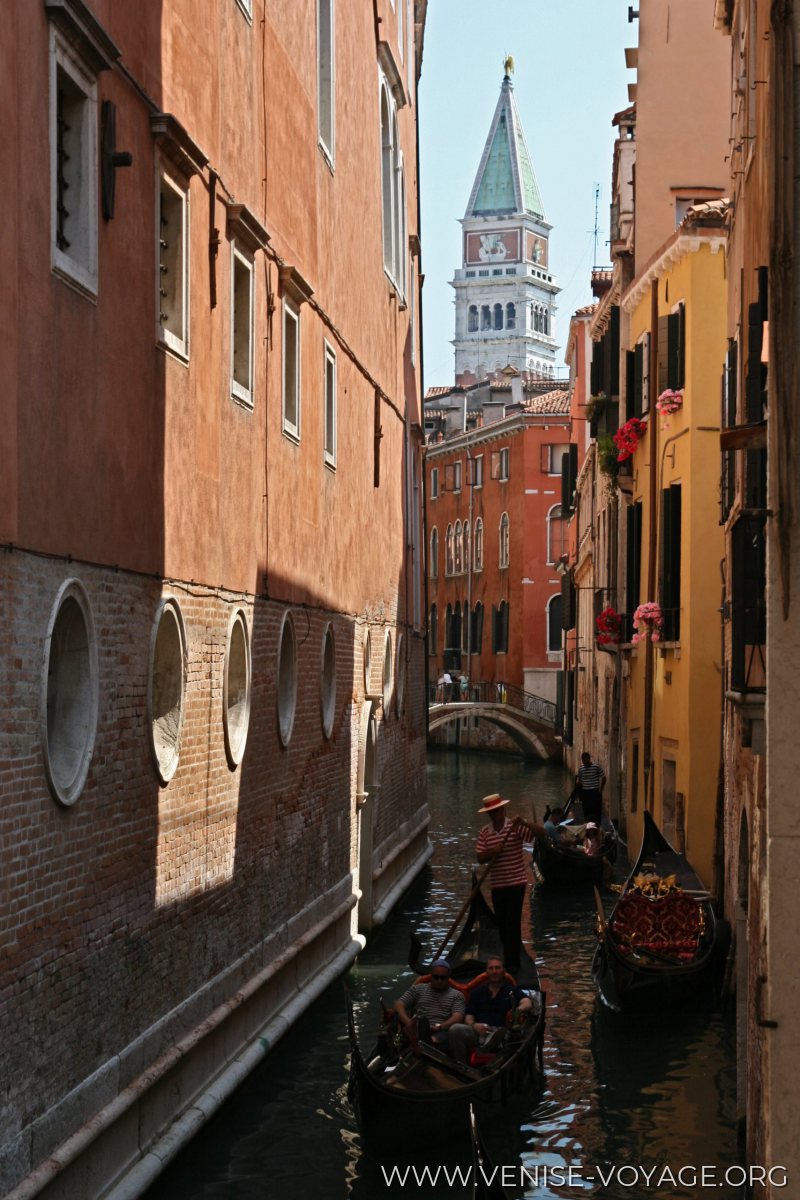
Canals
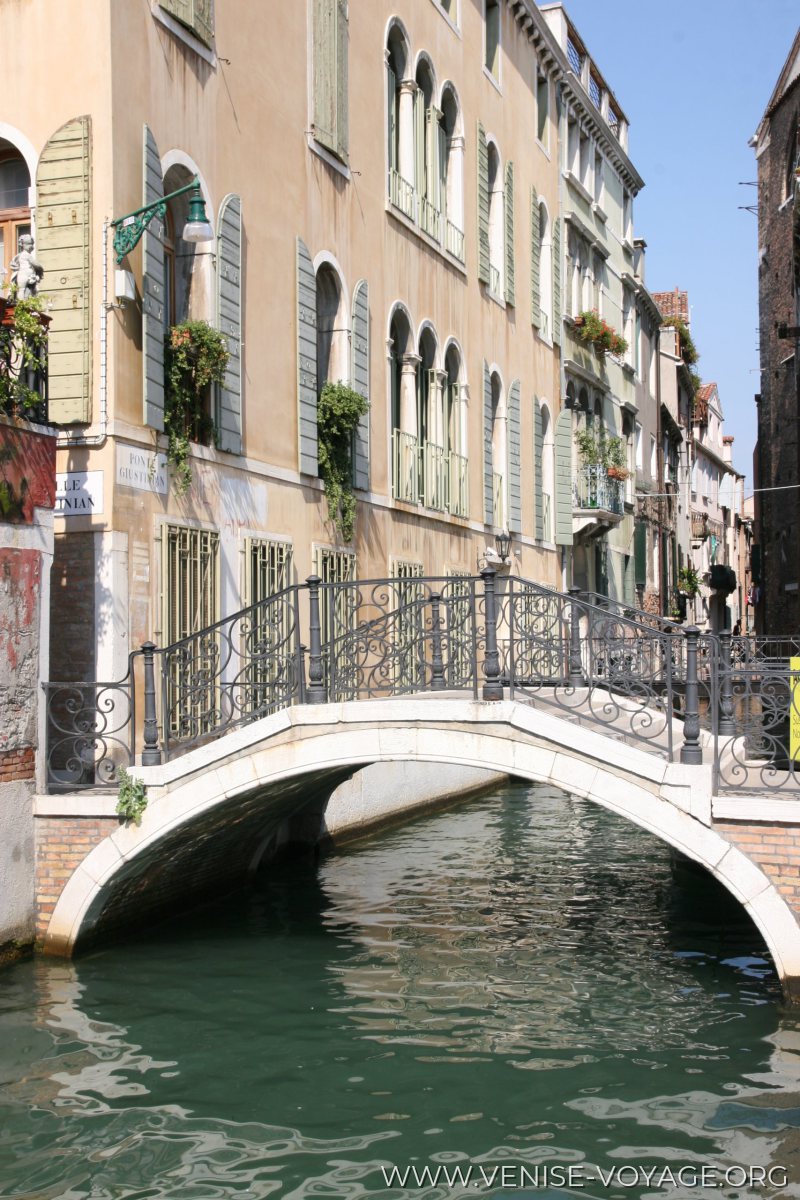
Ponte Giustinian
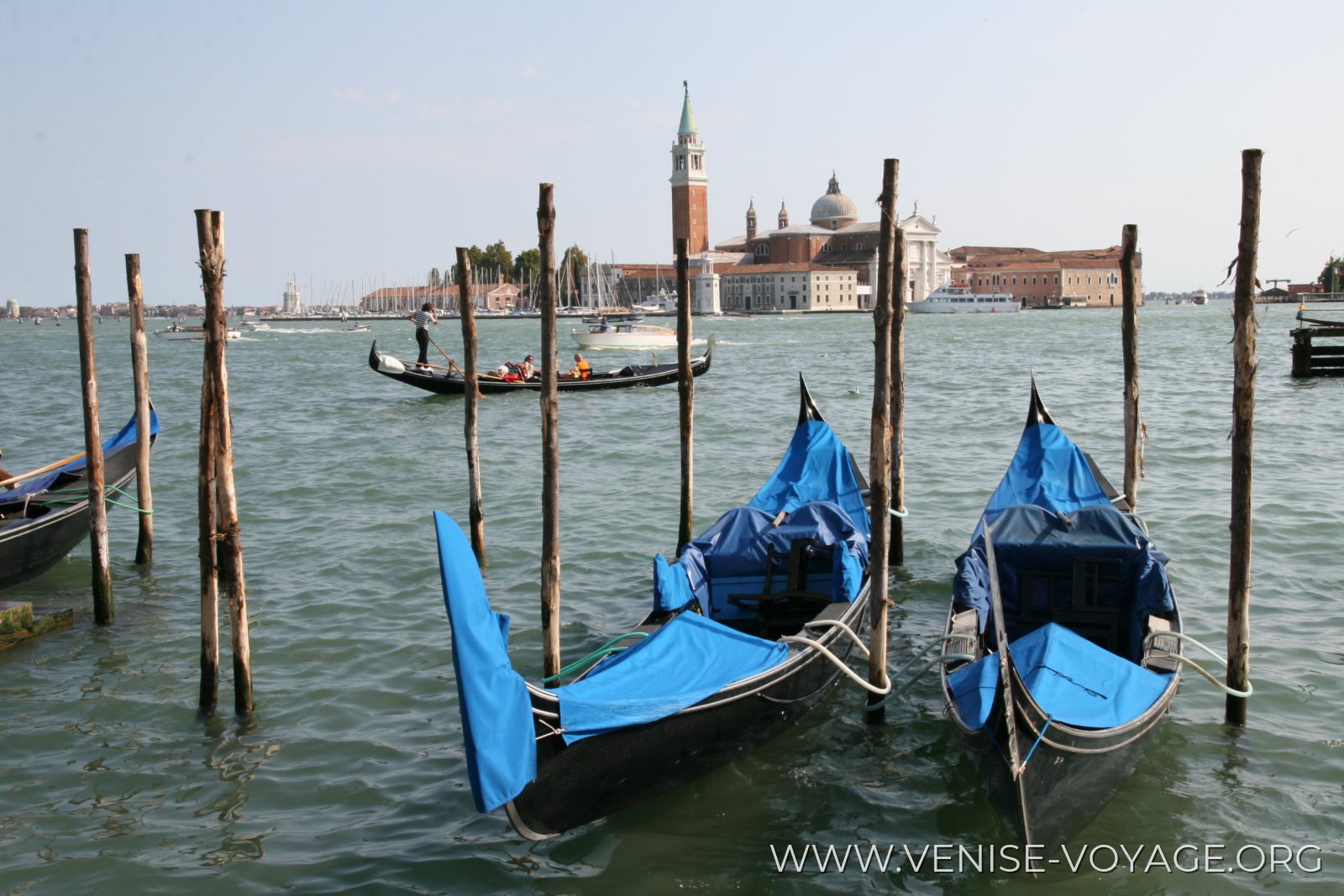
Molo del Palazzo Ducale
The main places to discover
- St Mark's Square: the monumental heart of Venice and the only large square officially called piazza, it brings together the Basilica, the Doge's Palace, the campanile, the Clock Tower, and the Procuratie. It is the main architectural and political complex of the former Republic.
- St Mark's Basilica: the former doge's chapel, it combines Byzantine architecture, golden mosaics, precious marbles, and works brought back from the East. The Pala d'Oro and the interior decoration testify to the wealth and Mediterranean connections of Venice.
- Doge's Palace: seat of Venetian power for centuries, it housed the institutions of the Republic, the doge's apartments, the courts, and the prisons. Its great halls decorated by Tintoretto, Veronese, or Palma the Younger rank among the most spectacular in Venice.
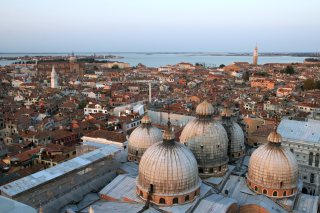
- St Mark's Campanile: towering over the square at nearly 100 meters high, it offers one of the most famous panoramic views over the rooftops, the lagoon, and the islands. Collapsed in 1902, it was rebuilt almost identically and inaugurated in 1912.
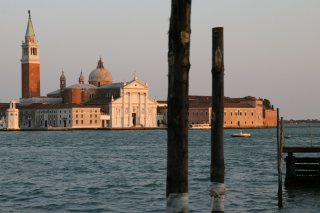
- San Giorgio Maggiore: located opposite the Doge's Palace, the island belongs to the San Marco sestiere. Its church designed by Andrea Palladio, its campanile, and the monastic buildings form one of the great architectural complexes of the lagoon.
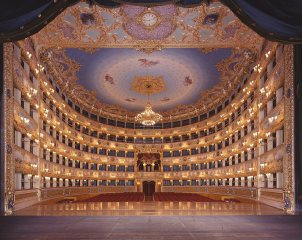
- La Fenice Theatre: inaugurated in 1792, destroyed several times by fire and rebuilt, it remains one of Europe's leading opera houses. Several major works by Rossini, Bellini, and Verdi were premiered there.
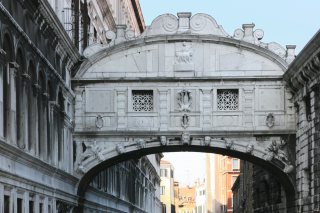
- Bridge of Sighs: connects the Doge's Palace to the old Prigioni Nuove, crossing the Rio di Palazzo. Built in the early 17th century, it owes its romantic name to the supposed sighs of prisoners catching one last glimpse of the lagoon before being locked up.
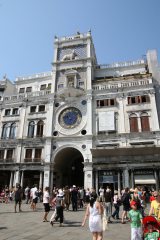
- Clock Tower: built at the end of the 15th century at the entrance to the Mercerie, it has a remarkable astronomical clock indicating in particular the phases of the Moon and the signs of the zodiac. The famous bronze Moors strike the bell at the top of the tower.
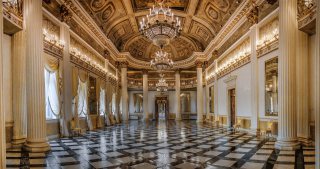
- Correr Museum: housed in the Napoleonic wing and the Procuratie, it traces the political, artistic, and daily history of Venice. It also includes the elegant neoclassical rooms of the former royal residence and several works by Antonio Canova.
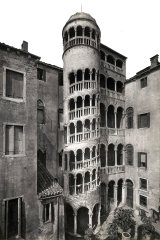
- Palazzo Contarini del Bovolo: hidden in a maze of alleys, it is famous for its spectacular external spiral staircase, built at the end of the 15th century. Its loggias offer a unique view over the rooftops and campaniles of Venice.
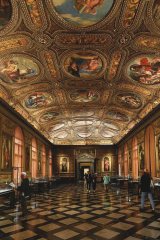
- Marciana Library and the Archaeological Museum: the Marciana Library occupies one of Jacopo Sansovino's masterpieces on St Mark's Piazzetta. The nearby complex of the Archaeological Museum preserves, among other things, ancient sculptures from major Venetian collections.
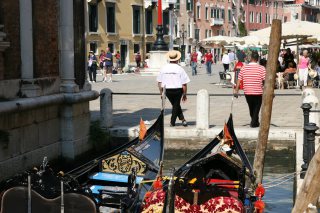
- Campo and the church of Santo Stefano: the Campo Santo Stefano is one of the largest and most pleasant open spaces in the center of Venice, surrounded by palaces and cafés. The neighboring church stands out for its Gothic architecture and its remarkable wooden ceiling evoking an overturned ship's hull.
- San Salvador church: located between Rialto and St Mark's, this important Renaissance church preserves a rich interior and several remarkable works. It makes an interesting heritage stop in the middle of the very busy Mercerie.
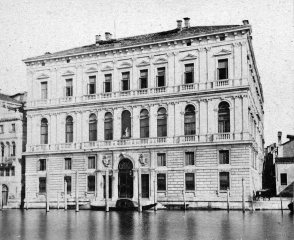
- Palazzo Grassi: built in the 18th century on the Grand Canal, it is one of the last great palaces erected before the fall of the Republic of Venice. Restored and refurbished, it now hosts major exhibitions devoted to contemporary art.
- Fortuny Museum: housed in the Palazzo Pesaro degli Orfei, it was the home and studio of the artist, creator, and decorator Mariano Fortuny. The museum preserves paintings, textiles, photographs, and objects in an atmosphere that still recreates the artist's very personal world.
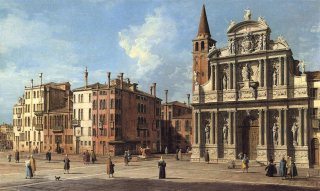
- Santa Maria del Giglio: this church is especially remarkable for its spectacular 17th-century Baroque façade. More than a traditional religious program, its decoration celebrates the Barbaro family through statues, maps, and representations of cities linked to its military and diplomatic career.
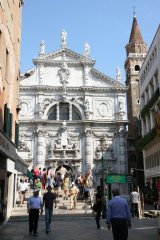
- San Moisè church: located near St Mark's Square, it has one of the most exuberant Baroque façades in Venice, covered with sculptures and reliefs. Its decoration was largely funded by the Fini family, several members of which are represented there.
- Other remarkable places
- The Giardini Reali form a rare historic garden on the edge of St Mark's Basin, a few steps from the Piazzetta. Laid out in the Napoleonic era and recently restored, they offer an unexpected green pause in the heart of Venice's most monumental area.
- The Negozio Olivetti is a small masterpiece of modern architecture designed by Carlo Scarpa in the late 1950s under the Procuratie of St Mark's Square. Sculptural staircase, stone, wood, mosaic, and light compose a retail space that has become a remarkable design work.
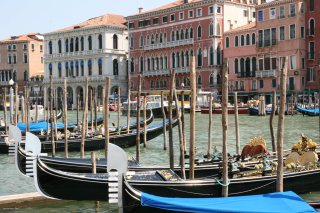
- The Riva del Carbon: this quay on the Grand Canal offers a pleasant opening onto the great Venetian waterway and the palaces that line it. It is also a good vantage point for observing the Rialto area and the bustle of the canal.
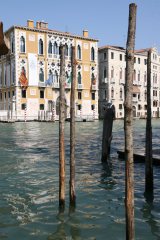
- The Palazzo Cavalli-Franchetti: located on the Grand Canal, near the Accademia Bridge, this palace owes much of its current appearance to 19th-century neo-Gothic transformations. It now hosts exhibitions and cultural events.
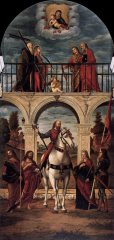
- The San Vidal church: near Campo Santo Stefano and the Accademia Bridge, it preserves, among other things, an important altarpiece by Vittore Carpaccio. The former church has also become a renowned venue for classical music concerts.
Places in San Marco
22 places in this district.
 1
Square
St Mark's Square
Venice's monumental and civic centre, lined by the basilica, the Doge's Palace, the Procuratie and the campanile.
1
Square
St Mark's Square
Venice's monumental and civic centre, lined by the basilica, the Doge's Palace, the Procuratie and the campanile.
 2
Church
St Mark's Basilica
Venice's ducal basilica, famous for its mosaics, Byzantine plan and ties to the Republic's maritime power.
2
Church
St Mark's Basilica
Venice's ducal basilica, famous for its mosaics, Byzantine plan and ties to the Republic's maritime power.
 3
Palace
Doge's Palace
Former seat of Venetian power, combining ducal apartments, institutional halls, prisons and the Bridge of Sighs.
3
Palace
Doge's Palace
Former seat of Venetian power, combining ducal apartments, institutional halls, prisons and the Bridge of Sighs.
 4
Monument
St Mark's Campanile
Standing 98.6 meters tall at the center of St Mark's Square, the Campanile has dominated Venice for over a thousand years. Rebuilt…
4
Monument
St Mark's Campanile
Standing 98.6 meters tall at the center of St Mark's Square, the Campanile has dominated Venice for over a thousand years. Rebuilt…
 5
Island
Island of San Giorgio Maggiore
An island facing San Marco, known for Palladio's basilica, its campanile and the Giorgio Cini Foundation. San Giorgio Maggiore sui…
5
Island
Island of San Giorgio Maggiore
An island facing San Marco, known for Palladio's basilica, its campanile and the Giorgio Cini Foundation. San Giorgio Maggiore sui…
 6
Theatre
La Fenice Theatre
Venice's great opera house, rebuilt several times, tied to the story of Italian and European music.
6
Theatre
La Fenice Theatre
Venice's great opera house, rebuilt several times, tied to the story of Italian and European music.
 7
Bridge
Bridge of Sighs
This covered bridge connects the Doge's Palace to the old prisons, made famous by the legend of the condemned prisoners catching t…
7
Bridge
Bridge of Sighs
This covered bridge connects the Doge's Palace to the old prisons, made famous by the legend of the condemned prisoners catching t…
 8
Monument
St Mark's Clock Tower
The Clock Tower overlooks the entrance to the Mercerie and is one of the historic sights around St Mark's Square.
8
Monument
St Mark's Clock Tower
The Clock Tower overlooks the entrance to the Mercerie and is one of the historic sights around St Mark's Square.
 9
Museum
Correr Museum
Museum on St Mark's Square devoted to the history of Venice, the arts and the city's civic collections.
9
Museum
Correr Museum
Museum on St Mark's Square devoted to the history of Venice, the arts and the city's civic collections.
 10
Palace
Palazzo Contarini del Bovolo
A discreet palace in San Marco, famous for its spiral staircase, the Scala del Bovolo.
10
Palace
Palazzo Contarini del Bovolo
A discreet palace in San Marco, famous for its spiral staircase, the Scala del Bovolo.
 11
Library
Marciana Library and Archaeological Museum
Masterpiece by Sansovino on the Piazzetta, the Biblioteca Marciana houses the manuscripts bequeathed by Cardinal Bessarion in 1468…
11
Library
Marciana Library and Archaeological Museum
Masterpiece by Sansovino on the Piazzetta, the Biblioteca Marciana houses the manuscripts bequeathed by Cardinal Bessarion in 1468…
 12
Square
Campo and church of Santo Stefano
A large campo between the Accademia, the Palazzo Grassi and the church of Santo Stefano, alive with everyday Venetian life, and a …
12
Square
Campo and church of Santo Stefano
A large campo between the Accademia, the Palazzo Grassi and the church of Santo Stefano, alive with everyday Venetian life, and a …
 13
Church
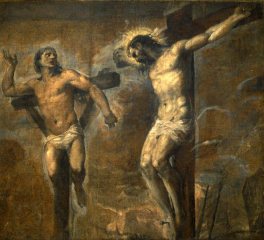
Church of San Salvador
Renaissance church near the Rialto, famous for the tomb of Catherine Cornaro, last queen of Cyprus, and two paintings by Titian.
13
Church
Church of San Salvador
Renaissance church near the Rialto, famous for the tomb of Catherine Cornaro, last queen of Cyprus, and two paintings by Titian.
 14
Palace
Palazzo Grassi
A great Grand Canal palace, now an exhibition venue of the Pinault Collection in Venice. Between the San Marco and Dorsoduro sesti…
14
Palace
Palazzo Grassi
A great Grand Canal palace, now an exhibition venue of the Pinault Collection in Venice. Between the San Marco and Dorsoduro sesti…
 15
Museum
Fortuny Museum
The Fortuny Museum occupies the Palazzo Pesaro degli Orfei and evokes the world of Mariano Fortuny.
15
Museum
Fortuny Museum
The Fortuny Museum occupies the Palazzo Pesaro degli Orfei and evokes the world of Mariano Fortuny.
 16
Church
Santa Maria del Giglio
Church near Campo Santa Maria del Giglio, notable for its baroque façade and its works of art.
16
Church
Santa Maria del Giglio
Church near Campo Santa Maria del Giglio, notable for its baroque façade and its works of art.
 17
Church
Church of San Moisè
Baroque church near San Marco, known for its theatrical façade and its ties to the Campo San Moisè.
18
Garden
Giardini Reali
Small garden created during the Napoleonic era on the edge of St. Mark's Basin, restored and reopened in 2019, a green break betwe…
19
Museum
Negozio Olivetti
Showcase boutique designed by Carlo Scarpa in 1957-58 under the arcades of St Mark’s Square, today a small museum managed by the F…
17
Church
Church of San Moisè
Baroque church near San Marco, known for its theatrical façade and its ties to the Campo San Moisè.
18
Garden
Giardini Reali
Small garden created during the Napoleonic era on the edge of St. Mark's Basin, restored and reopened in 2019, a green break betwe…
19
Museum
Negozio Olivetti
Showcase boutique designed by Carlo Scarpa in 1957-58 under the arcades of St Mark’s Square, today a small museum managed by the F…
 20
Street / Area
Riva del Carbon
A Grand Canal quay near the Rialto, with lively boat traffic and trade, and handsome façades along the banks. A good spot to watch…
20
Street / Area
Riva del Carbon
A Grand Canal quay near the Rialto, with lively boat traffic and trade, and handsome façades along the banks. A good spot to watch…
 21
Palace
Palazzo Cavalli-Franchetti
Gothic palace on the Grand Canal, near the Accademia Bridge, home since 1999 to the Istituto Veneto di Scienze, Lettere ed Arti.
21
Palace
Palazzo Cavalli-Franchetti
Gothic palace on the Grand Canal, near the Accademia Bridge, home since 1999 to the Istituto Veneto di Scienze, Lettere ed Arti.
 22
Church
San Vidal Church
Church founded in 1084 between Campo Santo Stefano and the Accademia Bridge, with a Glory of Saint Vital by Carpaccio, now a baroq…
22
Church
San Vidal Church
Church founded in 1084 between Campo Santo Stefano and the Accademia Bridge, with a Glory of Saint Vital by Carpaccio, now a baroq…