Church of San Moisè Church
Baroque church near San Marco, known for its theatrical façade and its ties to the Campo San Moisè.
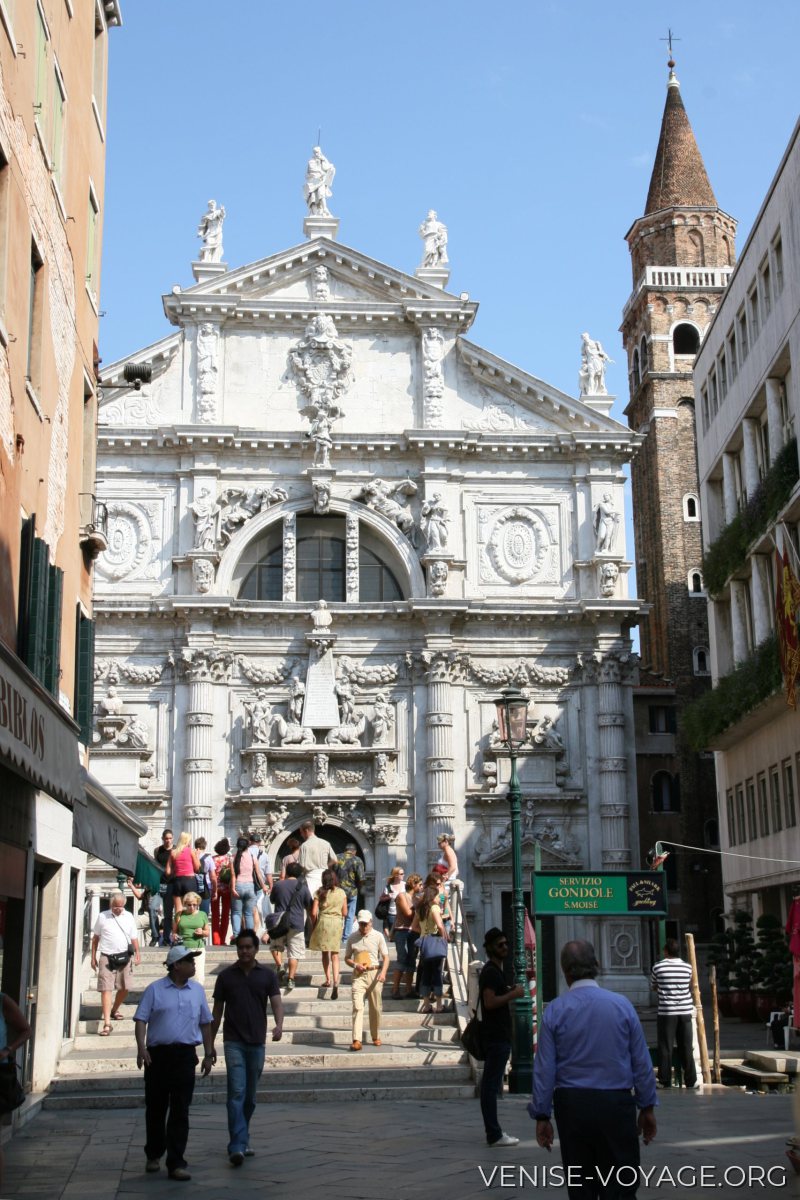
Church of San Moisè, baroque without restraint
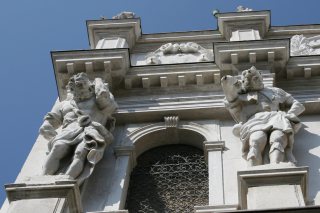
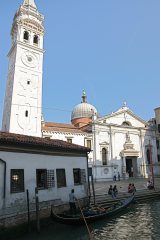
The church of San Moisè stands a few minutes from St Mark's Square, on the Campo San Moisè, at the end of a busy route between the grand shops and the monumental heart of Venice. It would be easy to walk past without a second look; its façade, though, does everything it can to prevent that. Columns, statues, busts, stone drapery and reliefs pile up in one of the most exuberant baroque compositions in Venice.
The church is nonetheless far older than its present appearance suggests. A parish existed here as early as the Middle Ages, also known under the name of San Vittore. Tradition links its current dedication to the prophet Moses to a medieval rebuilding associated with Moisè Venier. Dedicating a church to a great Old Testament figure was, in fact, not as strange in a Venice shaped by Byzantine culture as it might seem today.
The building was thoroughly rebuilt in the 17th century. Its present exterior owes most to the spectacular façade designed from 1668 by Alessandro Tremignon, an architect active in baroque Venice. The project was funded by the Fini family, who turned this religious façade into a dynastic monument as much as a church entrance.
The profusion of decoration long divided observers. San Moisè was singled out for criticism by those hostile to late baroque, but this very abundance is precisely what makes it interesting today: the façade works almost like a piece of stone stagecraft, where architecture, sculpture, family genealogy and religious symbols compete for attention. It represents a very different facet of Venice from the Palladian restraint found elsewhere in the city.
A more restrained interior, though not exactly austere
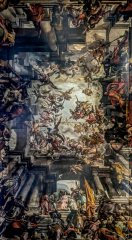
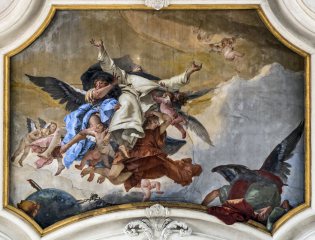
Behind this dramatic façade, the interior follows a more legible layout, with a single large nave leading to the choir and side chapels. The decoration nonetheless remains rich, bringing together several 16th- and 17th-century works.
The high altar is the most spectacular feature. Designed by Alessandro Tremignon and carried out in part by the sculptor Arrigo Merengo, or Heinrich Meyring, it stages Mount Sinai with Moses receiving the Tablets of the Law from God. Rocks, figures and architecture form a true sculpted landscape that carries into the interior the theatrical taste already announced by the façade.
Paintings preserved in the church also include Tintoretto's Washing of the Feet and a large Last Supper attributed to Palma the Younger. These works reward visitors who look past the first impression made by the façade: San Moisè is not merely a baroque curiosity, but a church where several generations of Venetian artists left their mark.
San Moisè also deserves to be viewed from the campo itself. Its monumental façade seems almost too large for the space facing it, while shops, hotels and passageways towards San Marco keep up a constant flow of movement around it. This contrast between baroque theatricality, religious heritage and commercial activity is, in the end, no stranger to the district's history: here as elsewhere in Venice, the sacred and business have long lived just steps apart.
The visit can be fairly short, but it reveals a particularly demonstrative face of Venetian baroque. Above all, take the time to study the façade closely: behind its apparent excess lie the ambitions of a family, the tastes of an era, and an idea of architecture that clearly had no intention of going unnoticed.
Sources and further information
Catalogo Generale dei Beni Culturali - Chiesa di San Mosè profeta vulgo San Moisè; SIUSA - Parrocchia di San Moisè; Catalogo Generale dei Beni Culturali - Moses Receiving the Tablets of the Law.
Map and route
Near the Church of San Moisè and places in the district
 Museum
Correr Museum
132 m
Garden
Giardini Reali
168 m
Museum
Correr Museum
132 m
Garden
Giardini Reali
168 m
 Theatre
La Fenice Theatre
174 m
Theatre
La Fenice Theatre
174 m
 Square
St Mark's Square
190 m
Square
St Mark's Square
190 m
In the San Marco sestiere
Nearby places to stay
Sur le même thème