Doge's Palace Palace
Former seat of Venetian power, combining ducal apartments, institutional halls, prisons and the Bridge of Sighs.
Doge's Palace, architecture of Venetian power
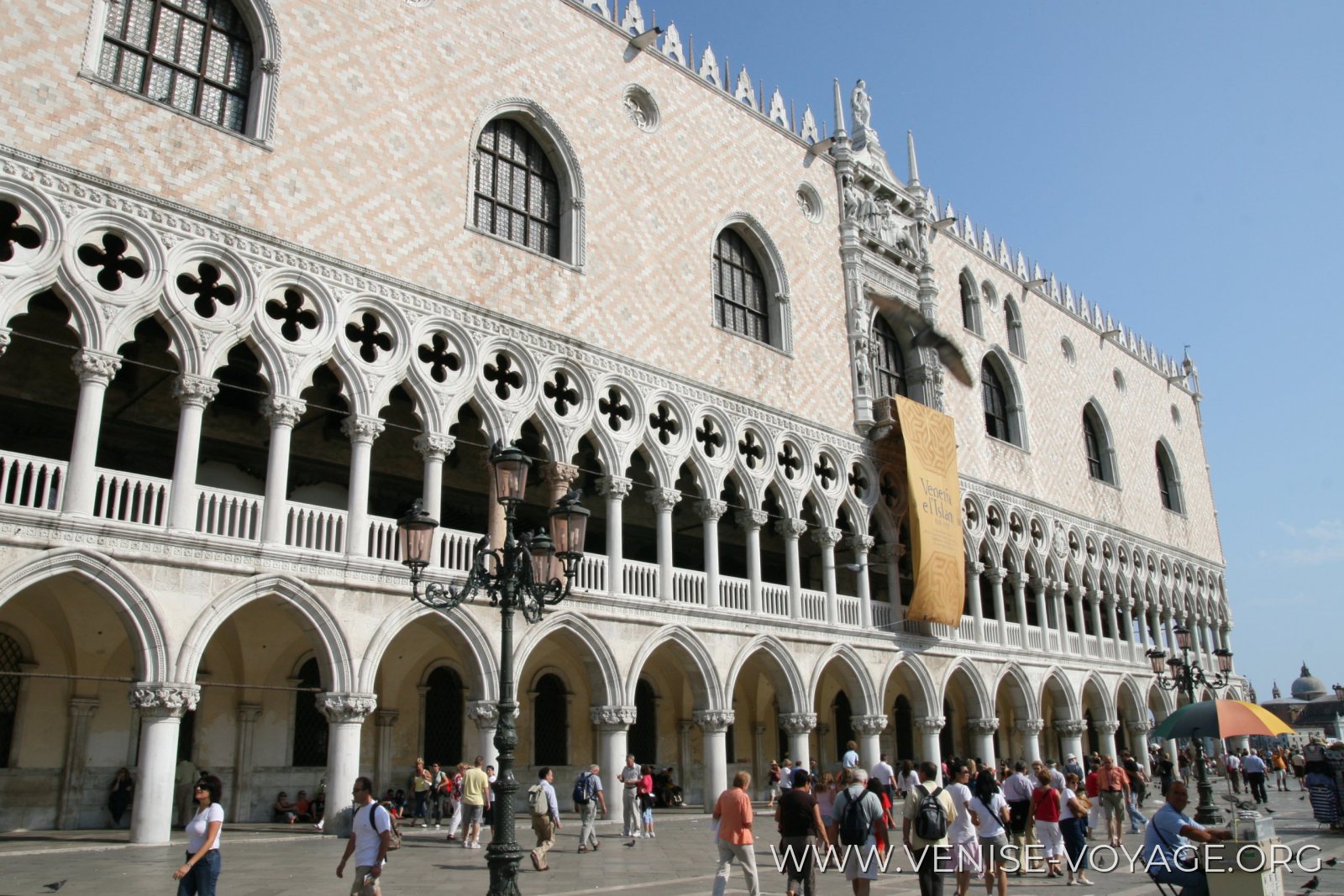
The Doge's Palace occupies one of the most prestigious sites in Venice, between the Piazzetta, the St Mark's Basin and the basilica. It was both the doge's official residence and the political, administrative and judicial centre of the Republic of Venice. Councils, magistracies, courts and offices stood alongside the apartments of the head of state: more than a princely palace, it was a genuine machine of government.
The contrast of its façades is one of the building's most distinctive features. Two levels of finely pierced arcades and loggias support a vast upper wall clad in a geometric pattern of pale pink and white marble. This arrangement seems to reverse the usual logic of a building: the heaviest-looking part appears to float above a light base. In the courtyard, the Scala dei Giganti (Staircase of the Giants), designed by Antonio Rizzo and topped since 1565 by Sansovino's statues of Mars and Neptune, formed one of the palace's great ceremonial settings.
The halls of Venetian government
Inside, the sequence of rooms reveals the complex workings of the Republic. Visitors pass through the spaces of the Senate, the College, the Council of Ten, the Quarantie, and above all the Hall of the Great Council. About 53 metres long and 25 metres wide, it could hold more than a thousand patricians and formed the heart of Venetian political sovereignty. Its decoration, largely renewed after the fire of 1577, combines historical paintings, portraits of doges and allegories celebrating the virtues of the state.
The visit also reminds us that the doge was not an absolute ruler. Elected for life, he embodied the Republic and its prestige, but his actions were strictly bound by the institutions, the councils and an exacting ceremonial. The palace itself, then, stages not so much a man as the continuity of the Venetian state.
Justice, prisons and the Bridge of Sighs
The visit finally leads to the judicial chambers, the armoury and then the prisons. The Bridge of Sighs, built in 1614, linked the palace to the New Prisons via two separate corridors. Prisoners passed directly from the courtrooms to their cells, while the old Pozzi and Piombi recall the different forms of imprisonment used within the complex.
Visiting the Doge's Palace thus allows visitors to read, almost room by room, the political organisation of Venice. Gothic architecture, Renaissance decoration, masterpieces by Veronese and Tintoretto, courts and prisons together form an ensemble in which art was never separate from power.
Gallery
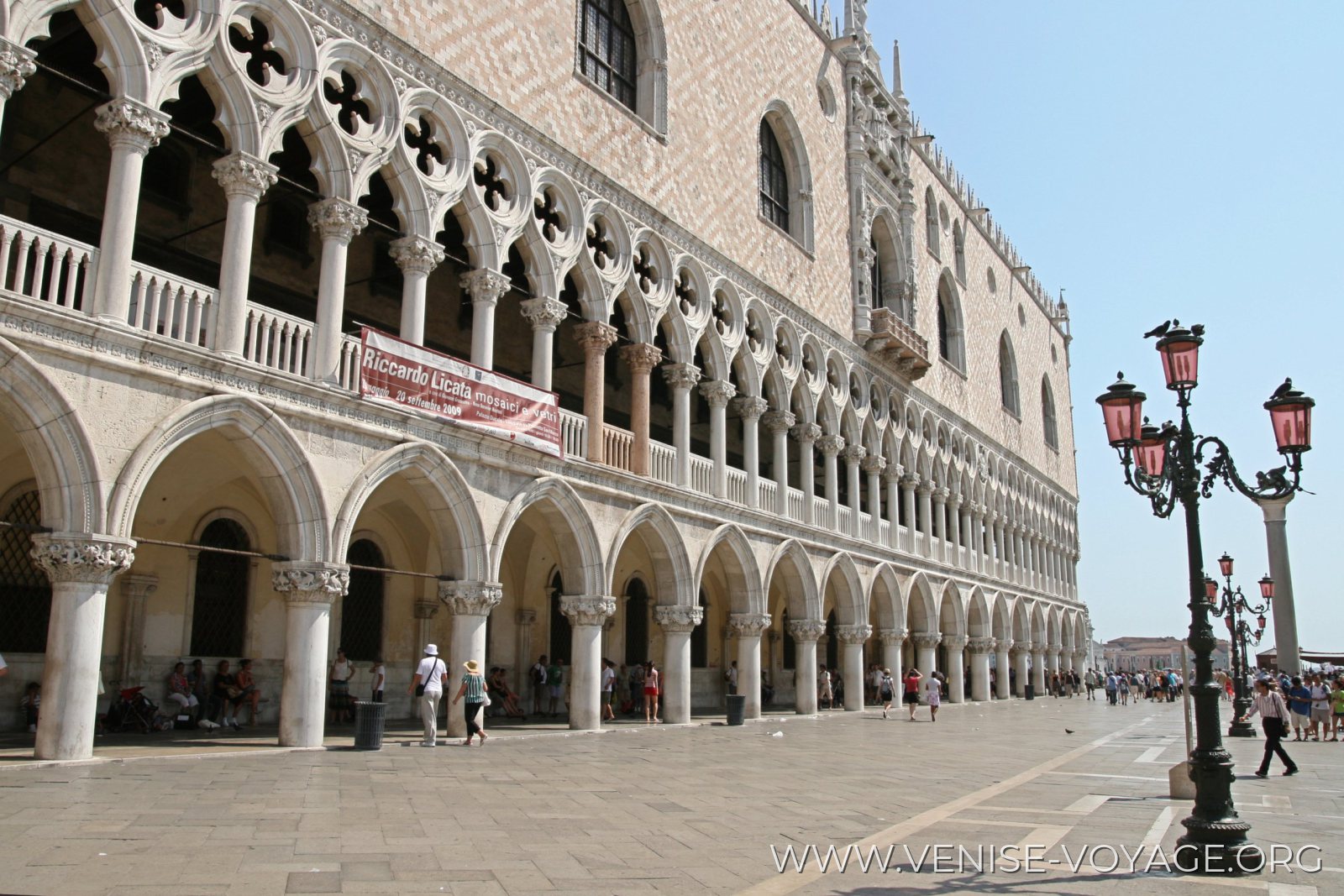
Doge's Palace
Doge's Palace
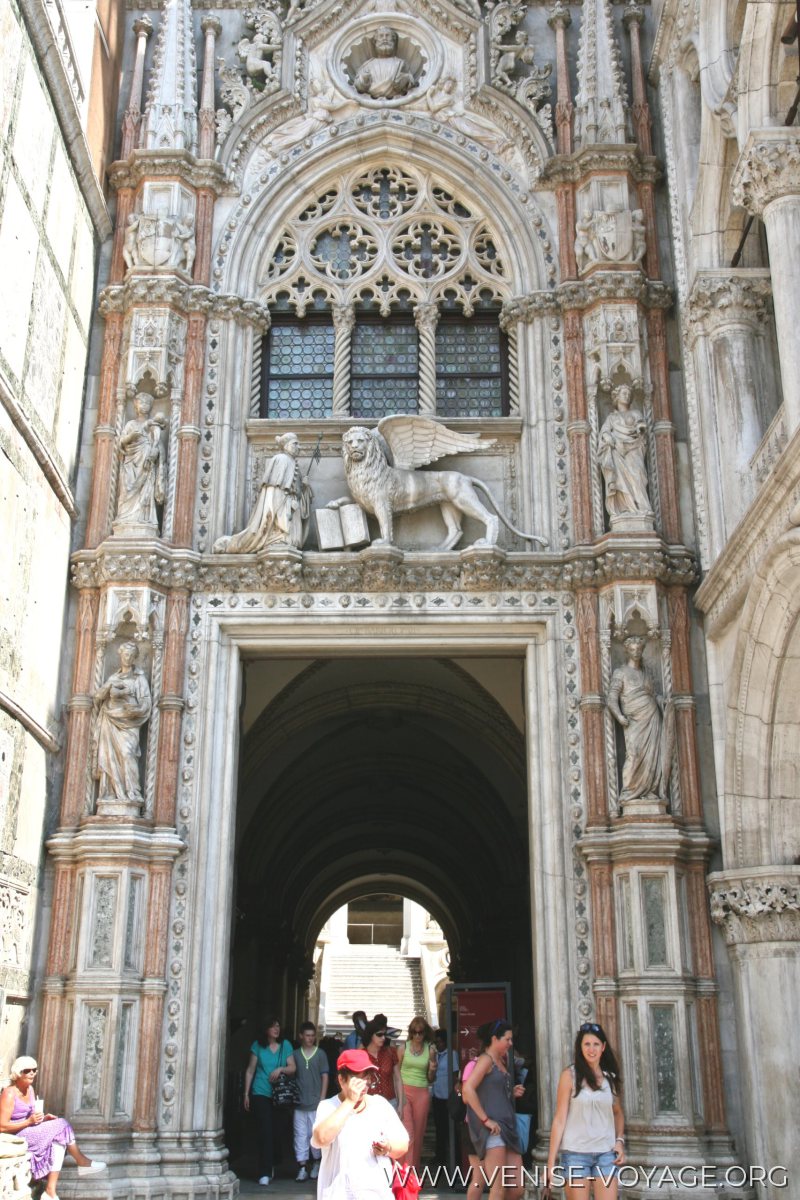
Porta della Carta
Sources and further information
Palazzo Ducale - history and architecture; Palazzo Ducale - courtyard and loggias; Palazzo Ducale - institutional chambers; Palazzo Ducale - prisons and Bridge of Sighs.
Map and route
Near Doge's Palace and places in the district
 Bridge
 of Sighs
55 m
Bridge
Bridge of Sighs
55 m
 Church
St Mark's Basilica
102 m
Church
St Mark's Basilica
102 m
 Library
Marciana Library and Archaeological Museum
104 m
Library
Marciana Library and Archaeological Museum
104 m
 Monument
St Mark's Campanile
112 m
Monument
St Mark's Campanile
112 m
In the San Marco sestiere
Nearby places to stay
Sur le même thème