La Fenice Theatre Theatre
Venice's great opera house, rebuilt several times, tied to the story of Italian and European music.
La Fenice, the resurrected opera house
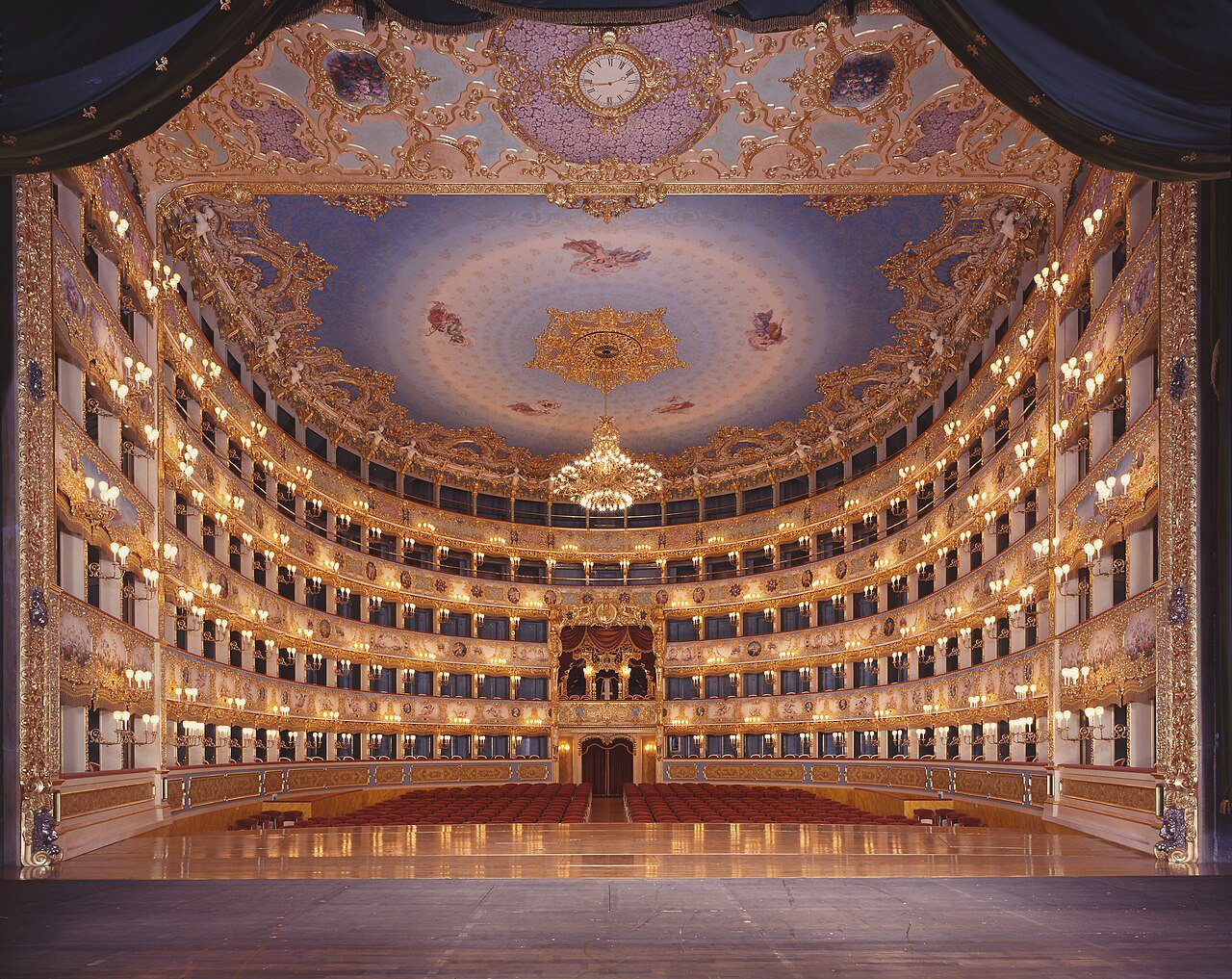
The La Fenice theatre is tucked away in the San Fantin area, a few minutes from St Mark's Square. Its rather understated façade gives little hint of the profusion of gilding, stucco and boxes that appears once you cross the vestibule. Its name, "The Phoenix", might seem invented to sum up its turbulent history; in fact it predates it, since the theatre already bore the name at its inauguration in 1792.

La Fenice was created by a society of Venetian patricians linked to the former San Benedetto theatre. An architectural competition was launched in 1789 and the design by Giannantonio Selva was chosen for construction. Work began in 1790 and the new theatre was officially inaugurated on 16 May 1792, during the feast of the Ascension. At the time, Venice had an exceptionally dense theatrical life: opera was at once a spectacle, a business, and a major part of aristocratic social life.
Selva designed an Italian-style theatre, with a horseshoe-shaped auditorium ringed by five levels of boxes. This layout answered both acoustic requirements and the social customs of the day. Each box formed a small private space where one could entertain, converse, eat or play cards while following the stage more or less closely. The theatre was thus a sort of miniature Venetian society: people came to hear the performers, but also to see and be seen.
Napoleon's arrival altered this in-principle egalitarian layout. In 1808, several central boxes were merged to form an imperial box, later the royal box. Changes of regime left their mark on the hall: removed after the revolution of 1848, the box was quickly restored with the return of Austrian rule. At La Fenice, even the arrangement of seating could become political.
A major stage in the history of opera
In the 19th century, La Fenice established itself as one of Europe's great opera houses. Rossini staged Tancredi here and premiered Semiramide in 1823; Bellini gave the first performances of I Capuleti e i Montecchi in 1830 and Beatrice di Tenda in 1833. Donizetti enjoyed great success here in 1836 with the premiere of Belisario.
But it is above all the relationship with Giuseppe Verdi that lastingly wrote the theatre into the history of opera. La Fenice hosted the premieres of Ernani in 1844, of Attila in 1846, and then of two works that became central to the world repertoire: Rigoletto, premiered on 11 March 1851, and La traviata, premiered on 6 March 1853. The latter received a difficult reception at its premiere, before going on to the fate we now know. Simon Boccanegra also premiered here in 1857.
La Fenice's role did not end with the great Romantic repertoire. In the 20th century, the theatre stayed attentive to contemporary creation, hosting in 1951 the world premiere of Igor Stravinsky's The Rake's Progress. Benjamin Britten, Luigi Nono and Bruno Maderna are also among the composers whose new works were presented on this stage.
Two fires, two rebuildings
On the night of 13 December 1836, a fire destroyed the auditorium and much of the theatre. The brothers Tommaso and Giambattista Meduna were entrusted with its reconstruction, and La Fenice reopened the following year. They kept Selva's overall layout while further adapting the hall to musical performances. The decoration was altered again in the mid-19th century, gradually giving rise to the sumptuous image of the theatre that later generations would come to know.
A new fire, this time an act of arson, ravaged La Fenice on 29 January 1996 while the building was closed for renovation work. The auditorium, the stage and much of the interior structure were destroyed. The shock felt in Venice and far beyond was considerable: this was no longer simply a matter of rebuilding a building, but of restoring one of the emblematic sites of European musical history.
The new auditorium thus regained its five levels of boxes, its wood and papier-mâché decoration, its stucco, velvet and lavish gilding. The extensive use of wood also meets an acoustic requirement. The surviving or partly preserved spaces, notably the Sale Apollinee, were restored while keeping the original elements as distinguishable as possible from the reconstructed parts.
La Fenice was handed back to the city in December 2003. The reopening concert, on 14 December, was conducted by Riccardo Muti. Technical work continued for a few more months before the site was fully completed in 2004. Nearly eight years had been needed to bring the theatre back to life, in an urban fabric where transporting materials, machinery and workers is already a less straightforward operation than elsewhere.
Visiting La Fenice
A visit takes in the main auditorium, the boxes, the royal box, the foyers and the Sale Apollinee, while shedding light on the particular relationship between theatrical architecture and Venetian sociability. It is worth looking as much at the layout of the hall as at its gilding: the arrangement of the boxes tells the story of a society in which the spectacle unfolded simultaneously on stage and among the audience.
The visit is naturally different from an evening at the opera. Attending a performance lets you experience the acoustics and see the theatre resume its true purpose; but even empty, La Fenice holds enough history to justify a visit. Behind its spectacular decoration lie two centuries of music, social life, political upheaval and successive reconstructions.
La Fenice is thus far more than a beautiful old theatre. Rossini, Bellini, Donizetti, Verdi and Stravinsky all brought new works into the history of music here, while two fires forced Venice to rebuild, almost stubbornly, one of its main cultural venues. Few buildings, in the end, live up to their name so precisely.
Sources and further information
Teatro La Fenice - history of the theatre; Teatro La Fenice - visiting the theatre; Teatro La Fenice - tickets and information.
Map and route
Near the La Fenice Theatre and places in the district
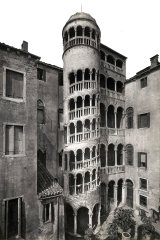 Palace
Palazzo Contarini del Bovolo
132 m
Palace
Palazzo Contarini del Bovolo
132 m
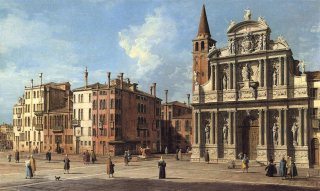 Church
Santa Maria del Giglio
150 m
Church
Santa Maria del Giglio
150 m
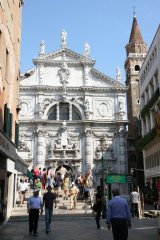 Church
 of San Moisè
174 m
Museum
Fortuny Museum
231 m
Church
Church of San Moisè
174 m
Museum
Fortuny Museum
231 m
In the San Marco sestiere
Nearby places to stay
Sur le même thème