Basilica of Santa Maria della Salute Church
The great votive basilica by Longhena, built on the tip of Dorsoduro after the plague of 1630.
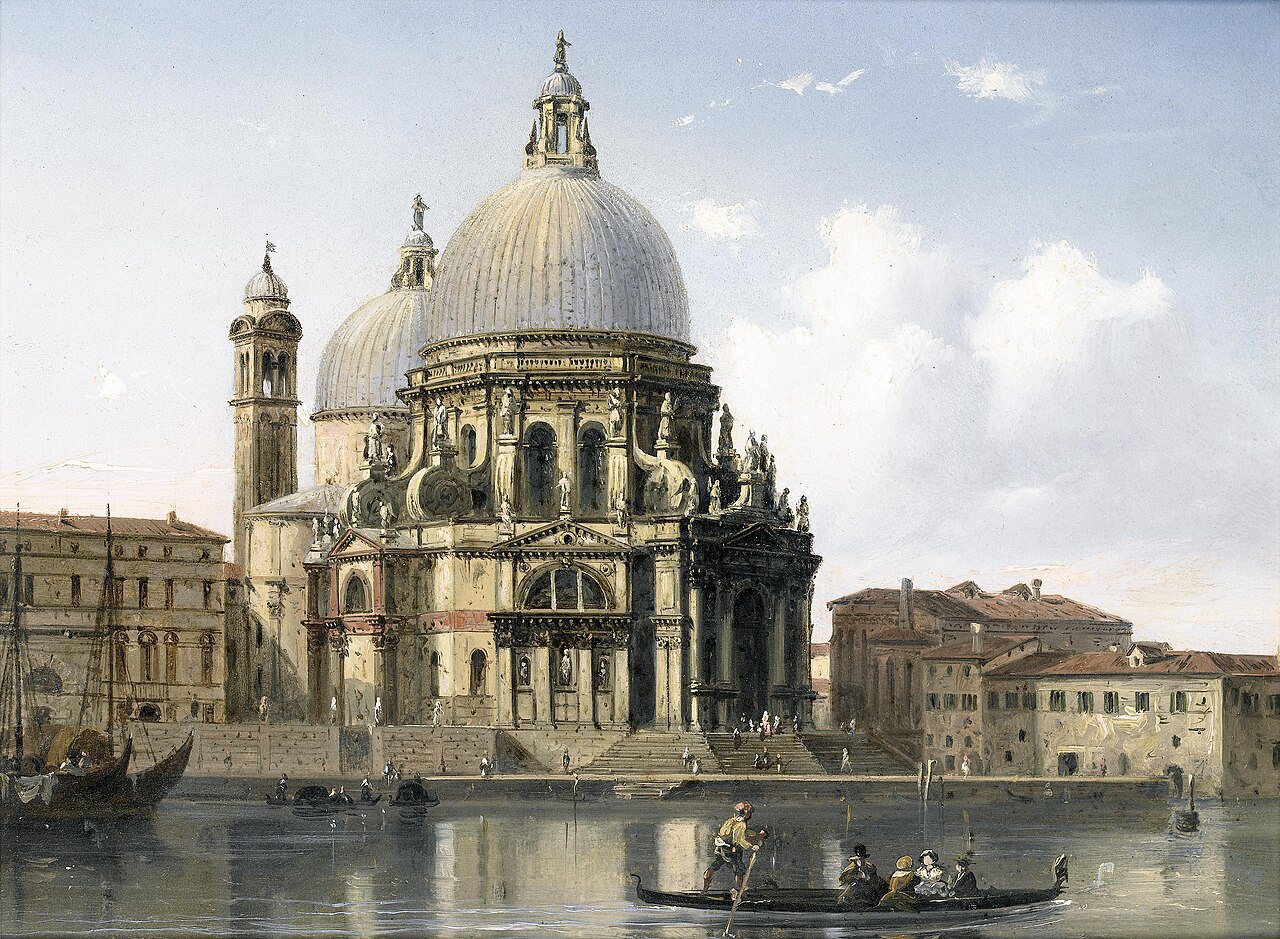
Santa Maria della Salute, Votive Basilica
Santa Maria della Salute dominates the entrance to the Grand Canal, at the eastern end of Dorsoduro. Positioned almost in contact with the water, between the Grand Canal and St Mark's Basin, its great dome is one of the main landmarks of Venice's skyline. From San Marco or a boat crossing the basin, it seems to form with Punta della Dogana a true monumental gateway to the city.
Born from a collective crisis, it remains both a great Baroque monument and a particularly clear expression of the way the Republic of Venice turned a historical event into public memory.
The church was born directly from the terrible plague epidemic of 1630-1631. As the disease struck Venice hard, the Doge and the Senate made a vow to build a sanctuary dedicated to the Virgin if the epidemic ceased. The project was entrusted to Baldassare Longhena, who designed a building capable of being both a great Marian sanctuary and a monument visible on the scale of the lagoon.
The first stone was laid on 1 April 1631. The construction site accompanied almost all of Longhena's career and continued after his death; the church was finally consecrated on 9 November 1687. It only officially received the title of basilica in 1921, but its religious and civic importance had long been established.
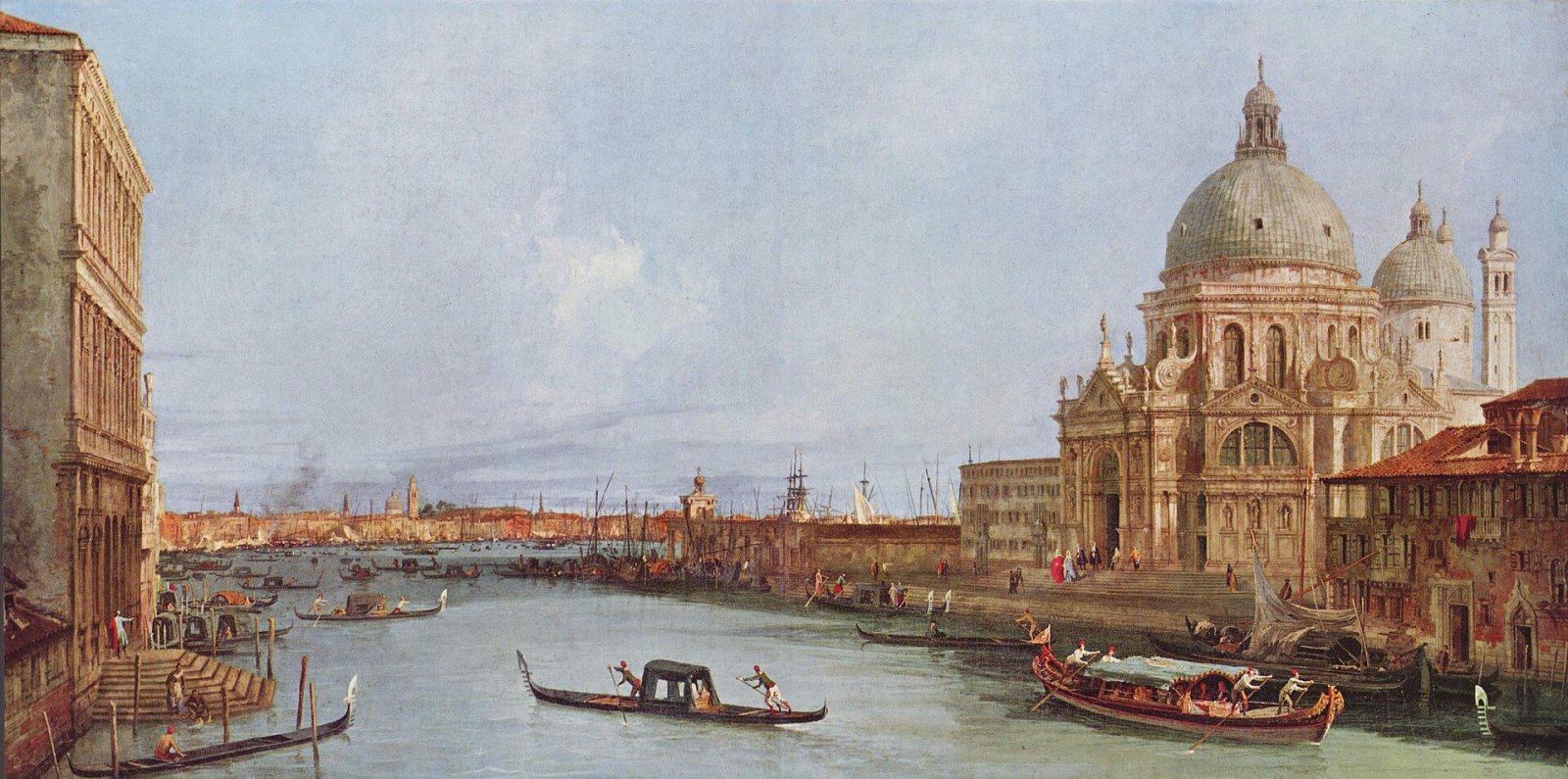
Grande Canale e Santa Maria della Salute
(Canaletto, 1725-26)
Santa Maria della Salute, Carlo Bossoli (19th century)
Architecture and Visit
The architecture is based on a vast octagonal central plan. Six chapels open around the main space, while a second, smaller volume, also covered by a dome, forms the sanctuary and the presbytery. Outside, Longhena multiplies the large volutes that support the drum, the pediments and the statues. The wide staircase descending almost to the water reinforces the monumental character of the whole.
Despite this spectacular architecture, the interior appears relatively bright and orderly. The grey stone highlights the large white masses of the building and light descends from the drum of the dome toward the central space. The eye is gradually drawn to the high altar, focal point of the sanctuary and a direct reminder of the reason the church was built.
Every 21 November, the feast of the Madonna della Salute renews the vow of 1630. Thousands of Venetians still go to the sanctuary, traditionally crossing a temporary votive bridge installed on the Grand Canal between the Santa Maria del Giglio area and that of San Gregorio. The celebration thus remains one of Venice's great living religious traditions.
The sculpted group of the high altar, made by Giusto Le Court, stages the vow of Venice: the Virgin appears with the Child while a figure personifying the city kneels before her and an angel drives away the plague. At the centre is the icon of the Mesopanditissa, a Marian image from Candia, today's Heraklion in Crete, brought to Venice by Francesco Morosini in 1670.
The Salute is also an important place for Venetian painting. It notably preserves the Pentecost by Titian as well as several of his great biblical compositions, including David and Goliath, Abraham and Isaac and Cain and Abel. In the sacristy there are also the Wedding at Cana painted by Tintoretto in 1561, a vast composition built around plays of perspective and light.
The visit also makes full sense outside. From the square, the eye takes in the Grand Canal, St Mark's Basin, San Giorgio Maggiore and the monumental waterfront of San Marco. A few steps are then enough to reach Punta della Dogana: one then understands why Longhena did not conceive merely a church, but a monument intended to participate fully in the urban landscape of Venice.
Sources and Further Information
- Basilica della Salute - History, architecture and collections - official website of the basilica.
- Chiese Italiane - Santa Maria della Salute - heritage record of the Italian Episcopal Conference.
- Patriarchate of Venice - Festa della Salute - information about the pilgrimage and the tradition of 21 November.
Map and route
Near the Basilica of Santa Maria della Salute and places in the district
 Museum
Peggy Guggenheim Collection
251 m
Museum
Peggy Guggenheim Collection
251 m
 Church
Santa Maria del Giglio
270 m
Church
Santa Maria del Giglio
270 m
 Church
 of San Moisè
295 m
Church
Church of San Moisè
295 m
In the Dorsoduro sestiere

Nearby places to stay
Sur le même thème