Peggy Guggenheim Collection Museum
A major modern art museum housed in the Palazzo Venier dei Leoni, the former Venetian residence of Peggy Guggenheim.
Peggy Guggenheim Collection, modern art in Venice
The Peggy Guggenheim Collection occupies the Palazzo Venier dei Leoni, directly on the Grand Canal, between the Accademia Bridge and Santa Maria della Salute. Its low, elongated facade contrasts with the neighboring grand palaces and gives the museum a more intimate, almost domestic scale.
This scale fits the history of the place: before becoming a museum, the palace was Peggy Guggenheim's Venetian home for thirty years. Thus, one discovers less an encyclopedic collection than an ensemble assembled by a personality directly involved in the artistic avant-gardes of her time. This presence in Dorsoduro forms a particularly interesting counterpoint to the old collections of the Gallerie dell'Accademia and to the Baroque architecture of the Salute.
An unfinished palace turned house-museum
The palace was originally intended to rise five stories. Its unfinished state, which might have seemed an architectural failure in the 18th century, is today one of its great qualities: its low profile makes the museum immediately recognizable among the monumental facades of the Grand Canal.
The Palazzo Venier dei Leoni was begun in 1748 on a project by the architect Lorenzo Boschetti for the Venier family. The building was intended to have five stories and rival the great houses of the Grand Canal, but construction was interrupted after its lower part was built. This history explains its singular appearance, with a long Istrian stone facade almost at water level.
Peggy Guggenheim bought the palace in 1949, one year after presenting her collection at the Venice Biennale. She installed her works and her own residence there, and from 1951 opened the house to the public several afternoons a week. She lived there until her death in 1979.
Peggy Guggenheim, collector and patron
The museum tells as much an art history as the journey of a collector. Peggy Guggenheim did not merely buy works: she directed galleries, organized exhibitions, and directly supported artists. In New York, her gallery Art of This Century, opened in 1942, became an important meeting place between exiled European artists and the young American avant-garde.
Her support for Jackson Pollock was particularly decisive: she gave him his first solo exhibition in 1943 and provided him with a contract that allowed him to devote himself more fully to painting. In 1948, the presentation of her collection in the Greek pavilion of the Venice Biennale also introduced the European public to several representatives of the new American painting.
A collection at the heart of the avant-gardes
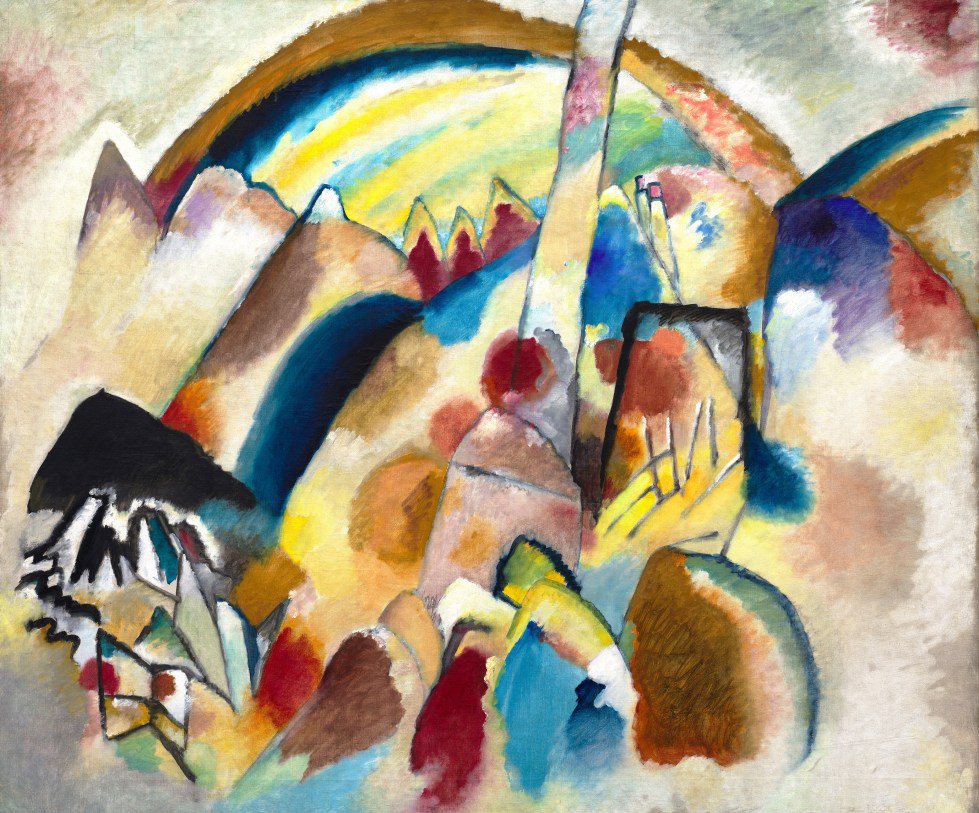
Landscape With Red Spots No 2
(Wassily Kandinsky, via Wikimedia Commons)

The collection covers several of the movements that profoundly transformed the art of the first half of the 20th century: Cubism, Futurism, Metaphysical painting, European abstraction, Surrealism, and American Abstract Expressionism. There you can find notably Picasso, Braque, Kandinsky, Miró, Magritte, Dalí, Max Ernst, Brancusi, Giacometti, Calder, and Jackson Pollock.
The richness of the ensemble also comes from its juxtapositions. The European avant-gardes of the 1910s to the 1930s rub shoulders with the American artists who renewed painting after the Second World War. The collection thus allows one to follow the artistic circulations between Paris, London, New York, and Venice rather than to traverse a simple succession of national schools.
A visit on the scale of a residence
The visit retains something of this former private residence. The rooms remain relatively modest in size and allow a direct approach to the works, far from the monumentality of certain large museums, with a terrace facing Venice on the Grand Canal side. The route continues into the Nasher Sculpture Garden, where sculptures and vegetation occupy the former palace garden.
The museum also presents works from, among others, the Hannelore B. and Rudolph B. Schulhof Collection, as well as temporary exhibitions, expanding the visit beyond Peggy Guggenheim's personal choices.
Sources and further information
- Peggy Guggenheim Collection - The Museum - official presentation of the museum and its collections.
- Peggy Guggenheim Collection - Palazzo Venier dei Leoni - history and architecture of the palace.
- Peggy Guggenheim Collection - About Peggy - Peggy Guggenheim's career and the formation of the collection.
- Peggy Guggenheim Collection - Venice Biennale 1948 - presentation of her collection at the Biennale.
Map and route
Near Peggy Guggenheim Collection and places in the district
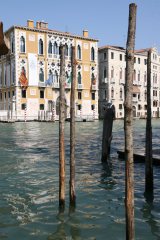 Palace
Palazzo Cavalli-Franchetti
180 m
Palace
Palazzo Cavalli-Franchetti
180 m
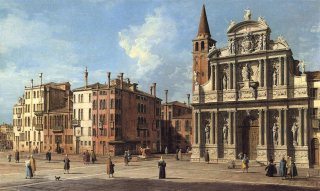 Church
Santa Maria del Giglio
219 m
Bridge
Accademia Bridge
220 m
Church
Santa Maria del Giglio
219 m
Bridge
Accademia Bridge
220 m
In the Dorsoduro sestiere