Scuola Grande dei Carmini Monument
A historic confraternity in Dorsoduro, famous for its interior decor and Tiepolo's paintings.
Scuola Grande dei Carmini, confraternity and Tiepolo
The Scuola Grande dei Carmini is located in Dorsoduro, a few steps from Campo Santa Margherita and right next to the church of Santa Maria dei Carmini. Behind a relatively sober facade hides one of the richest decorative ensembles in the district. It is also an excellent place to understand an essential aspect of Venetian society: the role of confraternities in the religious, social, and artistic life of the Republic.
In Venice, a scuola was not a school in the modern sense, but a lay confraternity. Its members gathered around a common devotion, participated in religious ceremonies, organized mutual aid actions, and provided assistance to sick or struggling confreres. These institutions had their own rules, financial resources, and sometimes considerable patrimony; they thus became important patrons for Venetian architects, painters, and sculptors.
The Carmini confraternity was founded in 1594 around devotion to the Virgin of Carmel and the cult of the scapular. It was officially recognized by the Council of Ten in 1597 as a Scuola Piccola. Its rapid development soon led to the construction of an independent seat, directly adjacent to the church of the Carmelites.
The design of the current building was approved in 1627 according to the plans of Francesco Caustello, architect attached to the Procurators of Saint Mark. The complex was gradually enlarged and completed in its main lines in 1670. In the following decades, the interior spaces gained even more monumentality: the layout of the grand staircase is notably attributed to Baldassare Longhena, with a realization probably carried out by his pupil Antonio Gaspari.
The visit thus reveals a succession of rooms where carved woodwork, white and gilded stuccoes, coffered ceilings, and large paintings compose a decoration much more sumptuous than the exterior suggests. The very organization of the building reflects the confraternity’s hierarchy: chapel, chapter room, archives room, Albergo room reserved for its leaders, and treasure room accompanied its various religious and administrative functions.
The grand spectacle of Tiepolo
It was only in 1767 that the confraternity officially obtained the prestigious rank of Scuola Grande. It was thus the last to receive this status before the fall of the Republic in 1797, when it was the most recent of the eight Scuole Grandi then existing. Suppressed in 1807 by the Napoleonic decrees, it was subsequently reconstituted and continues its confraternal existence to this day.
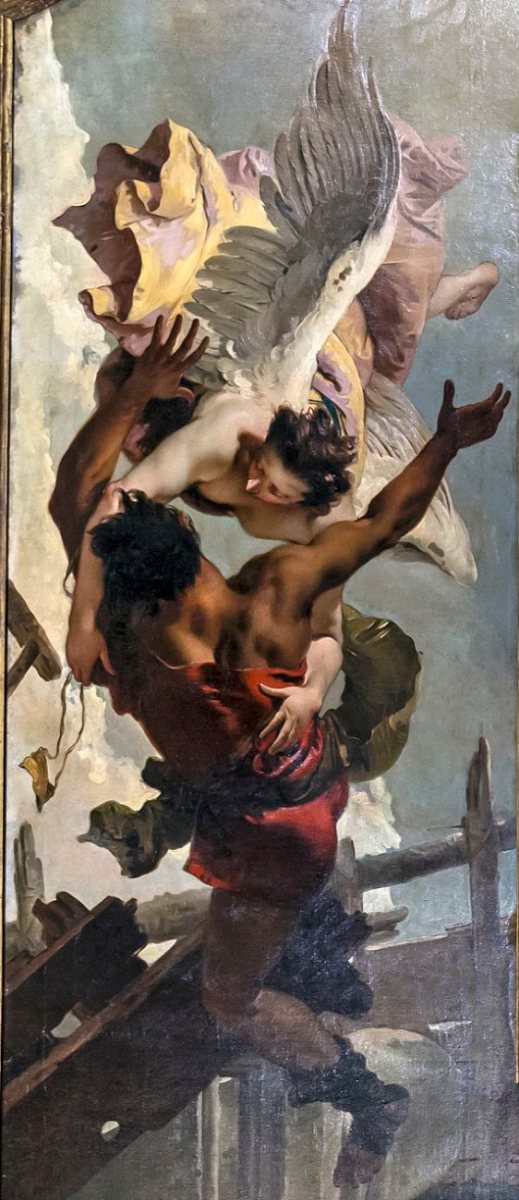
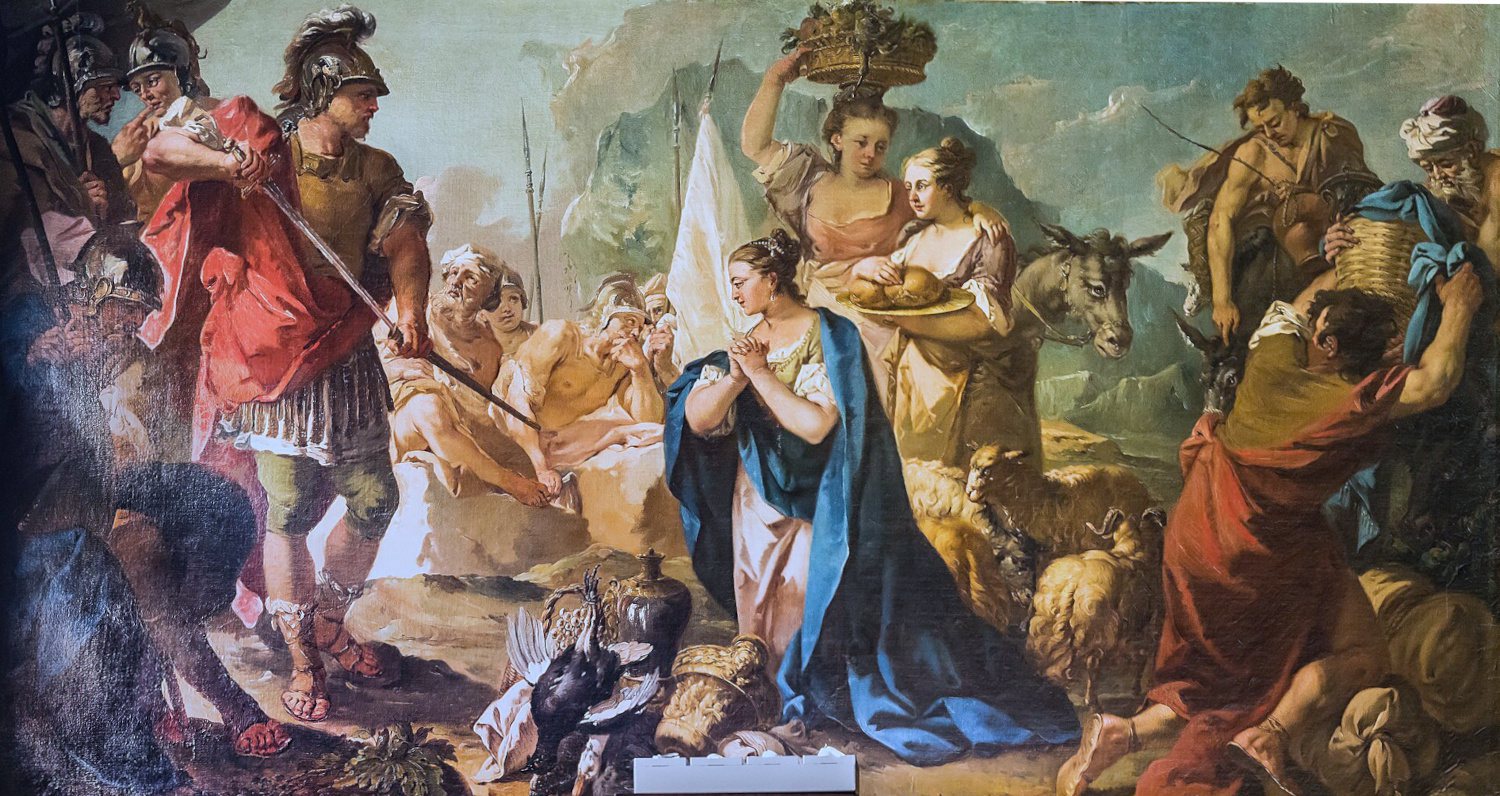
The highlight of the visit is the Chapter Room, whose ceiling was decorated by Giambattista Tiepolo between 1739 and 1749. There, the painter developed a set of nine large canvases dedicated to the Virgin of Carmel and the scapular. Foreshortened figures, luminous clouds, and illusionistic openings give the impression that the ceiling disappears to make way for the sky, a technique at which Tiepolo particularly excelled.
The cycle, however, is only part of the scuola’s artistic heritage. In the Albergo room, Padovanino’s Assumption of the Virgin occupies the center of the ceiling. The Archive Room notably preserves woodwork attributed to Giacomo Piazzetta and a spectacular Judith and Holofernes by Giambattista Piazzetta, while other rooms bring together works by Sante Piatti, Antonio Balestra, Gaetano Zompini, or Giustino Menescardi.
The decorations should not, therefore, be seen as a simple accumulation of prestigious works. They formed a true program: the Virgin of Carmel, the Christian virtues, the biblical figures, and the scapular reminded members of their common identity and simultaneously affirmed the confraternity’s rank in Venetian society. In Venice, charity and devotion also knew how to speak the language of marble, gilding, and great painting.
Less frequented than the great museums of Dorsoduro, the Scuola Grande dei Carmini offers a relatively concentrated visit in a highly coherent ensemble. It particularly complements the discovery of the nearby church and Campo Santa Margherita: in a few rooms, one moves from the Venice of confraternities to one of the great pictorial cycles of the 18th century.
Sources and further information
- Scuola Grande dei Carmini - History - official website.
- Scuola Grande dei Carmini - The building - official website.
- Scuola Grande dei Carmini - Chapter Room - official website.
- Venezia Unica - Scuola Grande dei Carmini.
Map and route
Near the Scuola Grande dei Carmini and places in the district
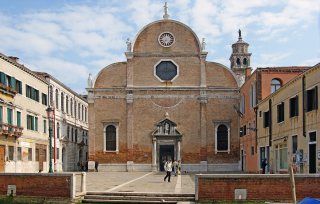 Church
 of Santa Maria dei Carmini
21 m
Church
Church of Santa Maria dei Carmini
21 m
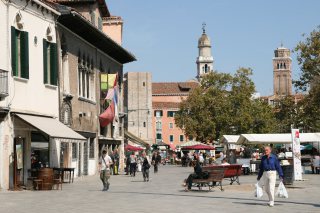 Square
Campo Santa Margherita
141 m
Square
Campo Santa Margherita
141 m
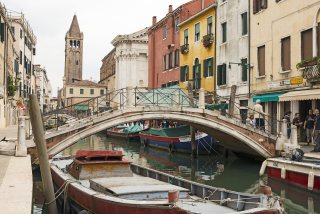 Square
Campo San Barnaba and Ponte dei Pugni
235 m
Square
Campo San Barnaba and Ponte dei Pugni
235 m
 Church
San Sebastiano Church
260 m
Church
San Sebastiano Church
260 m
In the Dorsoduro sestiere