San Sebastiano Church Church
A Dorsoduro church profoundly marked by Paolo Veronese, who painted there an exceptional decorative ensemble emblematic of the Renaissance.
San Sebastiano, Veronese's Church
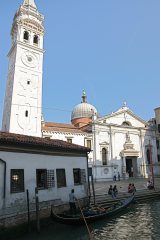
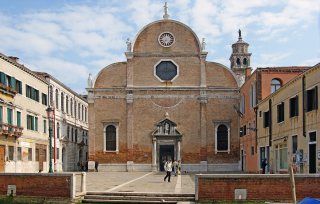
The San Sebastiano Church is located in the western part of Dorsoduro, not far from the Zattere quays and away from the most frequented routes. This relatively quiet position reinforces the element of surprise: behind a fairly sober Renaissance facade hides one of the most coherent and personal pictorial ensembles of 16th-century Venetian art.
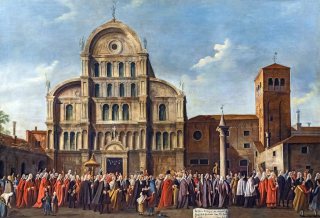
A first church was founded here in 1396 by the hermits of Saint Jerome. The current building took shape from 1506 under the direction of Antonio Abbondi, known as Scarpagnino. It adopts a single nave preceded by a vestibule, extended by a raised choir and a presbytery covered with a dome: a relatively simple architecture that would offer painting an exceptional field.
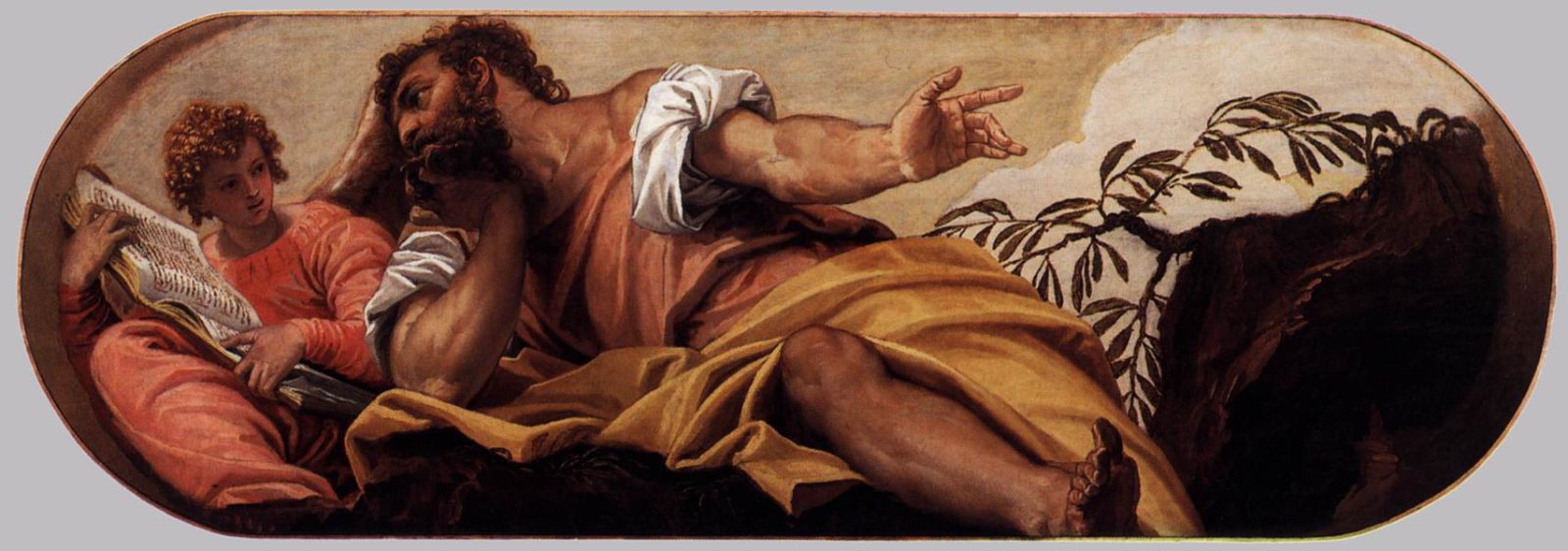
For San Sebastiano is above all the church of Paolo Veronese. The painter worked there for about fifteen years, from 1555 to around 1570, intervening successively in the sacristy, the nave, the monks' choir, the organ and the presbytery. He did not just place a few paintings there: he participated in the design of an overall decoration where painting, real architecture and illusionist architecture respond to each other.
A decoration designed as a whole
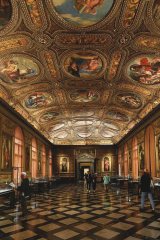
The first campaign began in 1555 in the sacristy, before continuing with the large compositions of the nave ceiling devoted to the Book of Esther. Veronese notably depicts the Coronation of Esther and the Triumph of Mordecai in vast scenes animated with characters, architectures and horses, designed to be viewed from the ground.
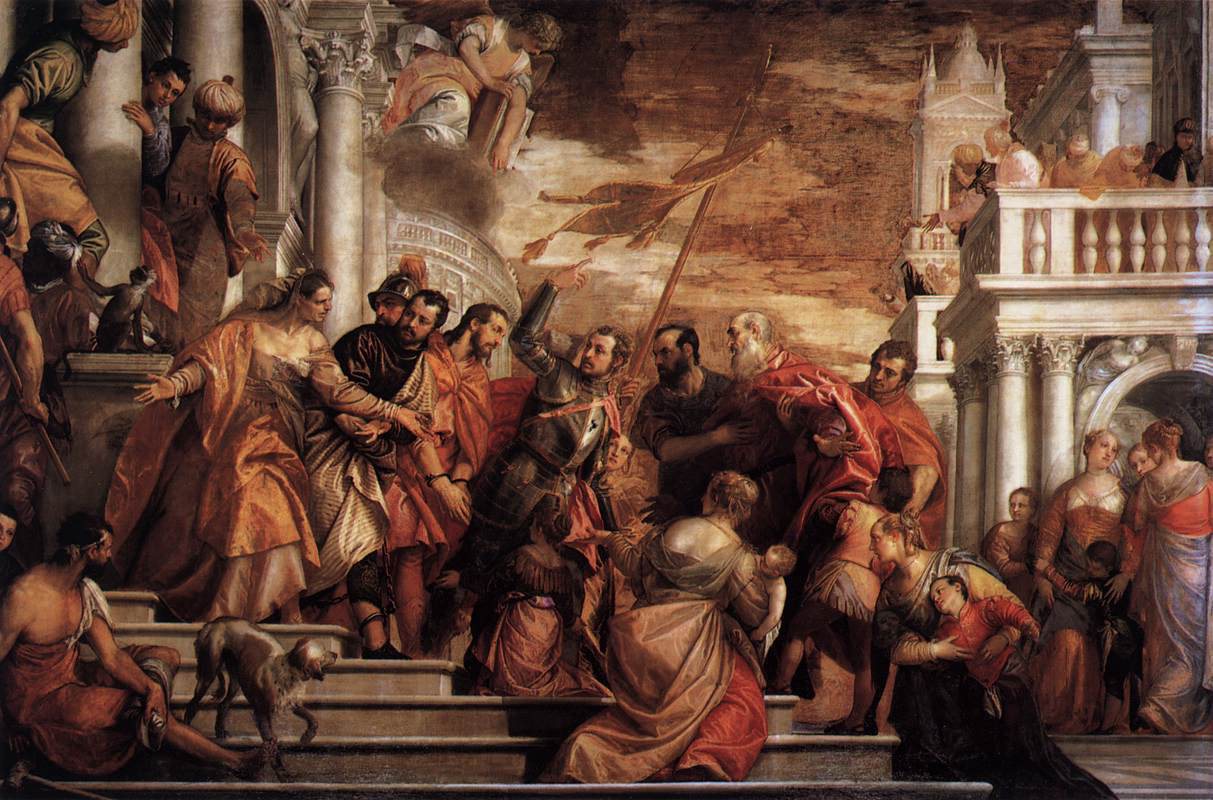
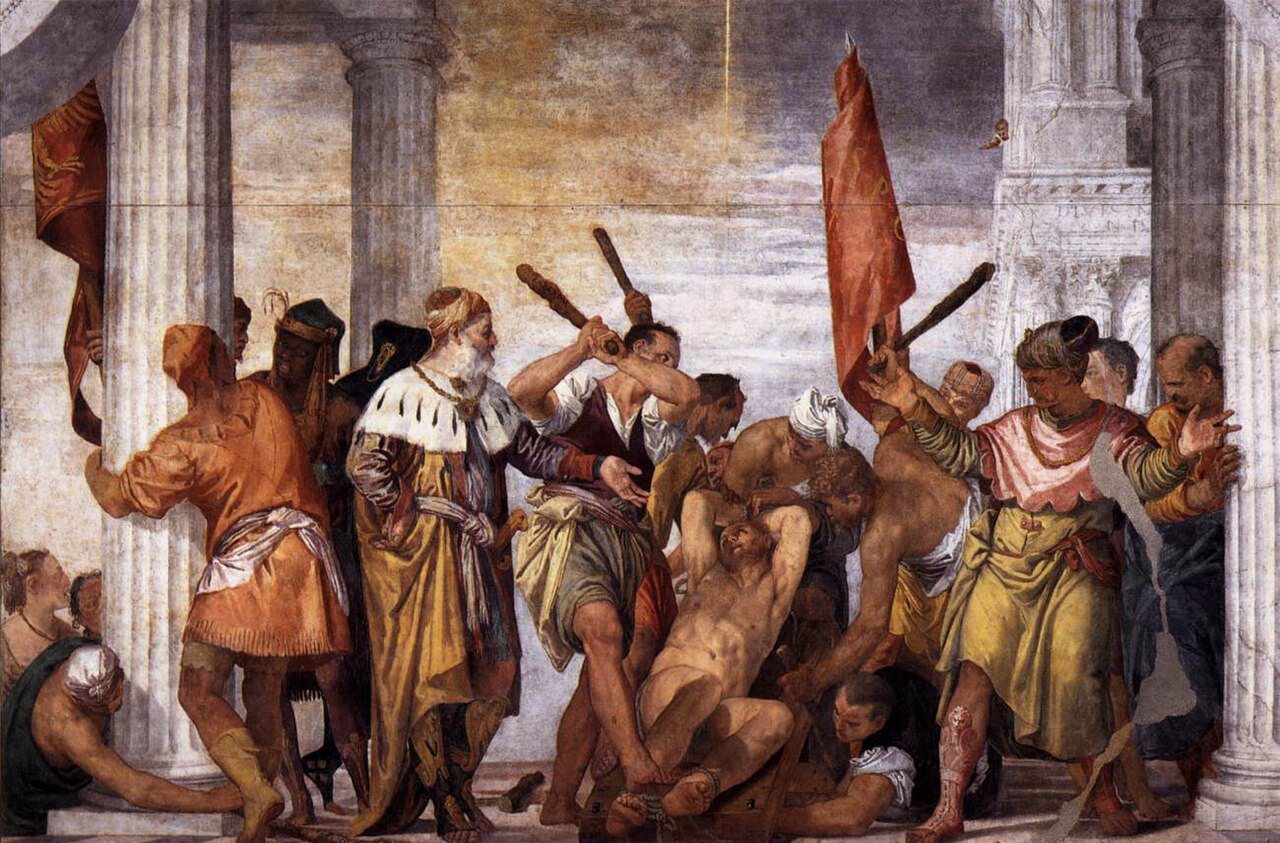
From 1558, he developed the decoration of the upper parts of the nave and the monks' choir, where prophets, Church Fathers and episodes from the life of Saint Sebastian appear. He also worked on the organ and its painted shutters. In the 1560s, his work finally reached the presbytery with the great altarpiece of the Virgin in Glory with Saint Sebastian and Other Saints, as well as the large scenes of the saint's martyrdom.
This concentration allows you to discover Veronese in a different way than in a museum. The works were designed according to their height, light, volumes and the viewer's movements. False architectural elements, painted columns, foreshortenings and perspectives extend the real space; some figures even seem to occupy an intermediate architecture between the wall and the painting.
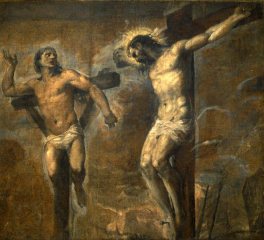
The church is not limited to Veronese, however. It also preserves works by Titian, Tintoretto, Paris Bordone, Jacopo Sansovino, Palma il Giovane and Alessandro Vittoria. But their presence almost highlights by contrast the exceptional unity of the main programme, which makes San Sebastiano one of the best places to understand Venetian decorative painting of the Renaissance in its original context.
The visit therefore deserves more than a quick glance. You must look successively at the ceiling, the walls, the organ and the presbytery to understand how the decoration accompanies the architecture and gradually transforms the interior. This is precisely what distinguishes San Sebastiano: the paintings do not form a collection of pieces merely gathered together, but the different parts of a programme designed for the place.
In a peaceful area of Dorsoduro, San Sebastiano thus offers a fairly rare experience in Venice: entering a building whose visual identity was shaped to a considerable extent by a great Renaissance painter, then finding his tomb a few metres away. For anyone interested in Veronese or in how art actually functioned in a 16th-century Venetian church, the visit is particularly revealing.
Sources and further information
- Chorus Venezia - Church of San Sebastiano - history, architecture and works of the church.
- Save Venice - Church of San Sebastiano - restoration programme of the church and Veronese's cycle.
- Venezia Unica - San Sebastiano and Dorsoduro - official tourist presentation.
Map and route
Near the San Sebastiano Church and places in the district
In the Dorsoduro sestiere


Nearby places to stay
Sur le même thème