Gallerie dell'Accademia Museum
The great museum of Venetian painting, housed near the Accademia Bridge in the former complex of Santa Maria della Carità.
Gallerie dell'Accademia, Venetian painting in Venice
The Gallerie dell'Accademia occupy a major place in Dorsoduro, along the Grand Canal and at the end of the Accademia Bridge. The museum is housed in the former complex of Santa Maria della Carità, which brings together the former church, the convent of the Lateran canons and the spaces of the Scuola Grande della Carità.
It is above all the essential museum for understanding Venetian and Veneto painting, from the 14th to the 18th century. Its collections allow visitors to follow the evolution of an artistic tradition that gave a special place to color, light, portraiture, vast narrative compositions and, later, to views of Venice.
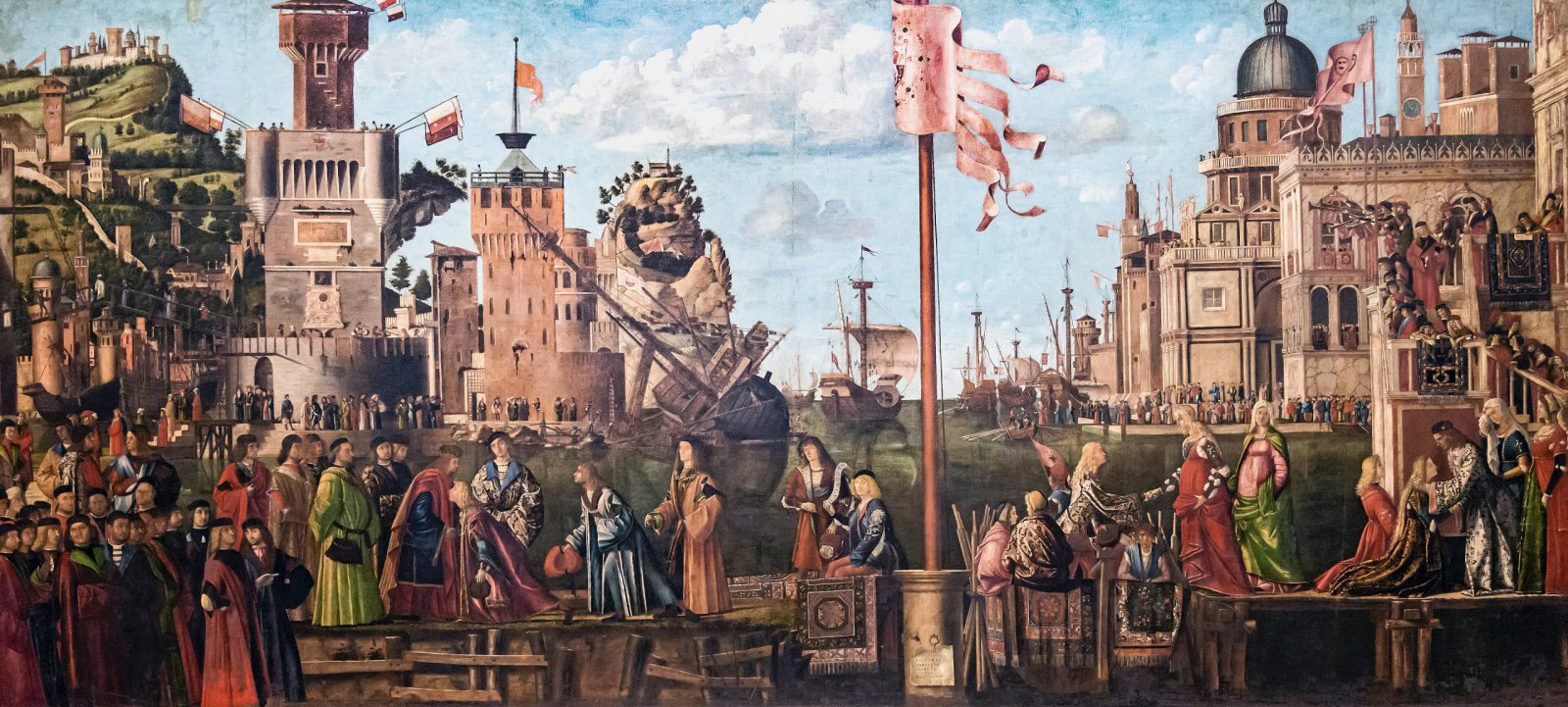
Incontro e partenza dei fidanzati, Vittore Carpaccio (1495-1500), via Wikimedia Commons
A museum born from the Academy of Fine Arts
The history of the museum is directly linked to that of the Academy of Fine Arts of Venice. The Carità complex was assigned to it under the Napoleonic Kingdom of Italy in 1807. The initial collections formed for teaching were then supplemented by numerous paintings, notably from churches, convents and confraternities suppressed at the beginning of the 19th century.
The Gallerie opened to the public in 1817. The collections then continued to grow through acquisitions, donations and the arrival of works from former Venetian buildings. In 1879, the museum was separated from the direct supervision of the Academy of Fine Arts, beginning its history as an autonomous museum institution.
From Bellini to Guardi, several centuries of Venetian painting
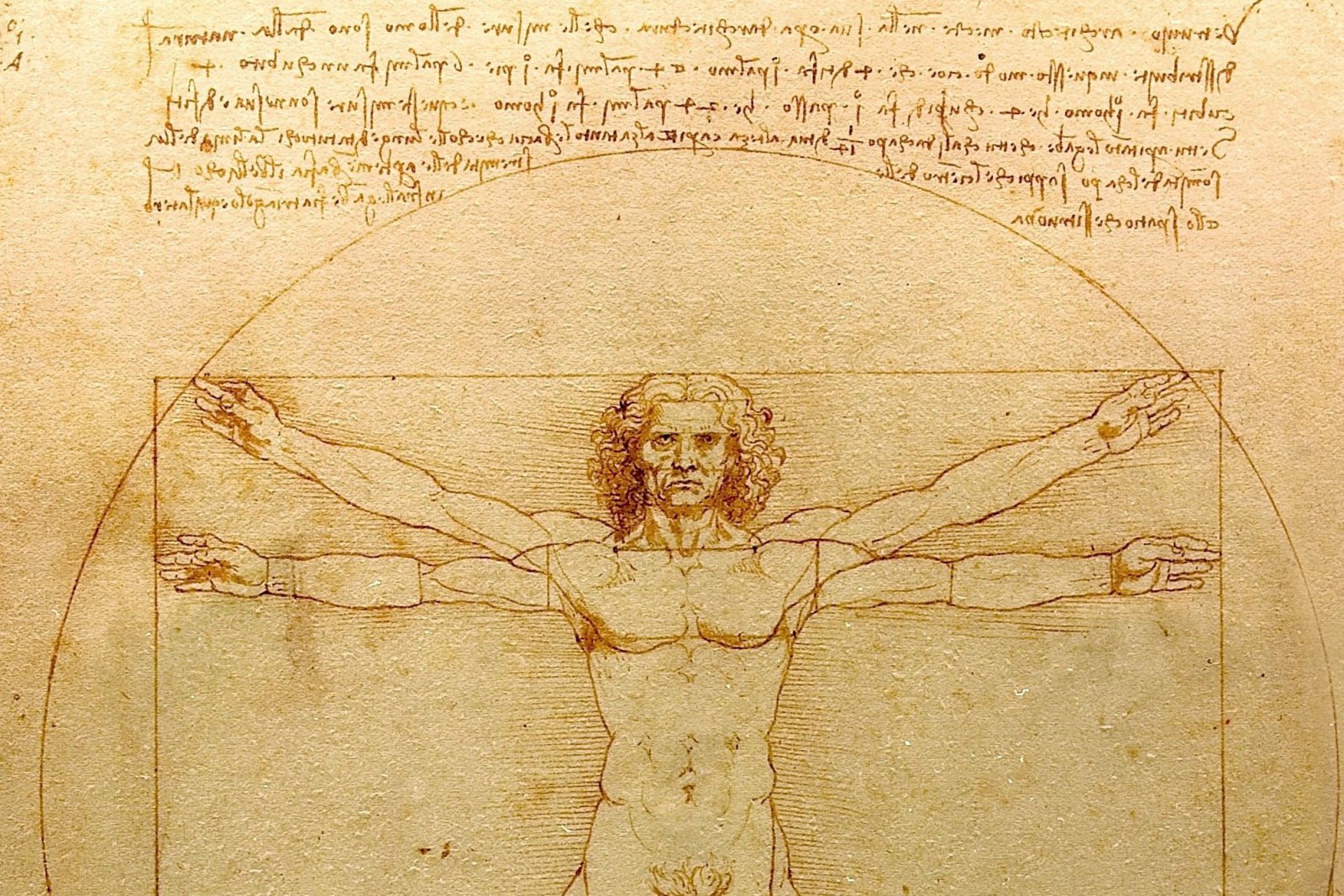
The Gallerie keep the famous Vitruvian Man by Leonardo da Vinci, a drawing made around 1490 to study the ideal proportions of the human body. Because of its fragility and sensitivity to light, this work on paper is only exhibited on exceptional occasions.
The route brings together an exceptional collection of works by Giovanni Bellini, Giorgione, Carpaccio, Titian, Tintoretto, Veronese, Tiepolo, Canaletto or Guardi. Among the most famous pieces are The Tempest by Giorgione, the last Pietà by Titian, the monumental Feast in the House of Levi by Veronese and the cycle of the legend of Saint Ursula painted by Carpaccio.
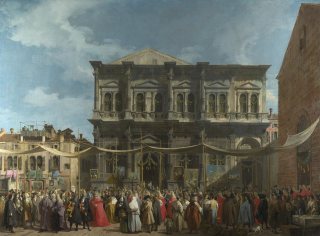
These paintings do not only tell the history of painting. Altarpieces, portraits, processions, miracles, large scenes intended for the scuole and vedute of the 18th century also show how Venice represented itself. The architectures, costumes, ceremonies and sometimes the city itself thus become a particularly rich source on the society and the imagination of the Republic.
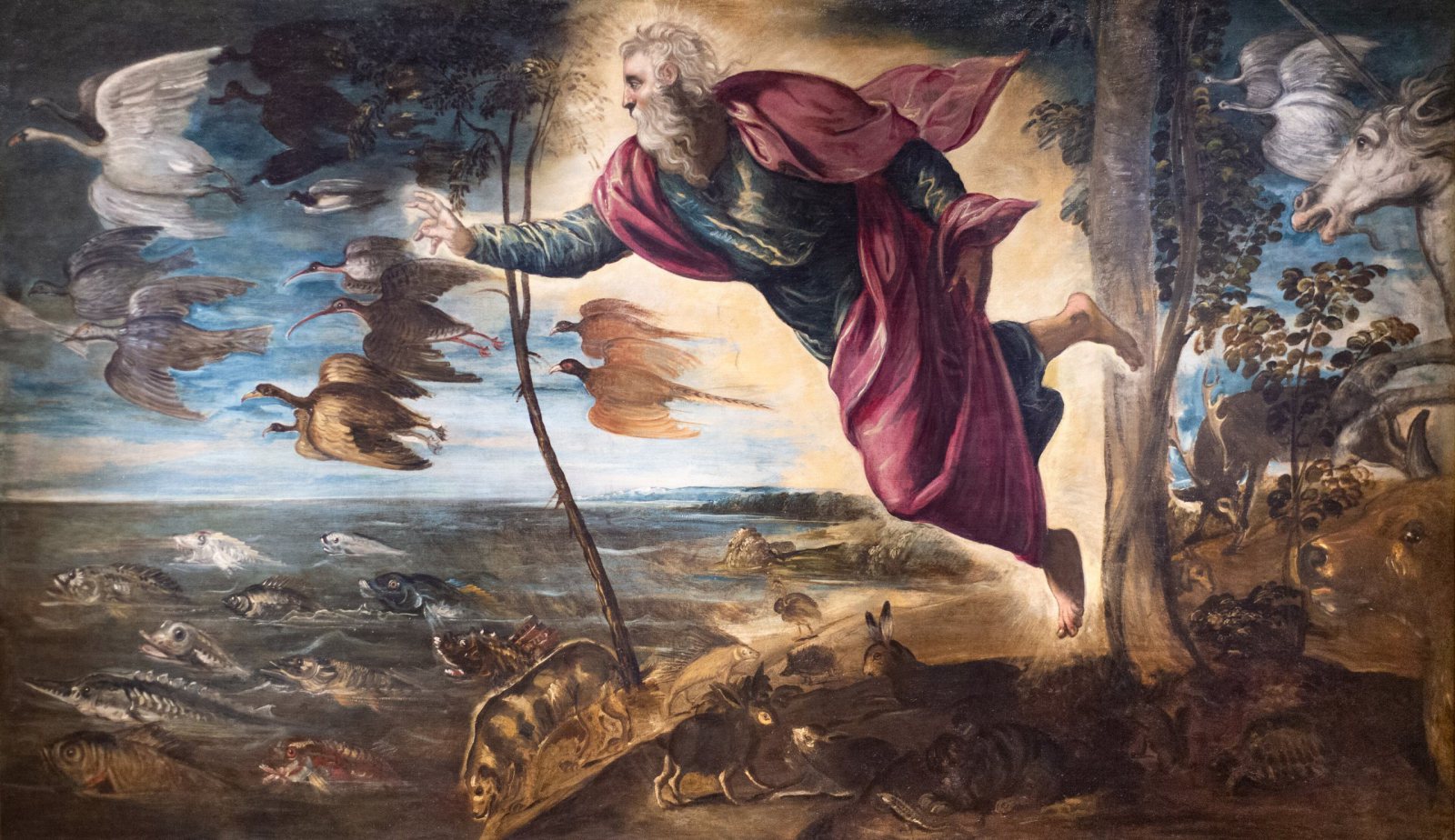
Creation of the Animals, Jacopo Tintoretto (1562)
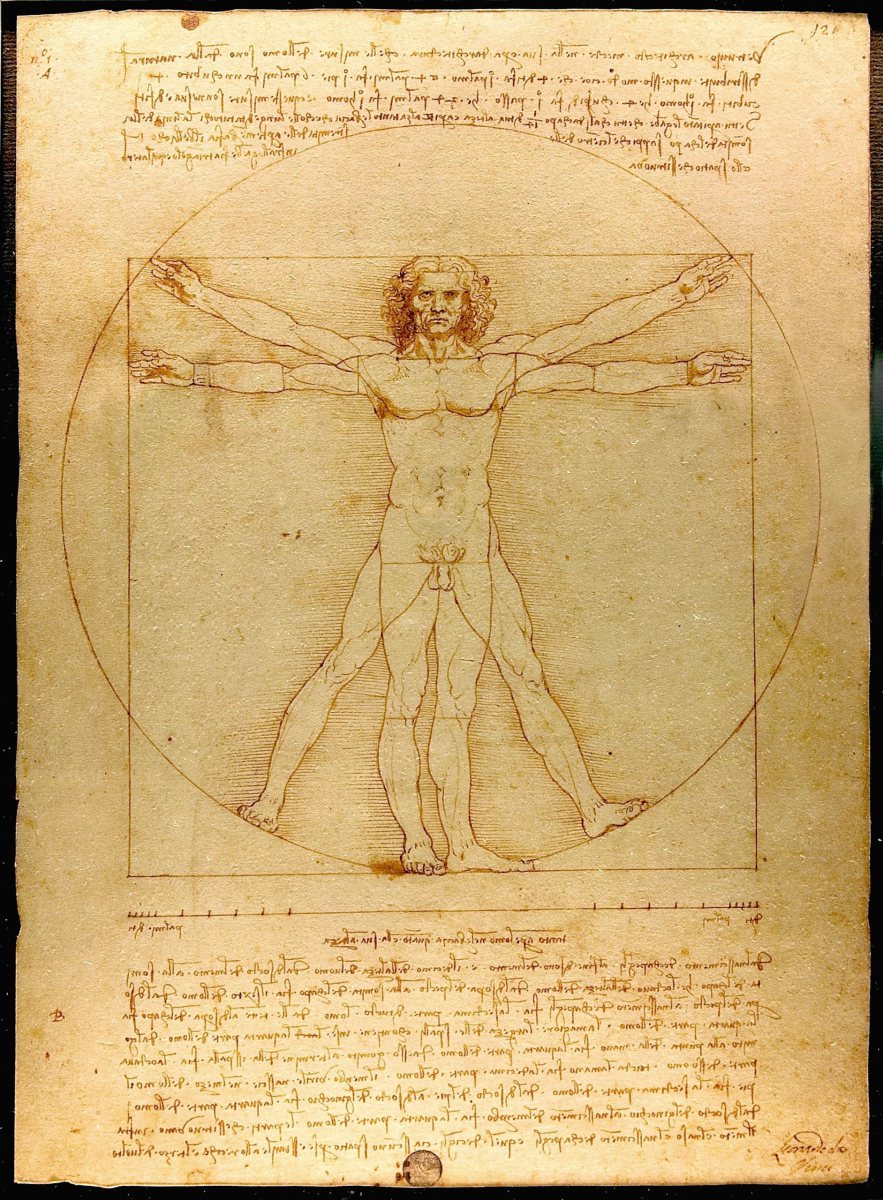
Vitruvian Man (Leonardo da Vinci, Wikipedia Commons)

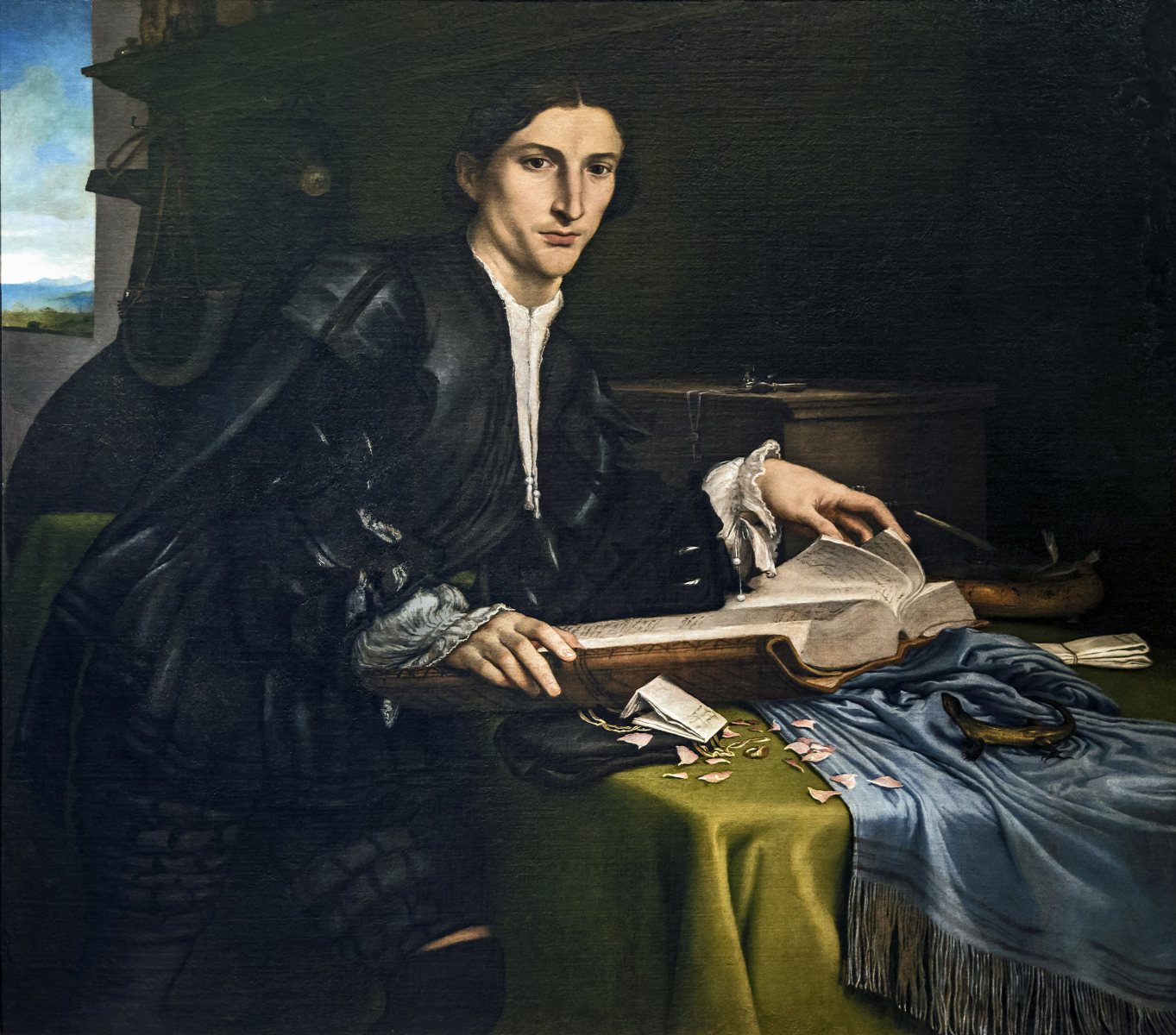
Ritratto di giovane gentiluomo nel suo studio - Lorenzo Lotto, 1527
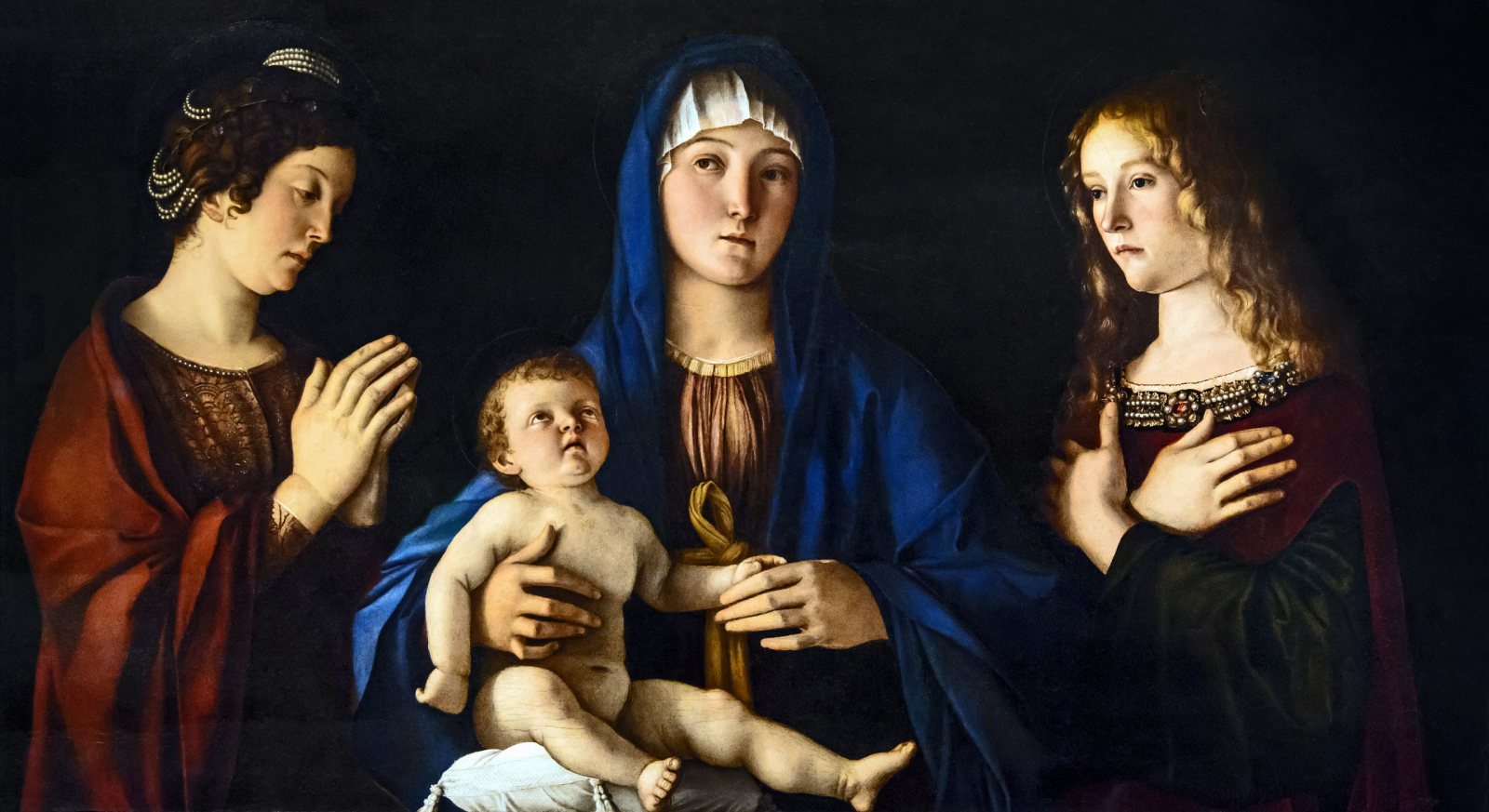
Madonna con Bambino tra le sante Caterina e Maria Maddalena, Giovanni Bellini, 1490 ca
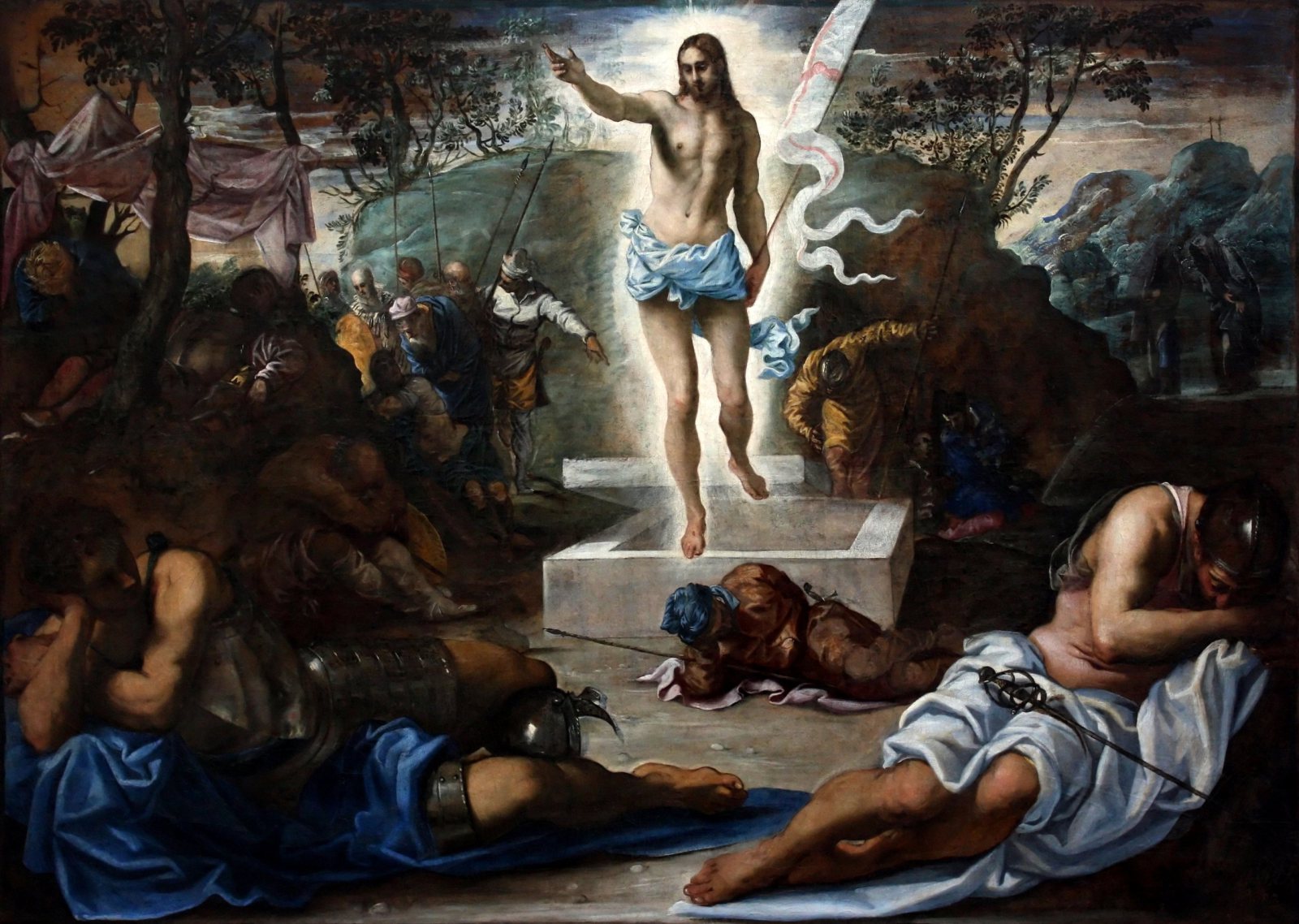
The Resurrection (Jacopo Tintoretto, via Wikimedia Commons)

Incontro e partenza dei fidanzati, Vittore Carpaccio (1495-1500), via Wikimedia Commons
A collection inseparable from its setting
The visit also owes part of its interest to the buildings that house it. Some rooms occupy the former spaces of the Scuola della Carità, while the complex preserves Gothic elements and layouts from several architectural campaigns. The former convent notably includes spaces designed in the 16th century by Andrea Palladio, long used by the Academy before being integrated into the museum route.
The richness of the collections makes an exhaustive visit difficult in a short time. For a first discovery, it is more profitable to follow a few major groups: the Bellini and the Venetian Renaissance, the immense narrative compositions of Carpaccio, Tintoretto and Veronese, then 18th-century painting and the views of Canaletto and Guardi. One then understands how the painters contributed, over several centuries, to building the image that Venice gave of itself.
Sources and additional information
- Gallerie dell'Accademia - Il Museo - history of the museum and the Carità complex.
- Gallerie dell'Accademia - Collections - official website and presentation of the collections.
- Gallerie dell'Accademia - Vitruvian Man - official record of the work.
- Ministero della Cultura - Gallerie dell'Accademia di Venezia - institutional presentation.
Map and route
Near the Gallerie dell'Accademia and places in the district
 Palace
Palazzo Cavalli-Franchetti
135 m
Street / Area
Zattere Quays
145 m
Museum
Loredan Cini Palace
145 m
Palace
Palazzo Cavalli-Franchetti
135 m
Street / Area
Zattere Quays
145 m
Museum
Loredan Cini Palace
145 m
In the Dorsoduro sestiere


Nearby places to stay
Sur le même thème