Beyond the historic center, the Venice Lagoon is home to a string of islands and shores with their own identity: glassmaking in Murano, lace and colorful houses in Burano, Byzantine remains in Torcello, beaches of the Lido... So many getaways accessible by vaporetto to extend your discovery of Venice.
The Venice Lagoon stretches over about 550 km2 between the mouth of the Sile and that of the Brenta, protected from the Adriatic by the long coastal strips of the Lido and Pellestrina. This landscape of shallow water, mudflats (barene) and marked channels hides a constellation of islands inhabited since Antiquity or the Middle Ages, each with its own history, trades and atmosphere, very different from the bustle of the historic center.
Murano
Famous worldwide for its glass craftsmanship, Murano has concentrated the furnaces of master glassmakers since the 13th century, moved here to move fire risks away from Venice. You can visit the workshop-shops along the Rio dei Vetrai, the Glass Museum housed in the Palazzo Giustinian, and the church of Santa Maria e San Donato with its Byzantine apse and 12th-century mosaic floor.
Burano
Burano is known for its brightly painted fishermen's houses, traditionally chosen so that everyone could spot their home from the lagoon in foggy weather. The island also long lived from needle lace, whose history is told at the Museo del Merletto. The leaning bell tower of the church of San Martino is another familiar landmark of the island.
Torcello
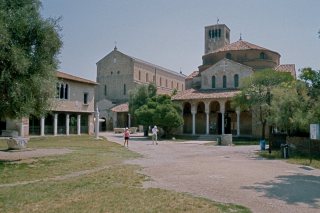
Almost deserted today, Torcello was one of the earliest settlement centers of the lagoon, even before the rise of Venice. It preserves the cathedral of Santa Maria Assunta, founded in the 7th century, adorned with some of the oldest Byzantine mosaics in the region, as well as the church of Santa Fosca and the seat known as 'Attila's Throne'.
Lido di Venezia
A sandy cordon that separates the lagoon from the Adriatic, Lido di Venezia is home to the city's beaches, its beach establishments and the Mostra, the international film festival held there every year. Cycling is very common there, a rarity in the Venetian conurbation, along avenues lined with Art Nouveau villas.
Sant'Erasmo
Nicknamed the vegetable garden of Venice, Sant'Erasmo is the largest agricultural island in the lagoon, renowned for its violet artichokes (i castraure). Little frequented by tourism, it offers long walks on foot or by bike among vineyards and market gardens.
San Francesco del Deserto
A small monastery island occupied by Franciscan friars since the 13th century, San Francesco del Deserto is accessible by private boat from Burano or Sant'Erasmo. Its cloister planted with cypresses and its silence make it a contemplative stop, away from the usual circuits.
San Michele
The first island one encounters when leaving Venice towards the north, San Michele has been the city's cemetery since the beginning of the 19th century, surrounded by high brick walls. You can visit the church of San Michele in Isola, the first Renaissance building in Venice, and the graves of several famous artists.
San Lazzaro degli Armeni
The island of San Lazzaro degli Armeni has housed since the 18th century a monastery of Armenian Mekhitarist fathers, endowed with a rich library and a polyglot printing house. Lord Byron stayed there to study Armenian, leaving a lasting trace in the memory of the place.
Zones liées