Nicknamed the vegetable garden of Venice, Sant'Erasmo is the largest agricultural island in the lagoon, known for its purple artichokes and appreciated for its long walks on foot or by bike.
Sant'Erasmo, the vegetable garden of Venice
Little known to hurried visitors, Sant'Erasmo is one of the largest islands in the lagoon and the largest in its northern part. Away from the highly urbanised landscapes of Venice, Murano or Burano, it presents an almost rural face: cultivated fields, vegetable gardens, orchards and vines still occupy a large part of its territory. This agricultural vocation has long earned it the nicknames of Orto di Venezia, the vegetable garden of Venice.
Agriculture shapes both the landscape and history here. As early as the end of the 16th century, Francesco Sansovino described Sant'Erasmo as an island rich in vegetable gardens and vineyards supplying Venice in abundance. For centuries, vegetables and fruits were loaded onto boats to reach the Rialto markets in particular. This function remains clearly visible today, even if the farms are fewer and the permanent population of the island remains limited.
The emblematic speciality of Sant'Erasmo is the carciofo violetto, the purple artichoke grown on the salty soils of the lagoon. The most sought-after are the castraure: the first bud produced by each plant, cut in spring to favour the development of the following artichokes. Small, tender and slightly bitter, they are eaten raw, fried or prepared according to several Venetian recipes and constitute one of the most characteristic agricultural products of the lagoon.
The vine has also regained a visible place on the island. Several plots have been replanted or restored over the past few decades, reviving an ancient winemaking tradition. Sant'Erasmo thus remains a productive territory rather than a rural landscape maintained only for its appearance.
Another way to discover the lagoon
The island is particularly well suited to walking and especially to cycling. The roads and paths cross the crops, sometimes run alongside the shallow waters and open views onto the barene, these low-lying lands characteristic of the lagoon. The contrast with the historic centre is radical: here, few monuments, but long perspectives, scattered farms and a much more direct relationship between land and water.
Places to discover in and around Sant'Erasmo
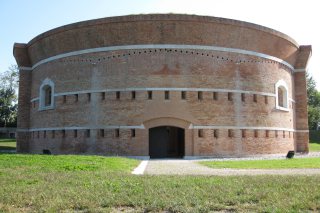
- Torre Massimiliana: circular Austrian fortification built in 1843-1844, restored and now used in particular for exhibitions and cultural events.
- The islet of Lazzaretto Nuovo: located near Sant'Erasmo, this former quarantine establishment today houses an ecomuseum, archaeological evidence and a trail dedicated to the health and natural history of the lagoon.
The fields and vineyards of Sant'Erasmo
Nicknamed Orto di Venezia, the “vegetable garden of Venice”, Sant'Erasmo unfolds over a large part of its surface an open agricultural landscape, made up of market gardens, artichoke crops, vines and orchards. This rural environment, unusual just a few kilometres from the historic centre, is one of the main reasons for exploring the island on foot or by bike.
The vine, cultivated for a long time in the lagoon, is also experiencing a resurgence of interest. The restoration of ancient grape varieties such as Dorona has for several decades contributed to the wine revival of the Venetian islands, particularly on Sant'Erasmo and Mazzorbo.
Visit: the island's roads and paths allow you to freely explore the agricultural areas on foot or by bike and observe vegetable gardens, vineyards and farms still in operation.
Bacàn beach
On the eastern part of Sant'Erasmo, near the Torre Massimiliana, Bacàn forms a small sandy beach very different from the beach establishments of the Lido. It makes a pleasant stop at the end of a bike ride through the fields and remains traditionally frequented by Venetians on fine days.
Visit: free access; the site remains undeveloped and is more suited to a simple stop than a day at an equipped beach establishment.
Sources and further information
Venezia Unica - Sant'Erasmo ; Slow Food - Sant'Erasmo, artichauts et vignobles ; Comune di Venezia - Carciofo violetto di Sant'Erasmo ; Ecomuseo dei Lazzaretti Veneziani - Lazzaretto Nuovo.
Places in Sant'Erasmo and Lazzaretto
2 places in this district.
Sur le même thème