San Nicolò Street / Area
At the northern end of the Lido, a greener and older area, home to the church and former monastery of San Nicolò, the old Jewish cemetery, and a protected coastal nature area.
San Nicolò, the maritime memory of the Lido
At the northern end of the Lido di Venezia, facing the maritime entrance that connects the lagoon to the Adriatic, the San Nicolò area stands out from the beachfront of the island's center: greener, quieter, and above all charged with a much older history. Here you'll find the church and former monastery of San Nicolò, one of the oldest surviving Jewish cemeteries in Europe, as well as a protected natural area that extends the walk to the coastline.
Its interest lies in this layering, combining the memory of Venice's great maritime enterprises, the historical presence of the Jewish community, the rites that bound the Republic to the sea, and a preserved landscape.
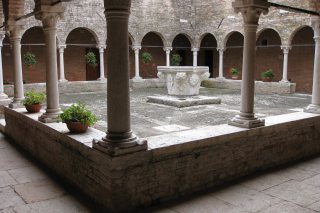
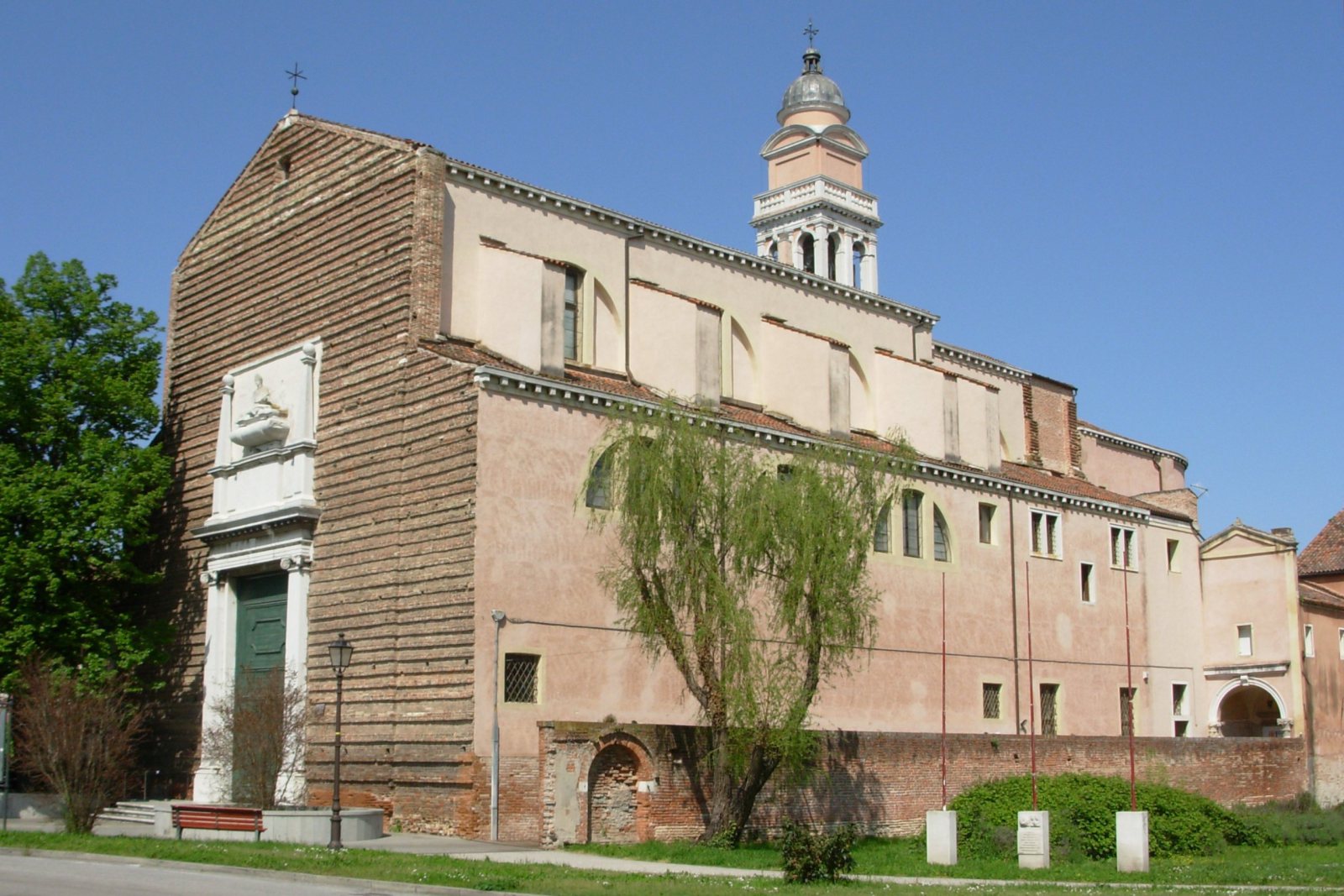
The church and former monastery of San Nicolò occupy a strategic location, close to one of Venice's main maritime gates. The complex took shape in the mid-11th century: the Benedictine monastery was founded around 1043 and the first church, consecrated in 1053, was about a hundred meters behind the current building. A few remnants of this early construction are still visible from the cloister.
San Nicolò was closely associated with the maritime vocation of the Republic. The troops of the Fourth Crusade gathered there before their departure in 1202, and the church kept a portion of the relics attributed to Saint Nicholas of Myra, brought back from the East around 1100. Patron of sailors, the saint was particularly well suited to this place where Venice looked out onto the Adriatic and the Mediterranean.
The current church was rebuilt in the 17th century, starting in 1626-1627. Austere on the outside, it has a vast single nave and preserves in particular a mosaic pavement, carved stalls dedicated to the life of Saint Nicholas, and paintings by Palma Vecchio and Palma Giovane. Its Baroque campanile was erected between 1626 and 1629. The monastery and its elegant cloister, remodeled during the Renaissance, were taken from the Benedictines in 1770; the site then passed under the responsibility of the Franciscans.
The old Jewish cemetery of the Lido, adjacent to the monastery, is another major element of the area. In 1386, the Republic granted the Jewish community a plot of land for burials; however, the monks of San Nicolò claimed ownership, and the dispute was only settled in 1389. The cemetery was then used without interruption and expanded until the 17th century, before being gradually reduced by the fortifications and then by the modern transformations of the Lido. A major restoration campaign begun in 1999 rescued and catalogued more than a thousand funerary monuments.
Beyond the monuments, San Nicolò also has a remarkable natural dimension. Its coastline belongs to the Natura 2000 site "Lido di Venezia: biotopi litoranei". Beach, dunes and coastal vegetation form a fragile environment where the Kentish plover nests in particular, becoming one of the emblematic species of the protected area. The area is now monitored by the City of Venice with LIPU.
Sources and further information
Visit Lido – Church and monastery of San Nicolò ; Venezia Unica – Festa della Sensa ; Comunità Ebraica di Venezia – old Jewish cemetery of the Lido ; Comune di Venezia – natural area of San Nicolò.
Map and route
On the island of Lido di Venezia

Nearby places to stay
Sur le même thème