Murano deserves far more than a simple stop to watch a glassblowing demonstration. The island retains a strong artisanal identity, remarkable religious heritage, and a history intimately linked to Venice's economic power. Between canals, old palaces, workshops, and churches, it offers a calmer and more industrious face of the lagoon. The visit above all allows one to understand how local craftsmanship became, over the centuries, one of Venice's most famous symbols.
Murano, the Island of Glass
Located about a kilometer north of Venice, Murano is not a single island but a group of small islets separated by canals and connected by bridges. Its appearance recalls that of Venice, in a more modest and more industrial version: low houses, quays lined with workshops, ancient churches, and a local Grand Canal running through the heart of the city.
Murano is world-famous for glassmaking. Its main streets today feature shops, glassblowing demonstrations, and objects of very variable quality, ranging from pieces created by great masters to mass-produced souvenirs. You therefore sometimes have to look beyond the flashiest storefronts to find the true Murano tradition.
The master glassmakers enjoyed a privileged status, but their skills were closely monitored by the Republic. Their families gradually formed a local elite, while manufacturing secrets were passed down within workshops. Murano thus became a small industrial town, with its own institutions, palaces, and an identity distinct from Venice.
From the 18th century onward, foreign competition and then the fall of the Republic in 1797 caused a serious crisis. Several convents, churches, gardens, and residences were abolished, transformed, or abandoned over the following decades. Glassmaking art, however, regained new vigor during the second half of the 19th century, before associating with modern design thanks to artists and houses such as Venini, Seguso, or Barovier & Toso.
Places to Discover in Murano
-
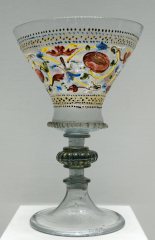
The Glass Museum: housed in the Palazzo Giustinian, the former residence of the bishops of Torcello, it traces more than a millennium of glassmaking history. Its collections include ancient pieces, Renaissance masterpieces, mirrors, beads, as well as modern and contemporary creations.
-
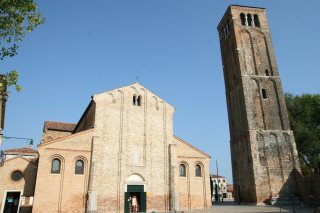
The Basilica of Santi Maria e Donato: largely rebuilt in the 12th century, it is the main historical and religious monument of Murano. Its Romanesque apse facing the canal, its remarkable mosaic pavement, and the great golden Virgin in the apse are among the lagoon's medieval treasures.
- The glass furnaces and workshops: several genuine Murano glassworks open their workshops to the public, usually by reservation. Some simply allow you to watch the masters working at the furnace, while others offer detailed tours or introductions to blowing, modeling, and murrine. For a more authentic experience, it is better to choose a known fornace and verify that production is actually carried out on the island.
-
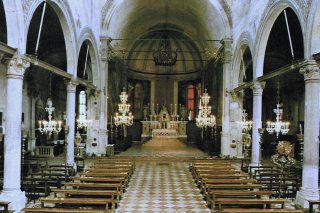
The Church of San Pietro Martire: rebuilt in the 16th century after a fire, it houses several works from Murano's vanished churches and convents. In particular, you can see paintings by Giovanni Bellini, Veronese, and the Tintoretto workshop.
-
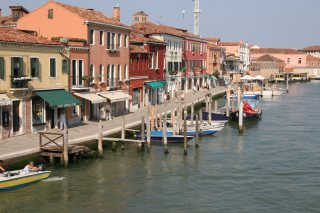
The Grand Canal of Murano: crossing the island and connecting its main areas, it is lined with quays, old glassmaking buildings, houses, and a few palaces. Traveling along it allows you to discover Murano's urban structure and a quieter atmosphere once you move away from the main landing stages.
-
The Palazzo da Mula: this Gothic residence with elegant carved windows reminds us that Murano was not just an island of furnaces and workshops. Venetian patrician families once owned vacation residences here surrounded by gardens.
-
The old Conterie: this important industrial complex testifies to the era when Murano produced glass beads on a large scale for international trade. The Società Veneziana Conterie, created at the end of the 19th century, employed several thousand people before its closure in 1993; part of the site has since been restored and repurposed.
-
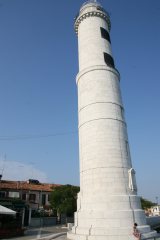
The Murano Lighthouse: rebuilt in stone in the 20th century, it stands near the Murano Faro vaporetto stop. Its white silhouette marks the island's eastern tip and recalls Murano's constant role in lagoon traffic.
Other Remarkable Places
-
Santa Maria degli Angeli: an ancient Renaissance church linked to an important convent of nuns, it retains a history closely associated with the great families of Murano. Its heritage interest is real, but public access is now very limited.
To buy an authentic piece, it is better to find out about the workshop, the creator, and the place of manufacture rather than relying solely on the mention "Murano style". True Murano glass remains a demanding artisanal production; a figurine sold for a few euros among magnets and keychains has probably had a less prestigious journey.
Places in Murano
9 places in this district.
 1
Museum
Glass Museum
Housed in the Palazzo Giustinian, the Glass Museum traces eight centuries of Murano's glassmaking history.
1
Museum
Glass Museum
Housed in the Palazzo Giustinian, the Glass Museum traces eight centuries of Murano's glassmaking history.
 2
Church
Basilica of Saint Mary and Saint Donatus
Romanesque-Byzantine church from the 12th century, famous for its apse and its extraordinary mosaic floor.
2
Church
Basilica of Saint Mary and Saint Donatus
Romanesque-Byzantine church from the 12th century, famous for its apse and its extraordinary mosaic floor.
 3
Attraction
Glass Furnaces and Workshops
Attending a glassblowing demonstration remains the unmissable experience of a visit to Murano.
3
Attraction
Glass Furnaces and Workshops
Attending a glassblowing demonstration remains the unmissable experience of a visit to Murano.
 4
Church
Church of San Pietro Martire
Dominican church housing several works by Giovanni Bellini and Veronese.
4
Church
Church of San Pietro Martire
Dominican church housing several works by Giovanni Bellini and Veronese.
 5
Street / Area
Grand Canal of Murano
Murano's main artery, lined with glass workshops and palaces, crossed by the Vivarini bridge.
6
Palace
Palazzo da Mula
One of the rare preserved Venetian Gothic palaces on Murano, now used as an exhibition venue.
7
Attraction
Ancient Conterie
Former Murano glass bead factory, one of the largest of its kind, repurposed since 2019 as a cultural venue dedicated to design an…
5
Street / Area
Grand Canal of Murano
Murano's main artery, lined with glass workshops and palaces, crossed by the Vivarini bridge.
6
Palace
Palazzo da Mula
One of the rare preserved Venetian Gothic palaces on Murano, now used as an exhibition venue.
7
Attraction
Ancient Conterie
Former Murano glass bead factory, one of the largest of its kind, repurposed since 2019 as a cultural venue dedicated to design an…
 8
Monument
Murano Lighthouse
At the northeastern tip of the island, this still-active lighthouse marks the entrance to the channel leading to Murano.
9
Church
Santa Maria degli Angeli Church
Ancient 12th-century conventual church in the west of Murano, which welcomed some of Venice's greatest noble families before becom…
8
Monument
Murano Lighthouse
At the northeastern tip of the island, this still-active lighthouse marks the entrance to the channel leading to Murano.
9
Church
Santa Maria degli Angeli Church
Ancient 12th-century conventual church in the west of Murano, which welcomed some of Venice's greatest noble families before becom…