Basilica of Saint Mary and Saint Donatus Church
Romanesque-Byzantine church from the 12th century, famous for its apse and its extraordinary mosaic floor.
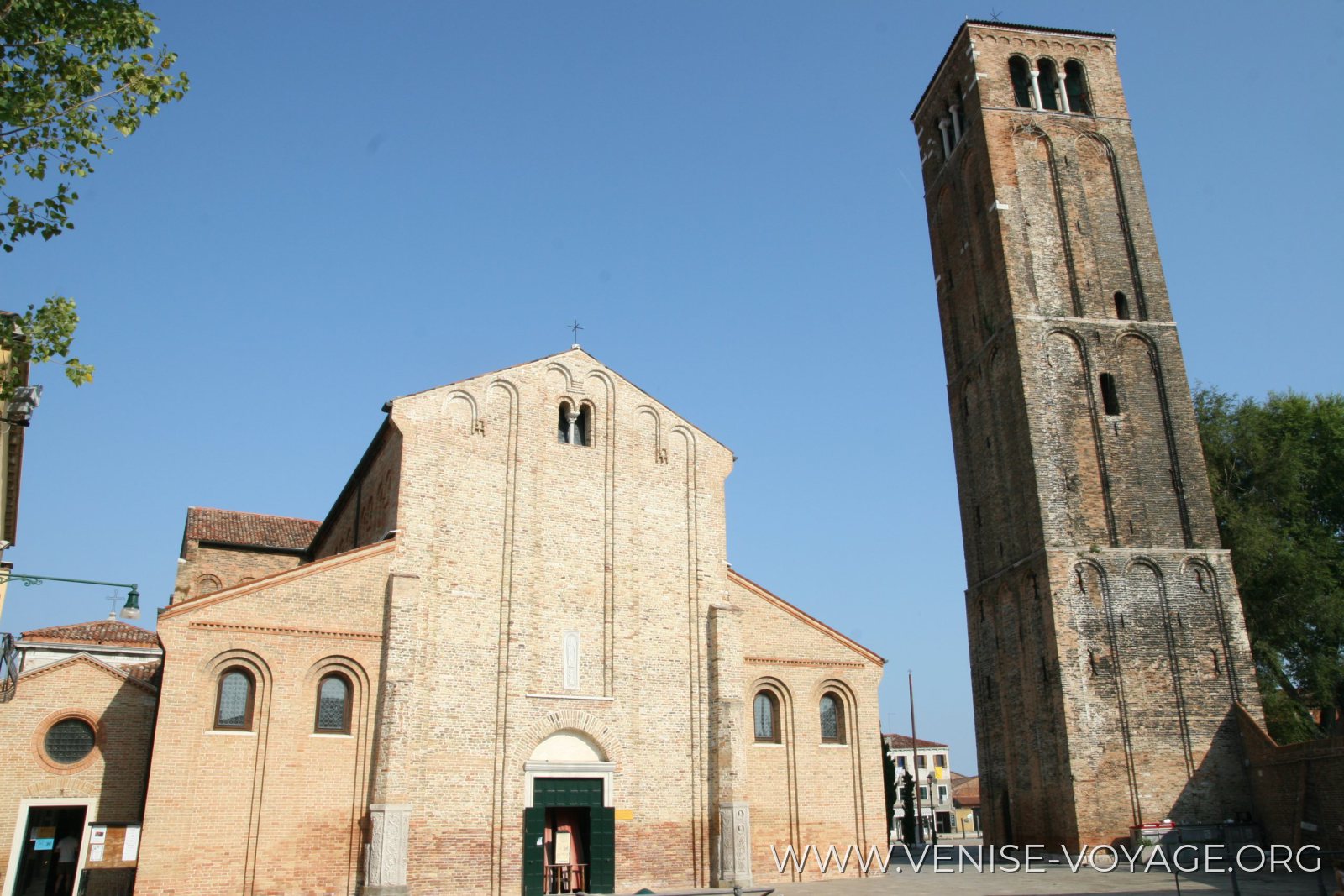
Saint Mary and Saint Donatus, Romanesque-Byzantine jewel of Murano
Among the oldest monuments of the lagoon, the Basilica of Santi Maria e Donato constitutes one of the main testimonies of medieval Murano. A first church is said to have existed here from the earliest centuries of lagoon settlement; the building was then extensively rebuilt in the 12th century, at a time when Venice was asserting its political, commercial and artistic ties with the Byzantine world.
Originally dedicated to the Virgin, the church received its double dedication after the arrival in 1125 of the relics of Saint Donatus, brought back from Cephalonia following the expedition led to the East by Doge Domenico Michiel. The subsequent reconstruction gave the basilica most of its current character, at the crossroads of Western Romanesque traditions and Byzantine art.
Duomo di Murano
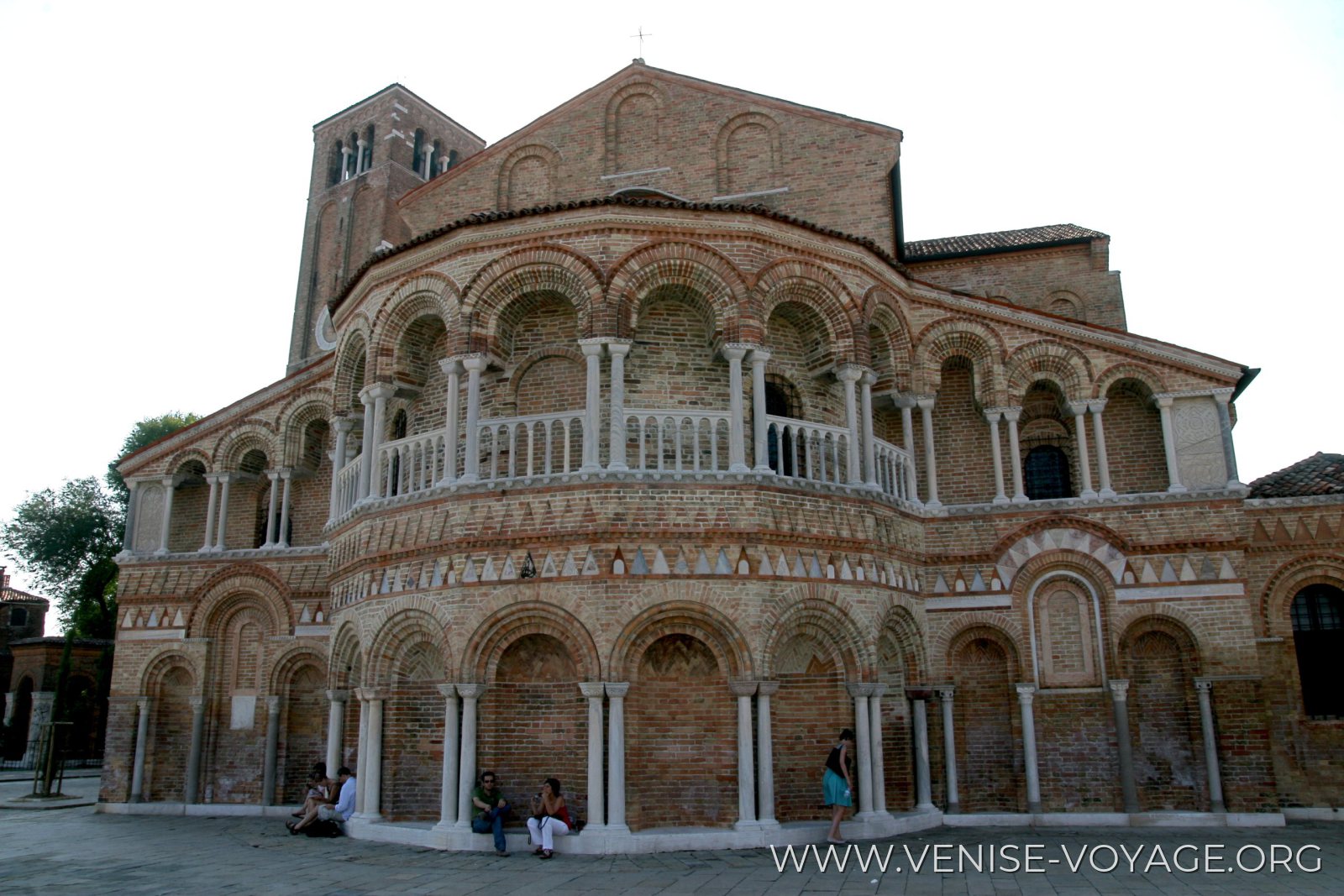
Apse of the Murano cathedral
An apse among the most remarkable in the lagoon
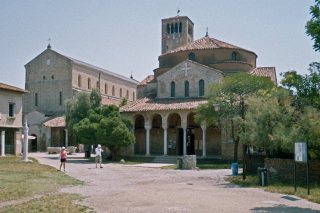
From the outside, it is above all the east end facing the canal that draws attention. The polygonal apse is enlivened by two levels of arcades, niches, marble columns and geometric friezes playing on the contrast between red brick and light stone. This eastern façade, much richer than the western entrance, has become the most characteristic image of the church.
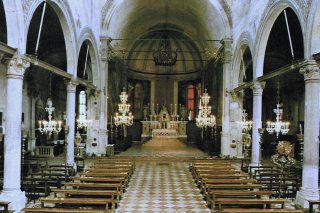
The brick campanile, isolated beside the basilica, completes this medieval complex. Inside, three aisles separated by marble columns lead to the apse, while a wooden truss covers the main nave. The architecture remains relatively sober so as to give full place to the mosaics.
The great mosaic pavement of 1141
The most singular treasure of Santi Maria e Donato lies under the visitor’s feet. An inscription preserved in the nave allows dating its remarkable mosaic pavement to September 1141, made from colored marbles, porphyry, serpentine and glass tesserae.
The floor combines interlacing, circles and geometric figures with a whole symbolic bestiary: peacocks, griffins, eagles, birds or fantastic animals. The famous cocks carrying a fox and the Solomon’s knots belong to this language of medieval images whose religious significance once accompanied the faithful on their way. The preservation of such an extensive ensemble makes the pavement one of the great testimonies of 12th-century mosaic art in the lagoon.
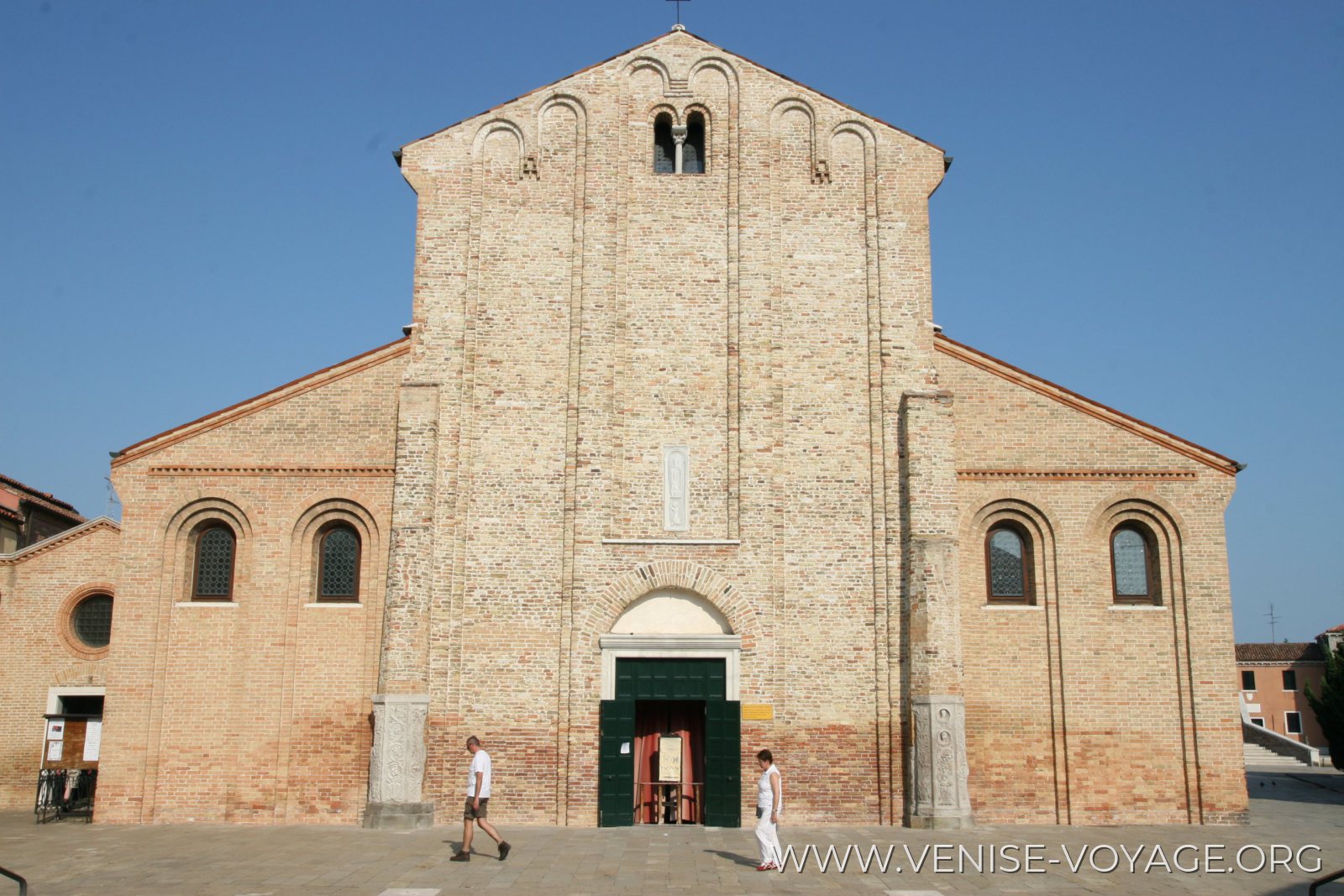
Duomo di Murano
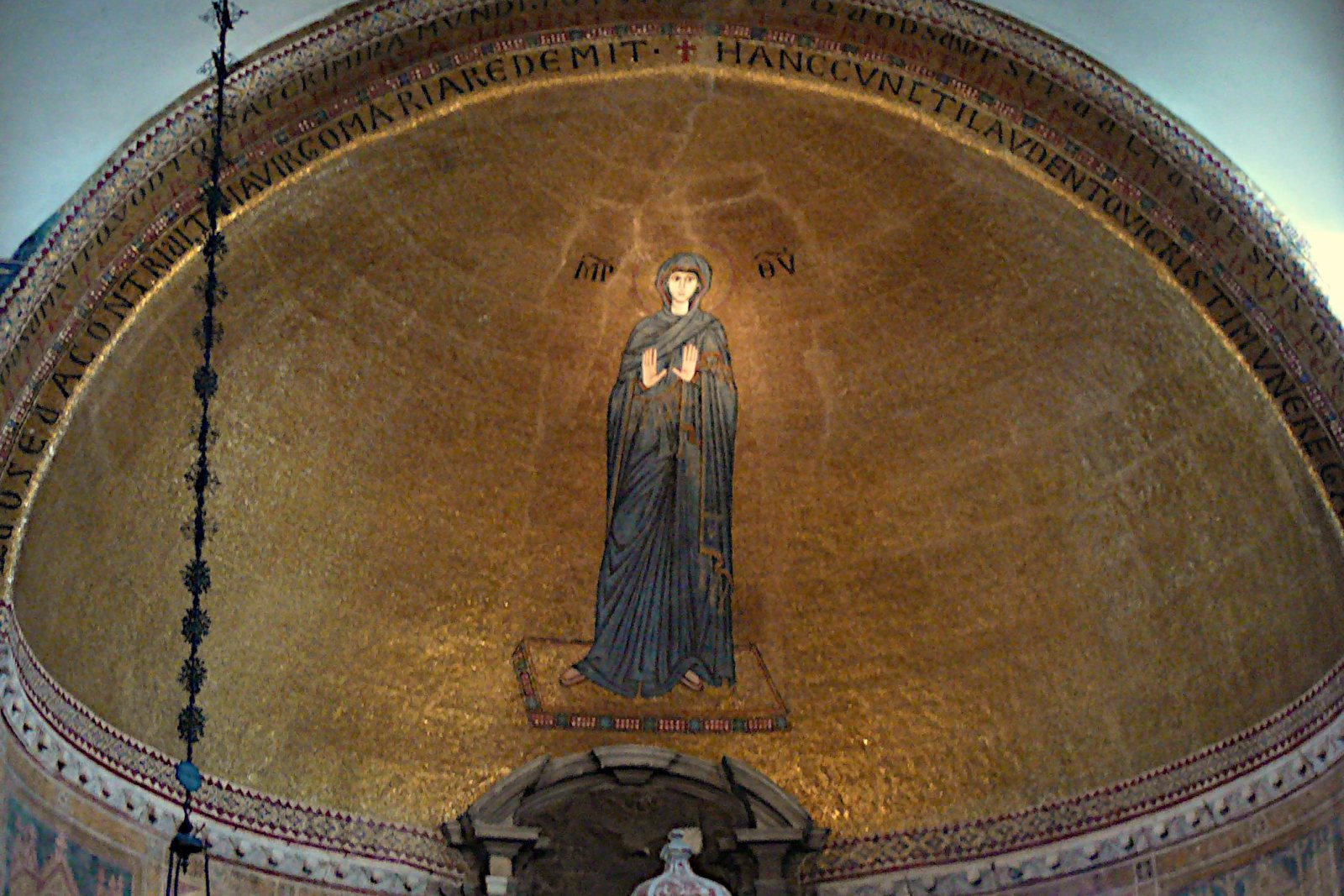
Madonna Orante
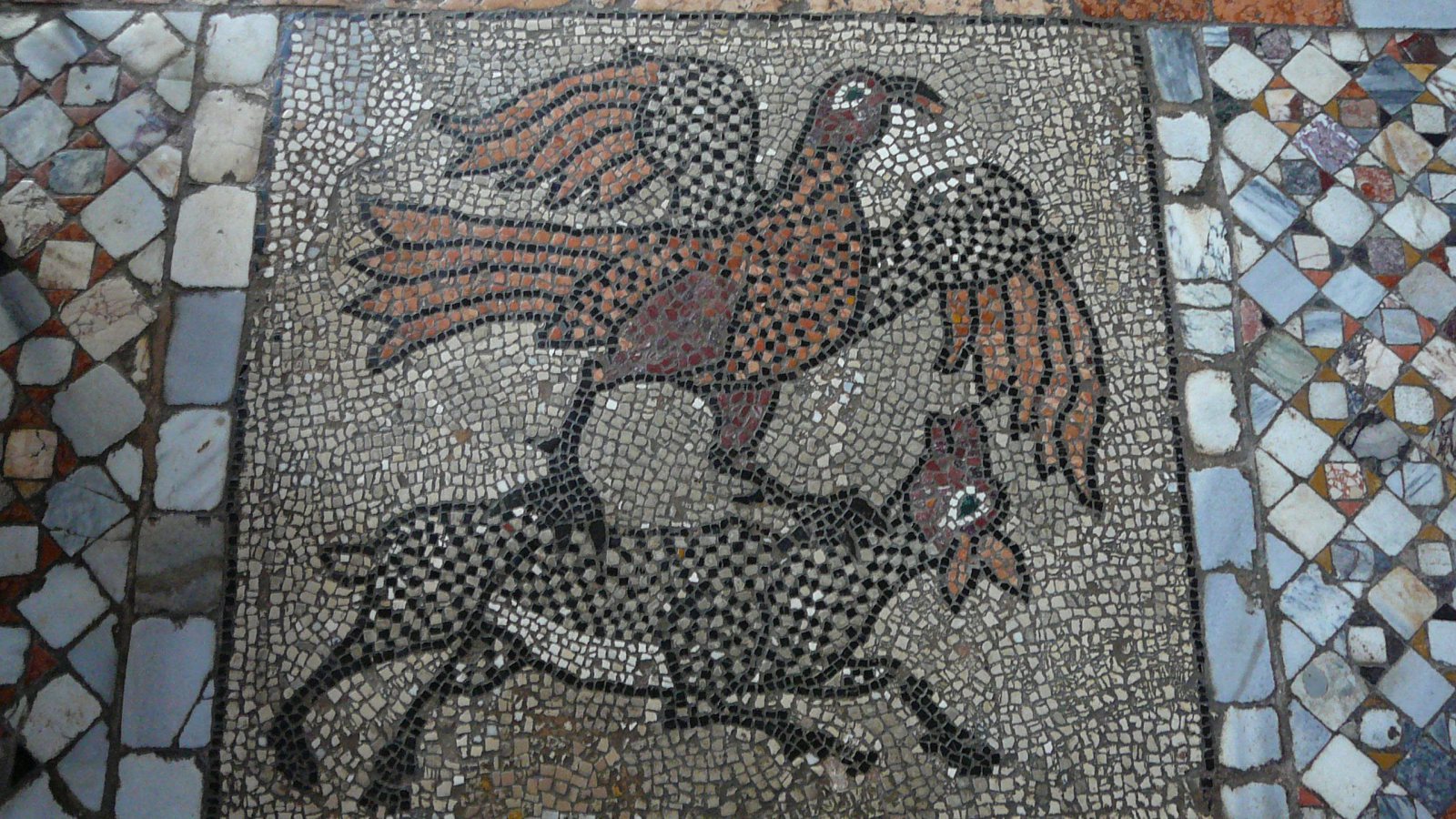
Basilica of Santi Maria e Donato (Byzantine mosaics, via Wikimedia Commons)

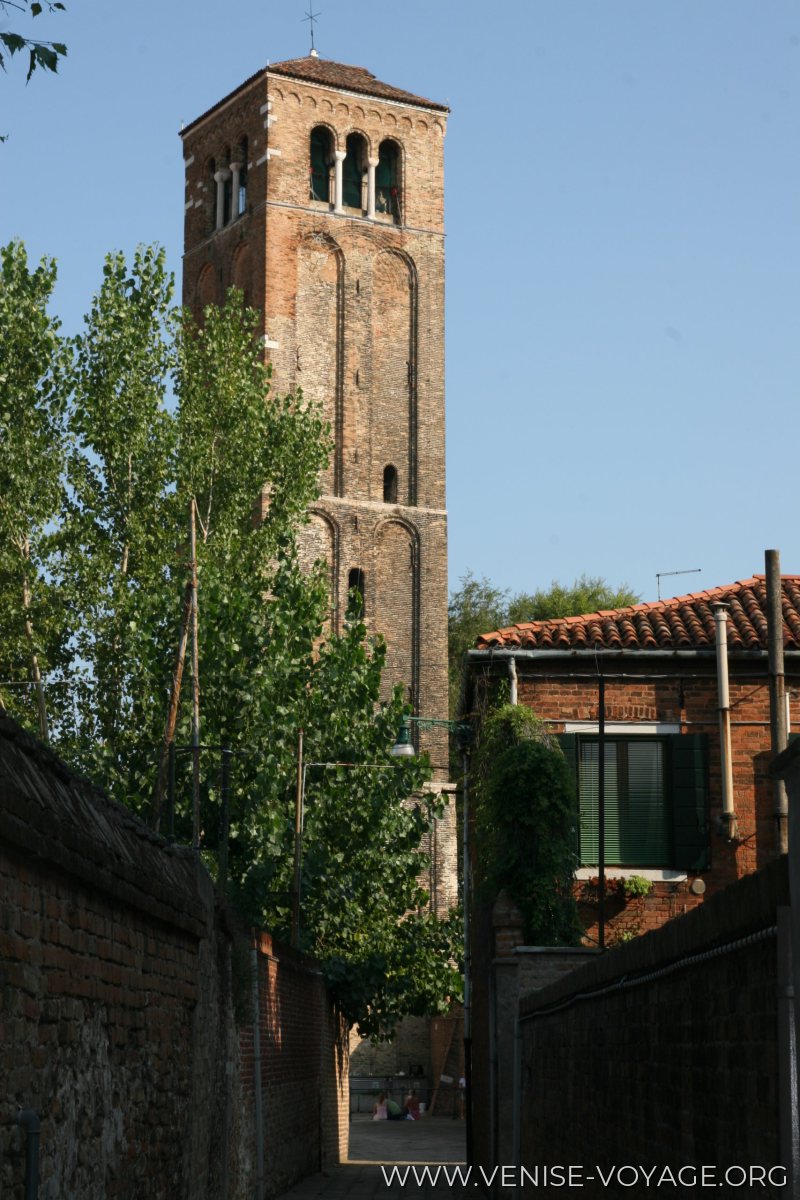
Campanile of Murano Cathedral
The Orant Virgin and the relics of Saint Donatus
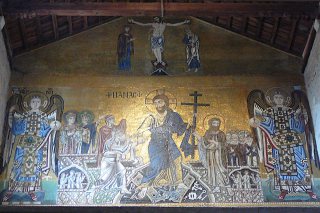
In the half-dome of the apse appears an Orant Virgin on a gold background, dated to the mid-12th century. Standing alone in the immense gilded surface, Mary directly recalls the great Byzantine compositions and in particular the artistic tradition also visible at Torcello. Her monumentality contrasts with the relative austerity of the rest of the church.
The church still preserves other medieval works, among which an ancient representation of Saint Donatus and several re-employed sculpted elements. But its interest lies above all in the coherence of the whole: architecture, pavement and apse mosaic allow us to find in Murano an expression of Veneto-Byzantine art prior to a large part of the palaces that today make up the image of Venice.
Sources and additional information
- Basilica dei Santi Maria e Donato - official parish website, history and visitor information.
- Regione del Veneto - Beni culturali - heritage record of the basilica.
- Fondazione Federico Zeri - Madonna orante - dating and documentation of the apse mosaic.
Map and route
Near the Basilica of Saint Mary and Saint Donatus and places in the district
 Street / Area
Grand Canal of Murano
255 m
Street / Area
Grand Canal of Murano
255 m
On the island of Murano

Nearby places to stay
Sur le même thème