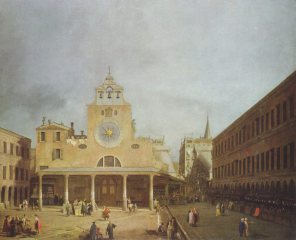
Church of Saint Zachary Church
A 9th-century church where the doges came every Easter Monday, famous for one of Bellini's masterpieces and the crypt of the first doges of Venice.
Saint Zachary, the Renaissance Showcase of Ducal Tombs
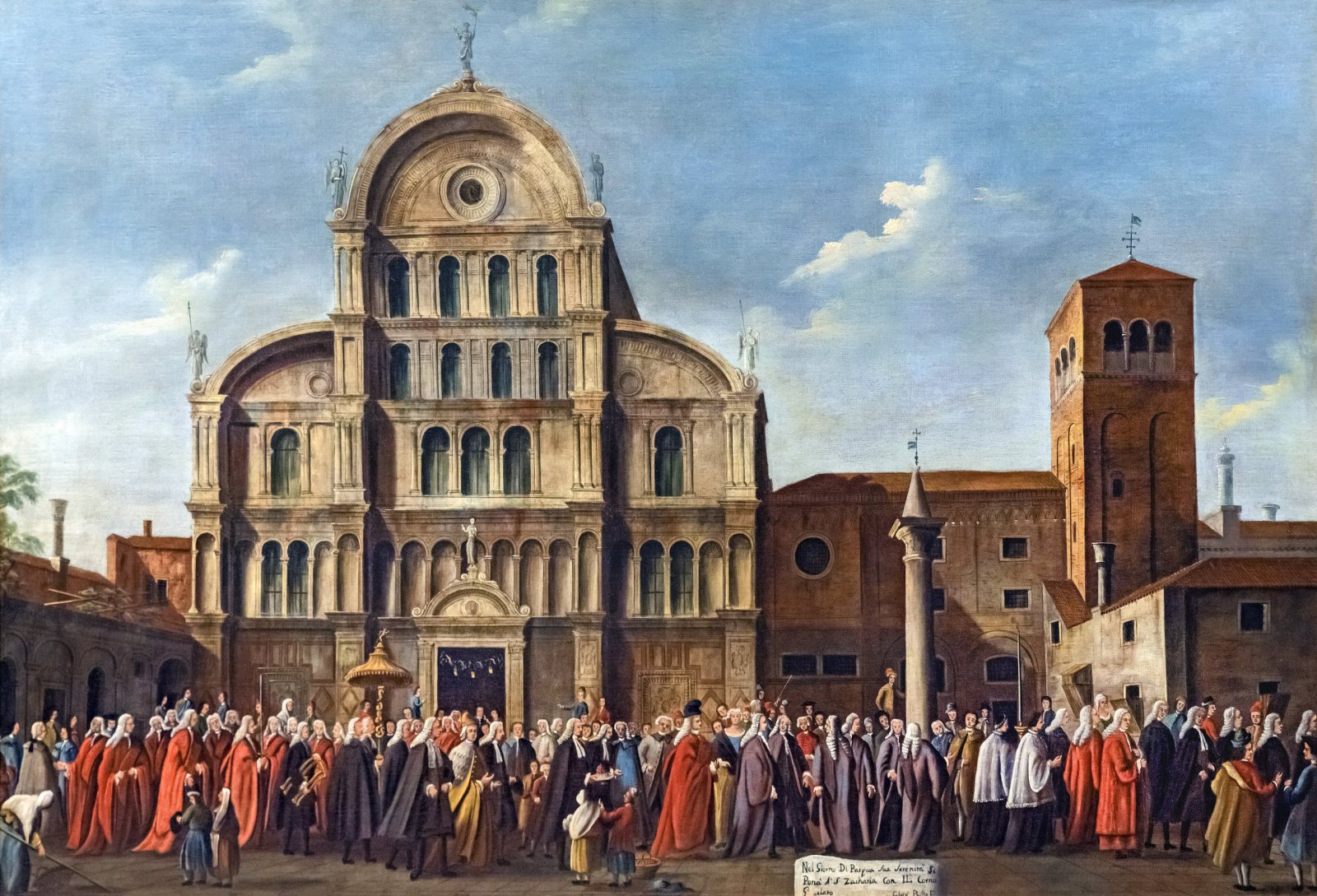
A few steps from the Riva degli Schiavoni, on Campo San Zaccaria, the Church of Saint Zachary is one of the great religious monuments of the sestiere of Castello. Dedicated to Saint Zachary, father of John the Baptist, it traces its origins back to the first centuries of Venice: a church and a Benedictine monastery were founded at the beginning of the 9th century under the doges of the Partecipazio family. According to Venetian tradition, the Byzantine emperor Leo V the Armenian is said to have offered relics of Saint Zachary to Venice, strengthening the prestige of the new sanctuary.
The large present-day church was built starting in the mid-15th century under the direction of Antonio Gambello, then completed at the beginning of the 16th century by Mauro Codussi. The transition between the two architects explains its particular character: the structure retains elements of the late Gothic, while Codussi imposes on the upper part of the facade his Renaissance vocabulary, with paired columns, large arched bays, and light stone. The whole is among the most elegant expressions of the transition from Gothic to Renaissance in Venice.
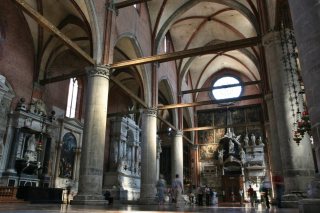
The interior strikes by its spaciousness and especially by its apse, surrounded by an ambulatory lit by tall Gothic windows, an unusual arrangement in Venetian churches. But the most famous work is in the left nave: the Pala di San Zaccaria by Giovanni Bellini, painted in 1505. The Virgin and Child appear there surrounded by saints in a fictive architecture whose light seems to extend that of the church. Bellini combines perspective, color, and monumental silence with a subtlety that makes it one of the great Sacre Conversazioni of the Venetian Renaissance.
The visit would however be incomplete without the remains of the old San Zaccaria. The San Tarasio Chapel, sometimes called the Gold Chapel because of the richness of its decoration, preserves three large polyptychs made in 1443 by Antonio Vivarini and Giovanni d’Alemagna, in astonishing gilded Gothic frames. The vaults and lunettes also bear frescoes by Andrea del Castagno, executed in 1442, a particularly valuable testimony to the presence in Venice of this important Florentine painter.
The neighboring Chapel of Saint Athanasius, which corresponds to the old nuns’ choir, also preserves several remarkable works, notably by Palma il Giovane and Tintoretto. This succession of Gothic and Renaissance spaces gives San Zaccaria a richness often unsuspected from the main nave alone.
Beneath the San Tarasio Chapel lies one of the most singular spaces of the monument: a small crypt probably dating back to the 10th century, divided into three naves by modest columns. Several doges from the first centuries of Venice were buried there, traditionally eight in number. The crypt is now below the high-water level and remains partially invaded by the lagoon for a large part of the year. The water that covers its pavement and reflects the columns gives it a striking atmosphere, while very concretely recalling Venice’s fragile relationship with its lagoon environment.
The bell tower, much older than the present facade, belongs essentially to the Romanesque reconstruction of the 12th century. Its brick masonry and sober forms contrast strongly with the marbles of the Renaissance church. Together with the crypt and the chapels of the old church, it allows one to follow on site nearly six centuries of architectural evolution.
Visita del Doge a San Zaccaria
Gabriele Bella, via Wikimedia Commons

Visiting tips
Access to the church itself is free. The monumental spaces of the old church, including the chapels and the crypt, are part of the San Zaccaria museum and are accessible with a specific ticket or with the Chorus Pass. Chorus currently indicates the artistic visit is open every day from 10 am to 6 pm, with last admission a few minutes before closing. The individual museum ticket is currently €3.50. Opening hours may change during services or major religious feasts: it is best to check them before the visit.
Sources and further information
Chorus Venezia – Museum and Crypt of San Zaccaria ; Venezia Unica – San Zaccaria ; Ca’ Foscari University – History of the San Zaccaria Monastery.
Map and route
Near the Church of Saint Zachary and places in the district
 Church
 of San Giorgio dei Greci
125 m
Church
Church of San Giorgio dei Greci
125 m
 Church
 of the Pietà
140 m
Church
Church of the Pietà
140 m
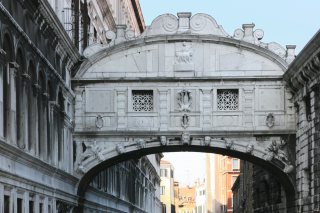 Bridge
 of Sighs
207 m
Bridge
Bridge of Sighs
207 m
 Museum
Fondazione Querini Stampalia
247 m
Museum
Fondazione Querini Stampalia
247 m
In the Castello sestiere

Nearby places to stay
Sur le même thème