Church of San Giacomo di Rialto Church
Nicknamed San Giacometo, this small church in the Rialto market claims to be the oldest church in Venice and features a 24-hour clock.
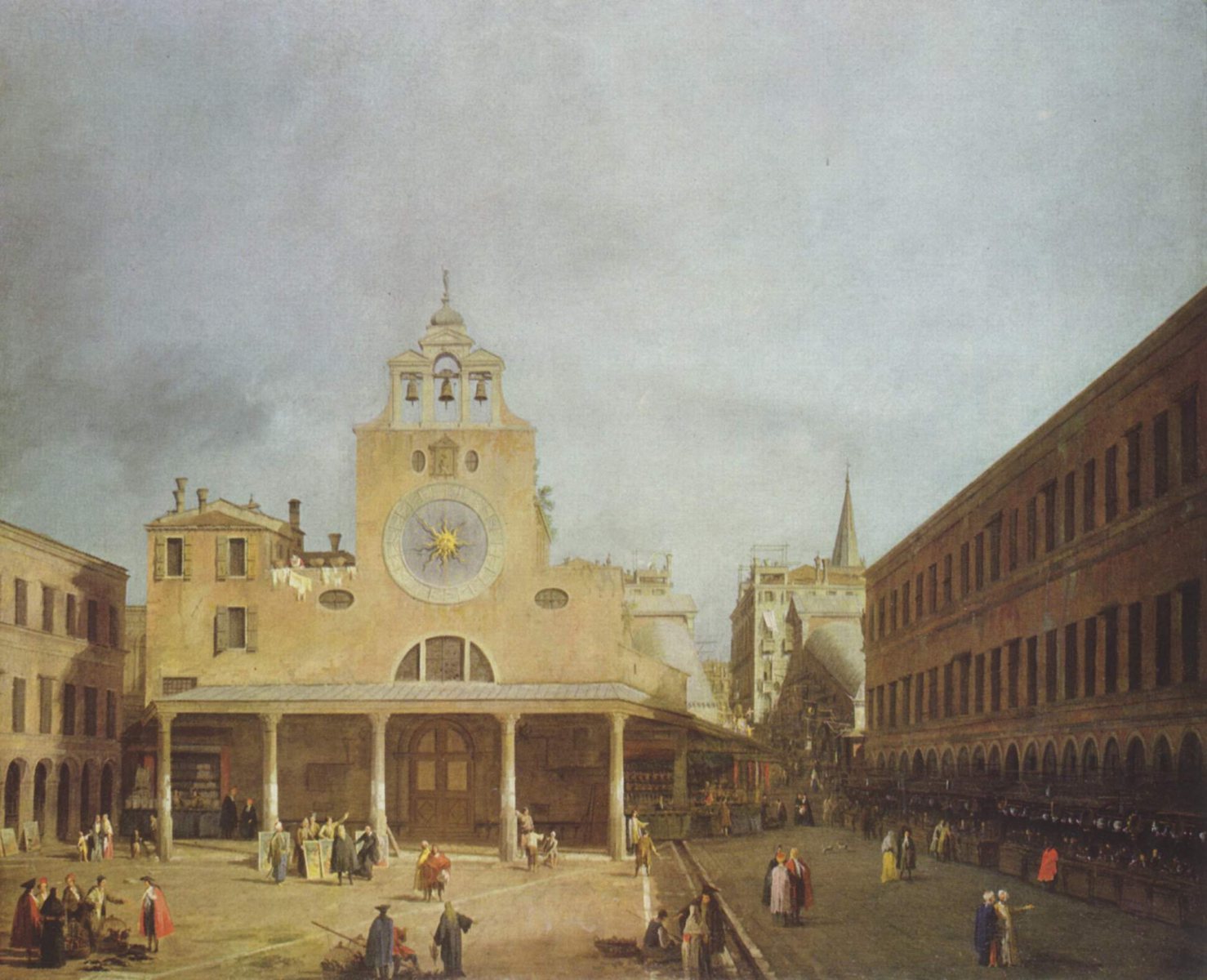
San Giacomo di Rialto, the legendary doyenne of the market
On the Campo San Giacomo di Rialto, at the heart of the old Rialto market district, the small church of San Giacomo di Rialto, familiarly called San Giacometo by Venetians, is traditionally considered the oldest church in Venice.
Legend traces its foundation to March 25, 421, a date that became the mythical birth of the city. Historical data are much later: the first reliable documentary mention dates to 1152, while the study of the architecture places the origin of the medieval building around the year 1000.
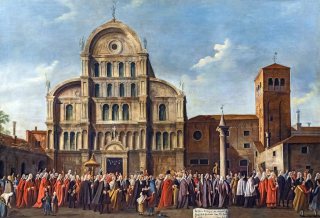
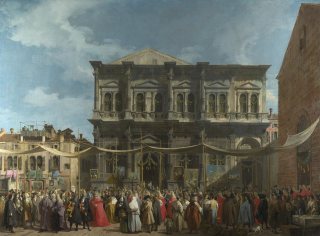
San Giacomo di Rialto
(Canaletto, 1726, via Wikimedia Commons)
_%E2%80%94_Platz_vor_San_Giacomo_di_Rialto_in_Venedig.jpg)
Its façade is dominated by a remarkable 24-hour clock face, with a single hand, installed in the 15th century and modified in the 18th. In front of the entrance, the polygonal Gothic portico supported by five columns is one of the few of its kind that were once more common in front of Venetian churches. Inside, the cross plan centered on a dome and the ancient marble columns with capitals of various inspirations recall the links of medieval Venice with the Byzantine world.
The campo was above all one of the financial centers of the Republic. The banchieri a scritta of the Rialto kept the accounts of their clients and could settle debts by simply transferring a sum from one account to another, without moving money: a particularly elaborate system for its time. A medieval inscription still visible on the apse reminds merchants to respect fair weights and honest contracts. Nearby is the Gobbo di Rialto, a 16th-century stone figure associated with public proclamations and also known as the finishing point for certain humiliating penalties inflicted in the city.
The current appearance of the church is largely due to the major renovation campaign of 1600-1601. Recent research shows that it was not a simple consolidation: the building was largely rebuilt while preserving its medieval form and reusing some of the old materials. The high altar, financed by the Casaroli guild, was then adorned with a statue of Saint James attributed to Alessandro Vittoria and his workshop, completed around 1602.
An interesting visit to understand the Rialto.
Sources and further information
Ca’ Foscari - The Church of San Giacomo di Rialto in the Medieval Era ; Ca’ Foscari - Reconstruction of San Giacomo di Rialto around 1600 ; Meeting Venice - San Giacomo di Rialto ; Venezia Unica - Rialto markets.
Map and route
Near the Church of San Giacomo di Rialto and places in the district
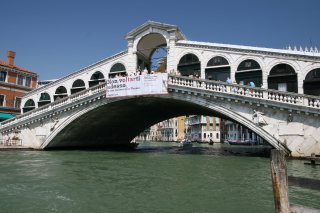 Bridge
Rialto Bridge
53 m
Bridge
Rialto Bridge
53 m
 Church
San Giovanni Elemosinario Church
78 m
Street / Area
Riva del Vin
114 m
Market
Rialto Market
154 m
Church
San Giovanni Elemosinario Church
78 m
Street / Area
Riva del Vin
114 m
Market
Rialto Market
154 m
In the San Polo sestiere

Nearby places to stay
Sur le même thème