Campo San Polo Square
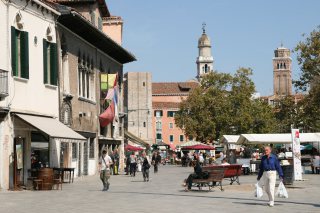
A large and popular square in San Polo, long used for festivals, markets and neighborhood gatherings.
Campo San Polo, large square of the sestiere
The Campo San Polo is the largest campo in Venice and, after St. Mark's Square, one of the largest open spaces in the historic center. At the heart of the sestiere to which it gives its name, along with the neighboring church, this wide irregular expanse offers a striking breath of air in an urban fabric dominated by narrow calli, canals and small bridges.
From meadows to popular festivals
Its current appearance is very different from that of the first centuries. Like many Venetian campi, the space was long occupied by grassy areas, crops and pastures. It was entirely paved in 1493, at which time the large well that still occupies its center was also built. This well belonged to the system of underground cisterns by which the Venetians collected and filtered rainwater in a city without fresh water sources.
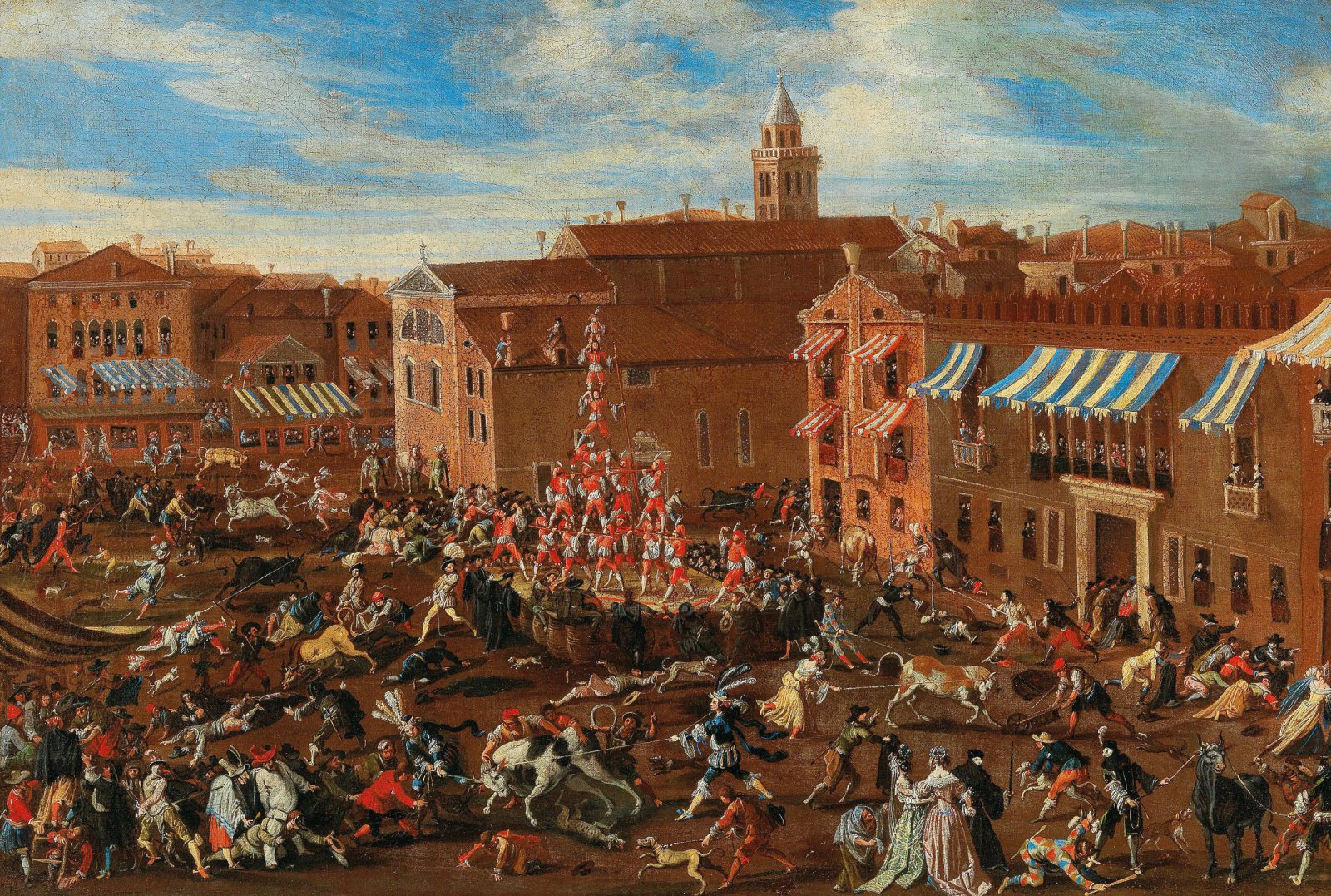
Campo San Polo gradually became an important place of collective life. Markets, fairs, sermons, festivals and gatherings followed one another, but also more spectacular entertainments: ball games, crossbow shooting exercises and cacce al toro, a kind of bull hunt much appreciated in ancient Venice.
The intense use of the square, however, forced the authorities to intervene. An inscription from 1611, still visible on the exterior of the church of San Polo, recalls the prohibition of certain games and the sale of goods on the campo.
The square was also the setting for a bloody episode in Florentine history. In 1548, Lorenzino de' Medici, known as Lorenzaccio, was murdered there after several years of exile. He himself had killed Alessandro de' Medici, Duke of Florence, in 1537, and his death in Venice is part of the political settling of scores that followed this assassination.
The Bull Hunt at Campo San Polo (Joseph Heintz the Younger, 17th century, via Wikimedia Commons)

What to see at Campo San Polo?
The square does not have the architectural unity of Piazza San Marco: its façades belong to different periods and styles, which instead gives it the appearance of a piece of the city built up gradually over the centuries.
Notably, the Palazzi Soranzo stand out with their Gothic features, as well as Palazzo Donà. In the immediate vicinity also stands the imposing Palazzo Corner Mocenigo, built in the 16th century to a design by Michele Sanmicheli. The church of San Polo itself presents its apse to the campo rather than its main façade, an arrangement that reinforces the irregular character of the square.
In the center, the large well is one of the main visual landmarks. More broadly, the interest of the campo lies in the possibility of observing it as a whole: from its vast central space, the eye takes in façades, passages and the openings of calli in a way quite rare in Venice.
A square still alive
Campo San Polo remains today a place for passing through and relaxation. Children, residents, visitors and café terraces occupy this large space, whose atmosphere varies greatly depending on the hour. The morning often allows one to appreciate its proportions more quietly, while the end of the day is livelier.
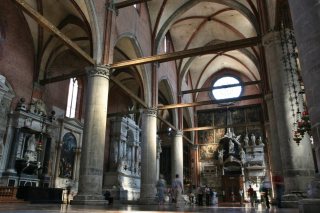
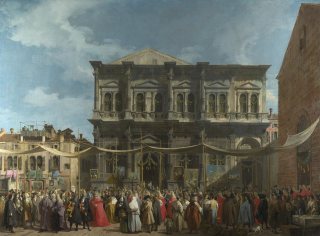
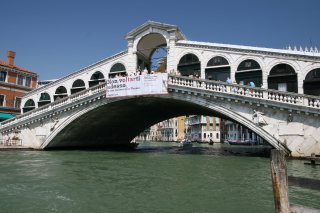
The square also retains its role as a gathering place and, depending on the season, hosts cultural events and open-air cinema screenings. Finally, it is a natural stop between the Rialto, the Frari Basilica and the Scuola Grande di San Rocco, all reachable in a few minutes on foot.
Sources and further information
Venezia Unica - San Polo ; Comune di Venezia - Campo San Polo ; Comune di Venezia - events at Campo San Polo.
Map and route
Near Campo San Polo and places in the district
In the San Polo sestiere

Nearby places to stay
Sur le même thème