Rialto Market Market
Historic market in Venice, around the Pescheria and the Erberia, in the heart of the Rialto district.
Rialto Market, in the heart of commercial Venice
The Rialto Market occupies the historic heart of San Polo, on the Grand Canal and a few steps from the famous bridge. Today it is organized mainly around the Pescheria, the fish market, and the Erbaria, a traditional fruit and vegetable market. Despite the tourist crowds of the district, the market remains one of the places where Venice still very concretely shows its daily connection with the lagoon, the islands and food supply.
This vocation is ancient. From the Middle Ages, Rialto became the main commercial center of the Republic of Venice. Goods arrived by boat, were unloaded on the quays, then distributed among specialized markets, shops and warehouses. As early as the 14th century, the space was organized by product: fish, vegetables, meat, cheeses, spices or metals occupied distinct sectors whose names still remain in the local place names.
The Erbaria notably received fruit, vegetables and herbs brought from the mainland and the lagoon islands. Nearby were the Casaria for cheeses, the Beccarie for meat, the Naranzeria for citrus fruits, as well as the streets of goldsmiths and apothecaries. The current market is therefore only the still-visible part of a vast specialized economic district that occupied a large portion of Rialto.
Rialto, market and financial center of the Republic
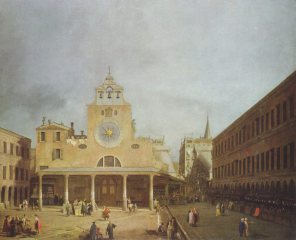
Rialto was not only used for selling fish and vegetables. Around San Giacometo were international merchants, money changers, financial administrations and banks. Commercial contracts, maritime insurance and credit operations were mixed with trade in goods. From the 17th century, the Banco Giro even allowed merchants to settle large transactions by transfer between accounts, without moving bags of coins for each deal.
The fish market also had a highly regulated organization. Fishermen brought the catches made during the night to a wholesale point, where specialized merchants bought them before resale to the public. The Republic monitored the quality of products and also intervened in the management of lagoon resources.
A medieval hall... built in the 20th century
The current fish market, with its arcades, columns and capitals adorned with marine animals, looks much older than it really is. It was built at the beginning of the 20th century, in a project combining architect Domenico Rupolo and artist Cesare Laurenti, to replace the metallic structures of the 19th century. Its neo-Gothic style was deliberately designed to match the Venetian architectural landscape rather than to impose a resolutely modern building.
Its location on the Grand Canal especially reminds us that water was the true logistical route of Venice. Fish from the lagoon and the Adriatic, vegetables and fruits grown on the islands or the mainland arrived directly by boat. This organization still explains the immediate proximity between quays, sales areas and waterways.
For visiting, the morning remains the most interesting time. The stalls are then active, deliveries are still visible, and one meets more residents coming to do their shopping. A few hours later, the district gradually takes on its much more touristy face.
The market finally allows us to read part of the food geography of Venice: fish and seafood from the lagoon or the Adriatic, vegetables from the islands, and products once arriving from Venetian possessions and trade routes. More than a simple picturesque market, Rialto reminds us that Venice's wealth was first built here on something very concrete: making goods arrive, selling, financing and redistributing them.
Sources and further information
Comune di Venezia - Pescheria and Rialto Market ; Comune di Venezia - Reconstruction of the Rialto Market ; Fondazione Musei Civici di Venezia - Pescheria project.
Map and route
Near the Rialto Market and places in the district
 Church
San Giovanni Elemosinario Church
110 m
Church
San Giovanni Elemosinario Church
110 m
 Museum
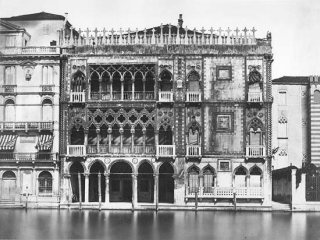
Ca’ d’Oro
151 m
Museum
Ca’ d’Oro
151 m
 Church
 of San Giacomo di Rialto
154 m
Church
Church of San Giacomo di Rialto
154 m
 Bridge
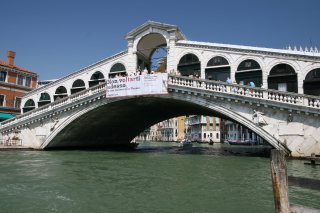
Rialto Bridge
206 m
Bridge
Rialto Bridge
206 m
In the San Polo sestiere