Scuola Grande San Giovanni Evangelista Monument
Ancient great confraternity of San Polo, known for its portal, monumental halls, and history linked to a relic of the Cross.
Scuola Grande San Giovanni Evangelista, confraternity and architecture
The Scuola Grande San Giovanni Evangelista is located in a relatively quiet area of San Polo, not far from the Basilica of the Frari and the campo San Stin. The approach is almost discreet, until the remarkable marble enclosure that closes its small courtyard appears. Behind this entrance, however, hides one of the oldest and most prestigious confraternities in Venice, still active today.
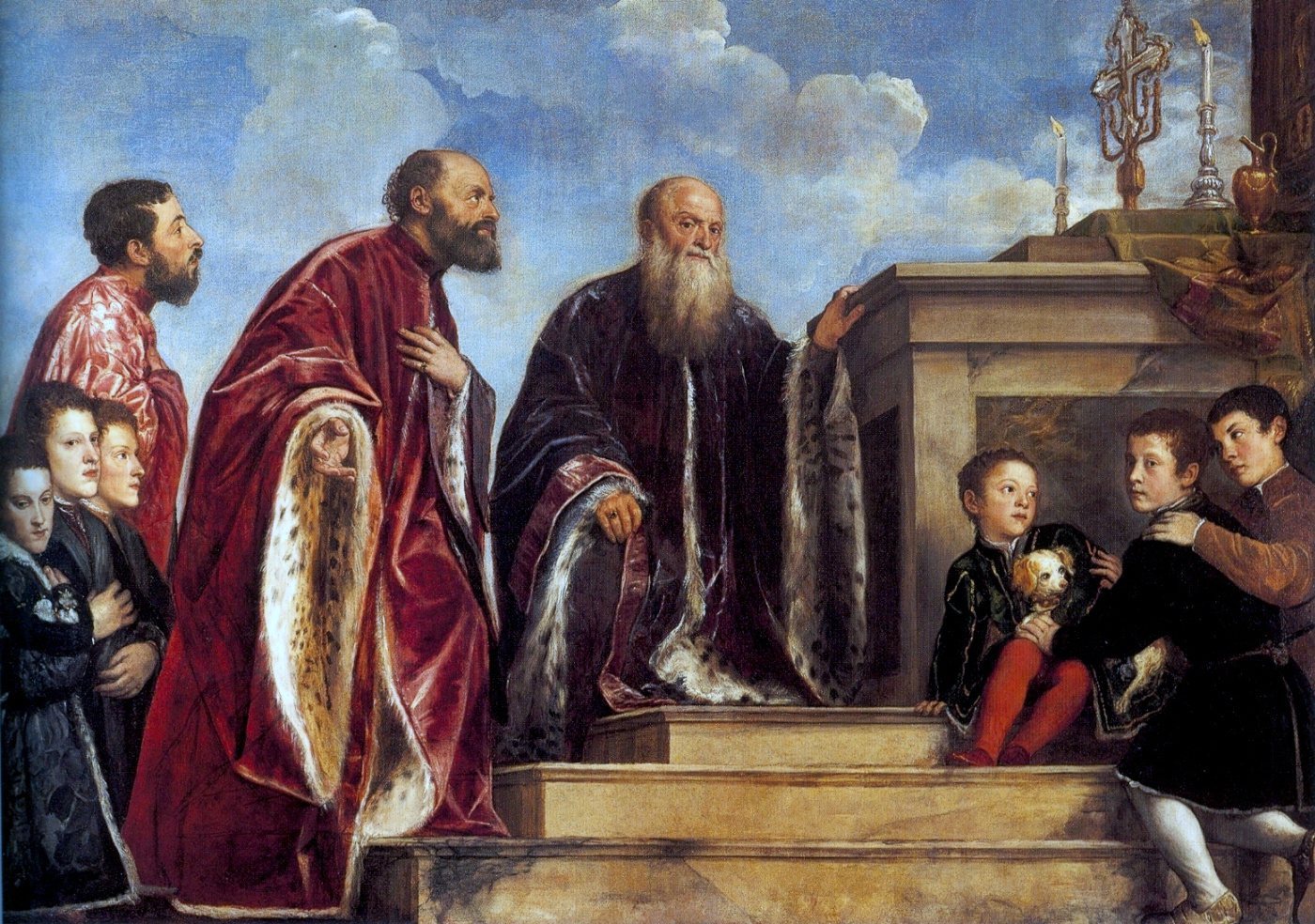
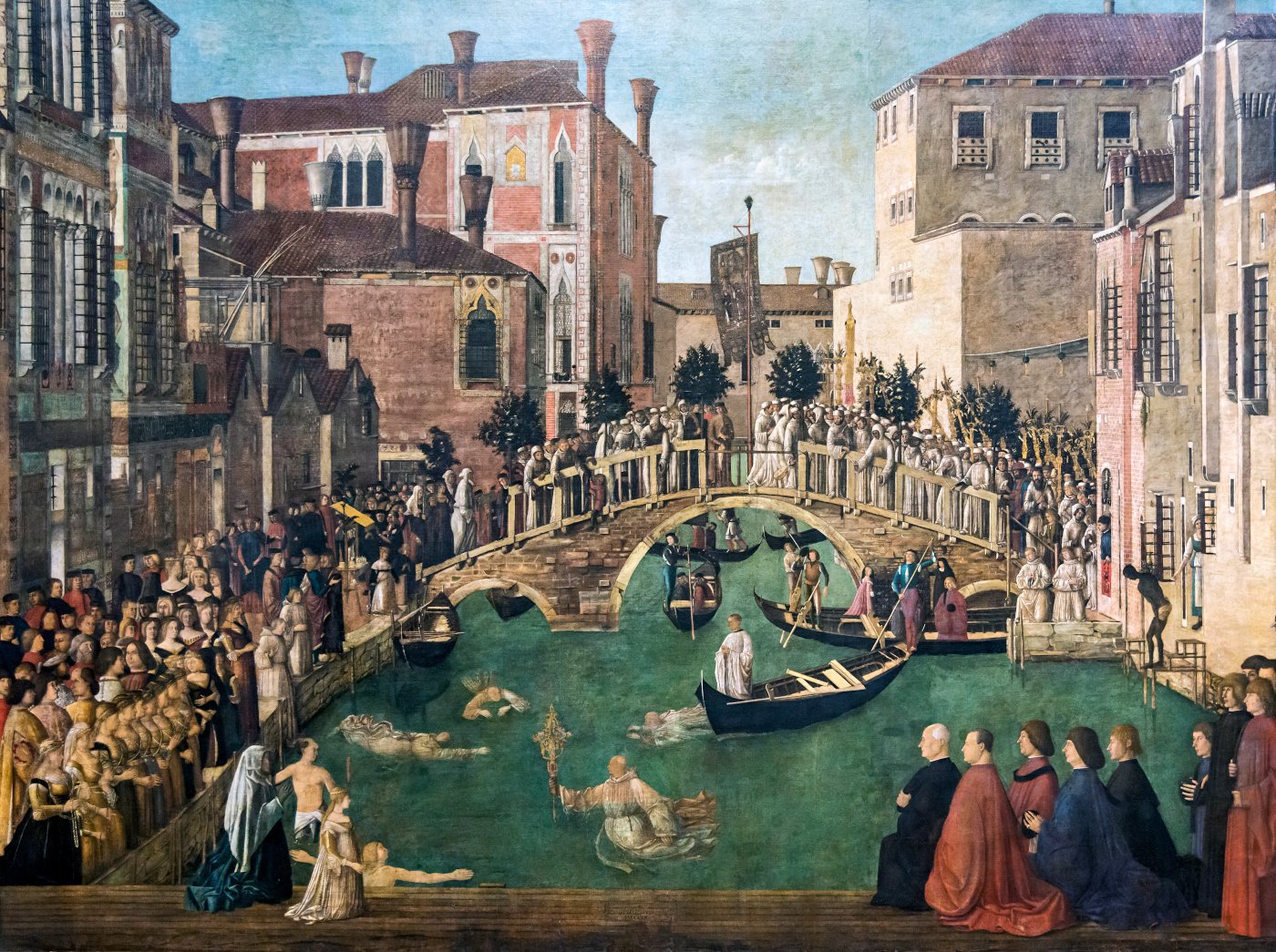
relic of the Holy Cross, Titian, c. 1543-1547
Founded in 1261 near the church of Sant’Aponal, the confraternity settled in 1301 at its current location, in premises belonging to the Badoer family. Like the other great Venetian scuole, it brought together laypeople around religious practices, but also charitable activities, mutual assistance, and support for fellow confreres in difficulty. Its growing financial power soon enabled it to commission buildings, decorations, and works of art from some of the best artists of the Republic.
An event profoundly transformed its history: in 1369, the French knight and diplomat Philippe de Mézières, then Grand Chancellor of the Kingdom of Cyprus, gave it a fragment considered to come from the True Cross. Kept in a precious Gothic reliquary of rock crystal and gilded silver, this relic became the main object of devotion of the confraternity and greatly contributed to its prestige in the city.
From Pietro Lombardo to Mauro Codussi
Outside, the most spectacular element is the monumental marble enclosure created by Pietro Lombardo between 1478 and 1481. Columns, vegetal motifs, and a large lunette bearing the eagle of Saint John form a refined entrance that symbolically separates the confraternity from the urban space. This early Renaissance decoration contrasts with the medieval parts still visible around the courtyard and heralds the richness of the interior spaces.
Inside, the monumental staircase by Mauro Codussi, designed in 1498, is among the most remarkable elements of the complex. Confronted with a narrow space, limited by the neighboring canal, the architect played on the progressive widening of the flights and on perspective lines to give the staircase a depth greater than its actual dimensions. The effect is both functional and theatrical: the ascent progressively prepares the entrance into the state rooms.
The large chapter hall offers a completely different face of the Scuola. Giorgio Massari profoundly transformed it between 1727 and 1762, raising its ceiling by several meters and opening twelve oval windows that diffuse light above the neighboring roofs. Its polychrome marble pavement, its decorations, and the altar dedicated to Saint John illustrate the power that the confraternity had still acquired in the 18th century.
The more intimate Albergo hall, for its part, preserves several large canvases by Palma the Younger dedicated to the Apocalypse. Titian had also painted for its ceiling a Vision of Saint John the Evangelist, now preserved in Washington. The complex thus allows one to follow several centuries of Venetian art, from Gothic to Baroque, without the different construction campaigns having completely erased those that preceded them.
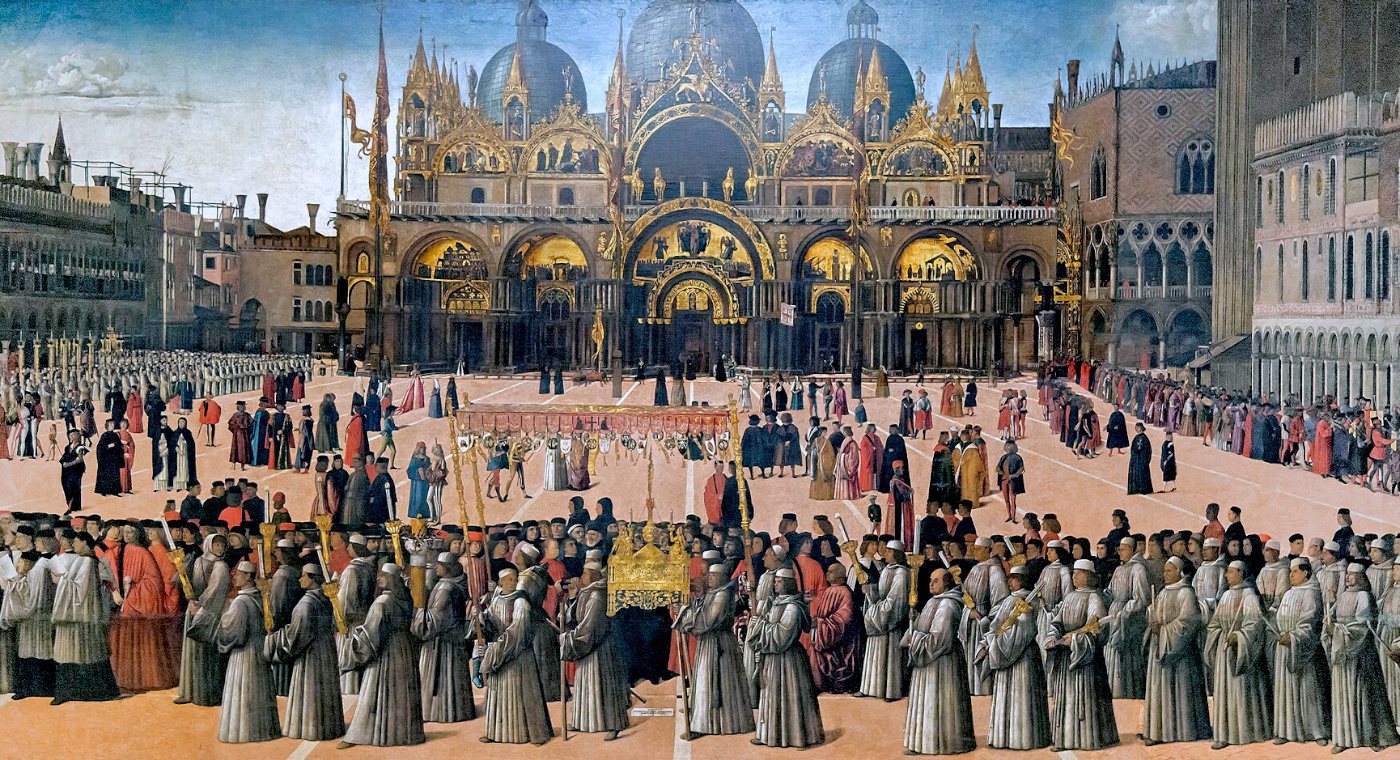
The visit especially allows one to understand what a Scuola Grande represented in Venetian society. These institutions were neither simple pious associations nor public administrations: they organized assistance, ceremonies, and processions, managed significant assets, and were powerful artistic patrons. Their seats therefore had to express devotion, solidarity, and collective prestige at once.
Finally, the charm of the place lies in its succession of spaces. From the alleys of San Polo, one crosses the marble enclosure to enter a small, almost secluded courtyard, before moving on to the atrium, the monumental staircase, and the vast reception rooms. This progression from the discreet to the solemn sums up quite well an institution whose power hid behind the modest word scuola.
Sources and further information
Scuola Grande San Giovanni Evangelista - official website ; Scuola Grande San Giovanni Evangelista - history ; Scuola Grande San Giovanni Evangelista - art and architecture ; Gallerie dell’Accademia - cycle of the Miracles of the Cross ; Venezia Unica - Scuola Grande San Giovanni Evangelista.
Map and route
Near the Scuola Grande San Giovanni Evangelista and places in the district
 Church
Santa Maria Gloriosa dei Frari
159 m
Church
Santa Maria Gloriosa dei Frari
159 m
 Church
San Rocco Church
168 m
Church
San Rocco Church
168 m
 Square
Campo San Giacomo dall’Orio
197 m
Square
Campo San Giacomo dall’Orio
197 m
 Museum
Scuola Grande di San Rocco
206 m
Museum
Scuola Grande di San Rocco
206 m
In the San Polo sestiere