The island of Burano, north of the Venice lagoon, stands out immediately for its brightly colored houses lined up along small canals. Behind this characteristic image lies an old fishing community. From the 16th century onward, Burano also gained international renown for its very fine lace, sought after by courts and palaces throughout Europe. Today the island retains this dual identity, both popular and artisanal, which is a large part of its charm.
Burano, the island of colorful houses
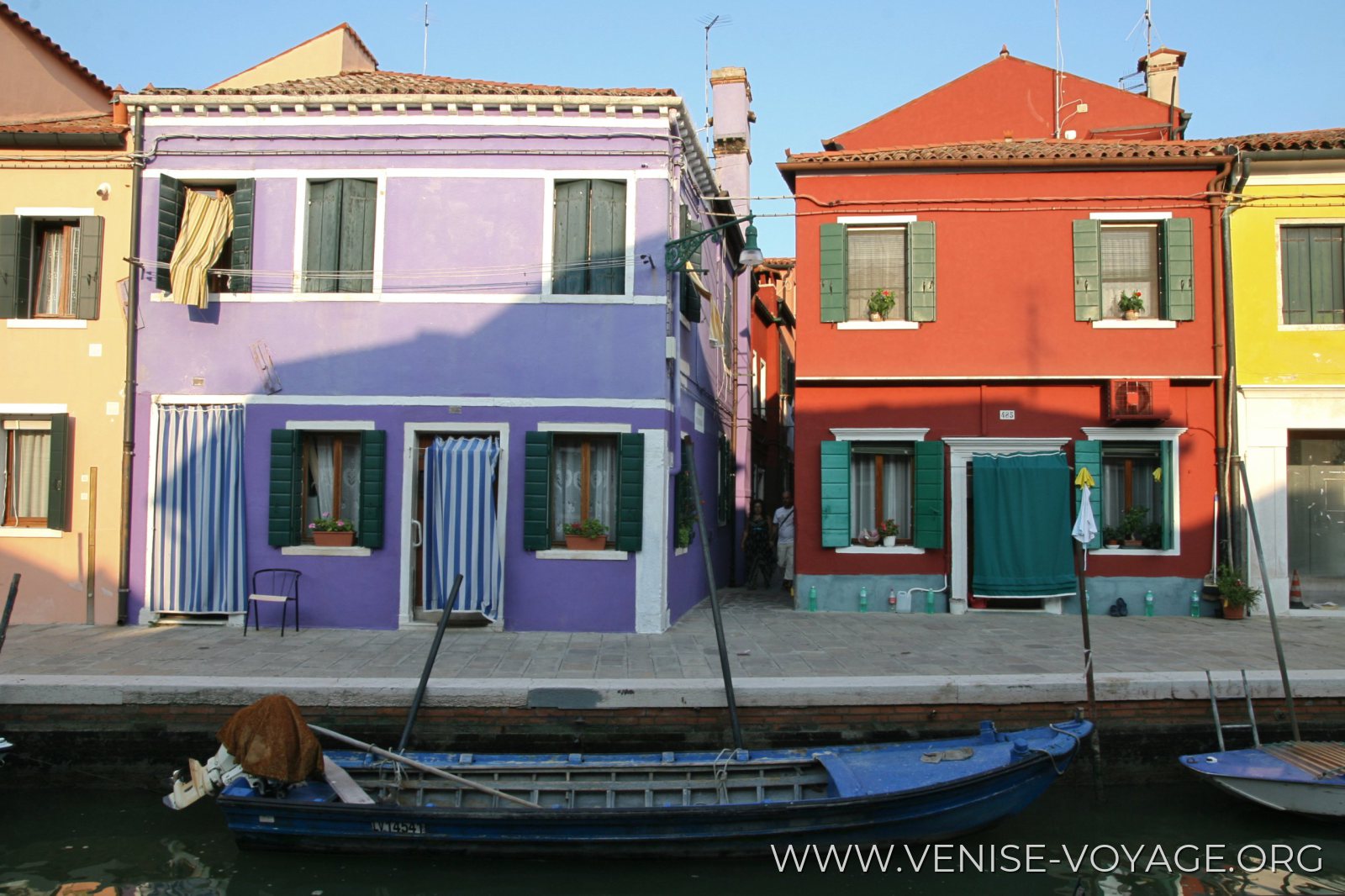
Streets and canals of Burano
Located in the north of the Venice lagoon, near Torcello, Burano forms a small cluster of islets separated by canals and connected by bridges. A footbridge also links it to Mazzorbo. Less monumental than Torcello, it has an immediately recognizable identity, made up of small brightly colored houses, quays, fishing boats and alleys where a very real island life still survives.
Burano lost its status as an autonomous municipality by the royal decree of 30 December 1923 which attached Burano and Murano to Venice. It nonetheless retains a very strong identity, nourished by its dialect, its maritime traditions and its island history.
The exact origin of the red, yellow, blue, green or pink facades is less certain than is sometimes told. The famous explanation that fishermen used these colors to recognize their house in the fog belongs above all to popular tradition. The City of Venice instead attributes this relatively recent practice to the delimitation of small properties. Interventions on facades are now regulated: chromatic fantasy is therefore not entirely free.
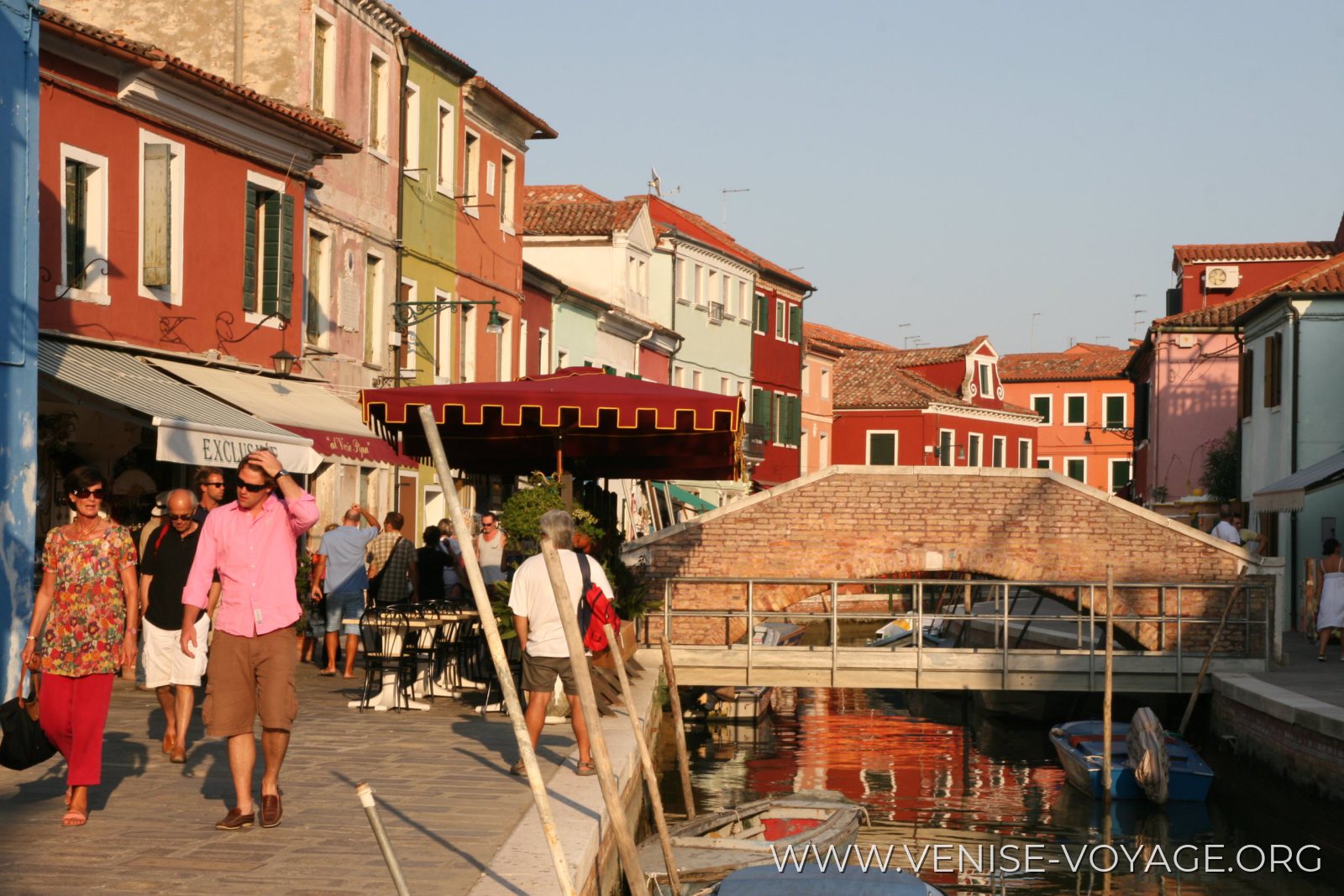
Streets and canals of Burano
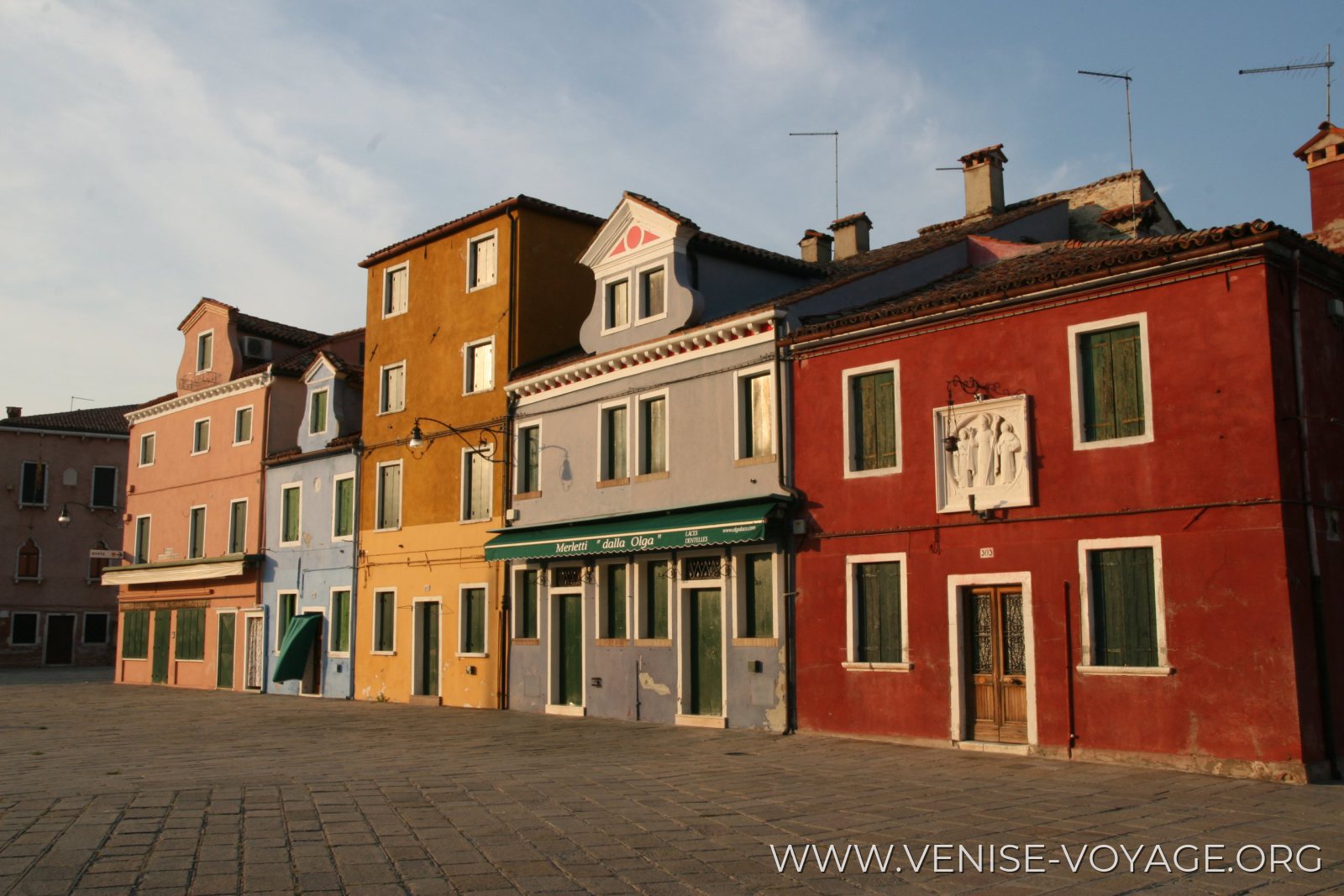
Piazza Baldassare Galuppi, Burano
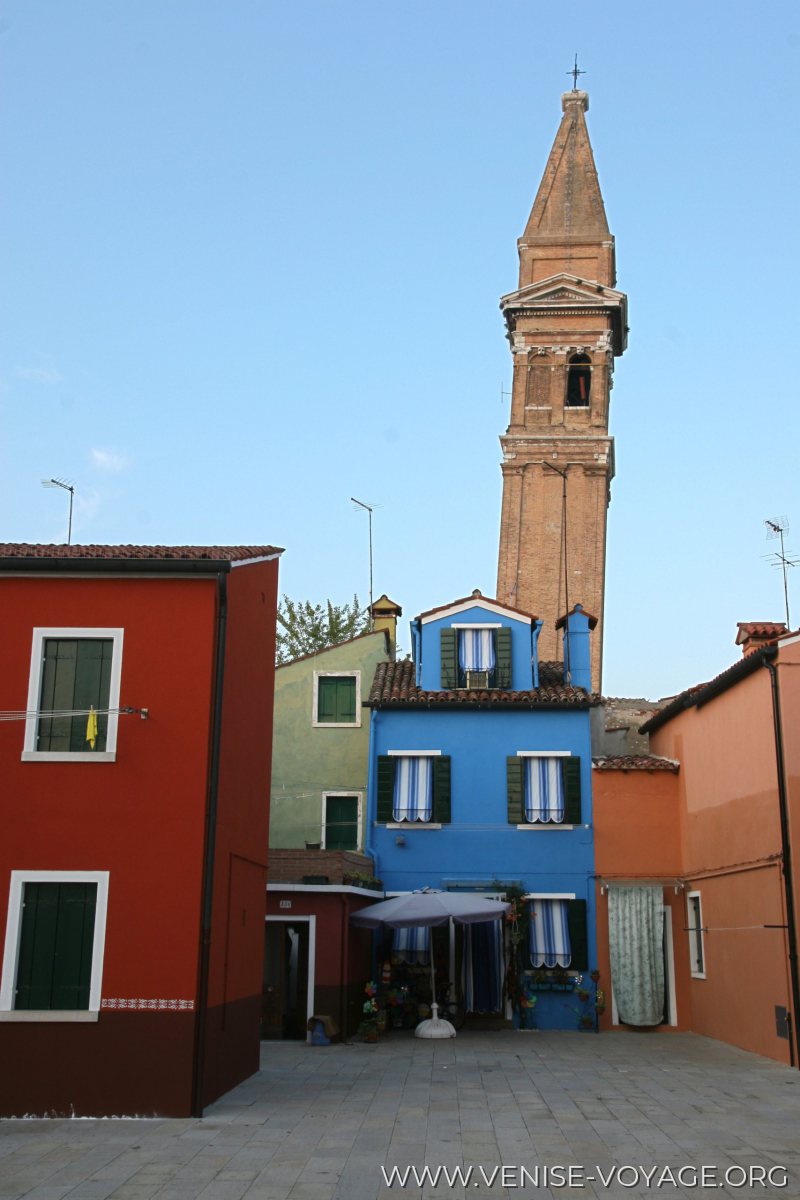
San Martino church and bell tower
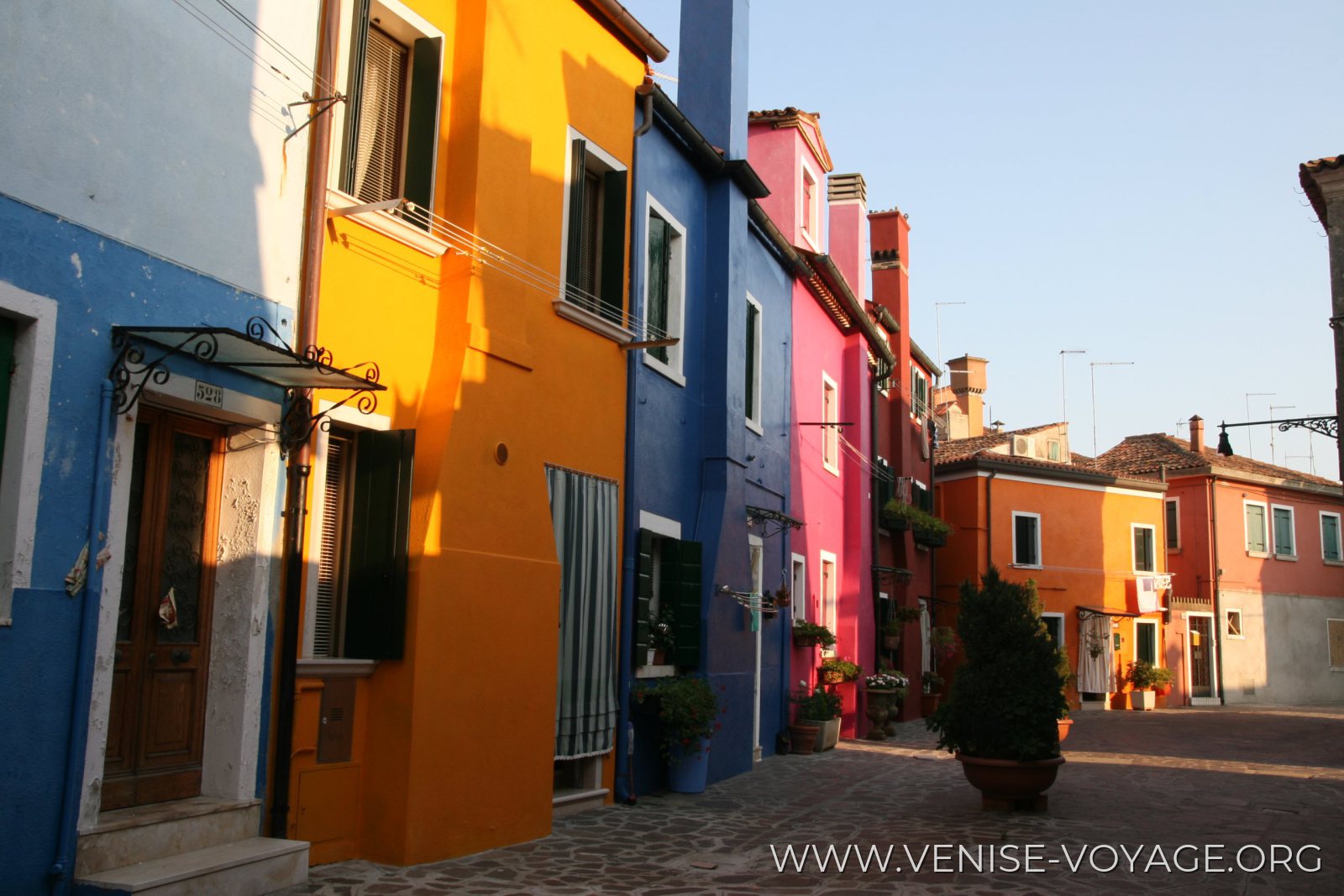
Streets and canals of Burano
Places to discover in Burano
- The canals, the colorful houses and the Tre Ponti: Burano’s interest lies as much in its urban fabric as in its monuments. The Tre Ponti area offers one of the most characteristic views of the canals and facades, while the fondamenta and alleys further away from the main axis show a less visited side of the island.
- The Lace Museum: housed in the former palace of the podestà of Torcello, which later became the seat of the Lace School, it is the most complete visit to understand this craft. Its route presents more than two hundred pieces from the 16th to the 20th century and reveals the remarkable complexity of traditional techniques.
- The Piazza Baldassare Galuppi: the monumental and civic heart of the island, it bears the name of the composer Baldassare Galuppi, known as “Il Buranello” (1706-1785). Besides the church and the museum, one can also see the old well in Istrian stone and the statue of Galuppi created by the Buranello sculptor Remigio Barbaro.
- The San Martino Vescovo church and its bell tower: the main monument of Burano, the church essentially took its present form between the 16th and 17th centuries and was consecrated in 1645. It notably preserves a remarkable Crucifixion by Giambattista Tiepolo, painted around 1725. Its brick bell tower, 53 meters high and built between 1703 and 1714, is famous for its strong lean.
- The passage to Mazzorbo is rather an extension of the visit than a site of Burano itself: a few minutes’ walk is enough to reach this greener island, marked by gardens, vegetable patches and vineyards.
- The Casa di Bepi Suà: its facade covered with geometric motifs was painted and continually transformed by Giuseppe “Bepi” Toselli from the 1960s. More of a local curiosity than a monument, it remains a singular testimony of Buranello popular culture.
The visit can finally end with a bussolà buranello, a biscuit rich in butter and eggs traditionally associated with the island. As for the laces sold at very low prices, they are unlikely to have required the weeks or months of work of a true handmade piece.
Places in Burano
6 places in this district.
 1
Viewpoint
Tre Ponti and Canals of Burano
A crossroads of canals and footbridges offering one of the most characteristic views of Burano.
1
Viewpoint
Tre Ponti and Canals of Burano
A crossroads of canals and footbridges offering one of the most characteristic views of Burano.
 2
Museum
Lace Museum
Housed in the former seat of the Lace School, this museum traces the history of the craft that made Burano famous.
2
Museum
Lace Museum
Housed in the former seat of the Lace School, this museum traces the history of the craft that made Burano famous.
 3
Square
Piazza Baldassare Galuppi
The main square of Burano, the lively heart of the island and the classic starting point for a visit.
3
Square
Piazza Baldassare Galuppi
The main square of Burano, the lively heart of the island and the classic starting point for a visit.
 4
Church
San Martino Vescovo Church
Parish church of Burano, known for its leaning campanile and Tiepolo's Crucifixion.
5
Bridge
Bridge to Mazzorbo
A wooden footbridge connects Burano to Mazzorbo, a much quieter and greener agricultural island.
6
Attraction
Casa di Bepi Suà
The most photographed house in Burano, its façade covered in colorful geometric motifs hand-painted by its owner over decades.
4
Church
San Martino Vescovo Church
Parish church of Burano, known for its leaning campanile and Tiepolo's Crucifixion.
5
Bridge
Bridge to Mazzorbo
A wooden footbridge connects Burano to Mazzorbo, a much quieter and greener agricultural island.
6
Attraction
Casa di Bepi Suà
The most photographed house in Burano, its façade covered in colorful geometric motifs hand-painted by its owner over decades.