Madonna dell’Orto Church
Large Gothic church in Cannaregio, strongly linked to Tintoretto and to a statue of the Virgin that became an object of devotion.
Madonna dell’Orto, Gothic and Tintoretto
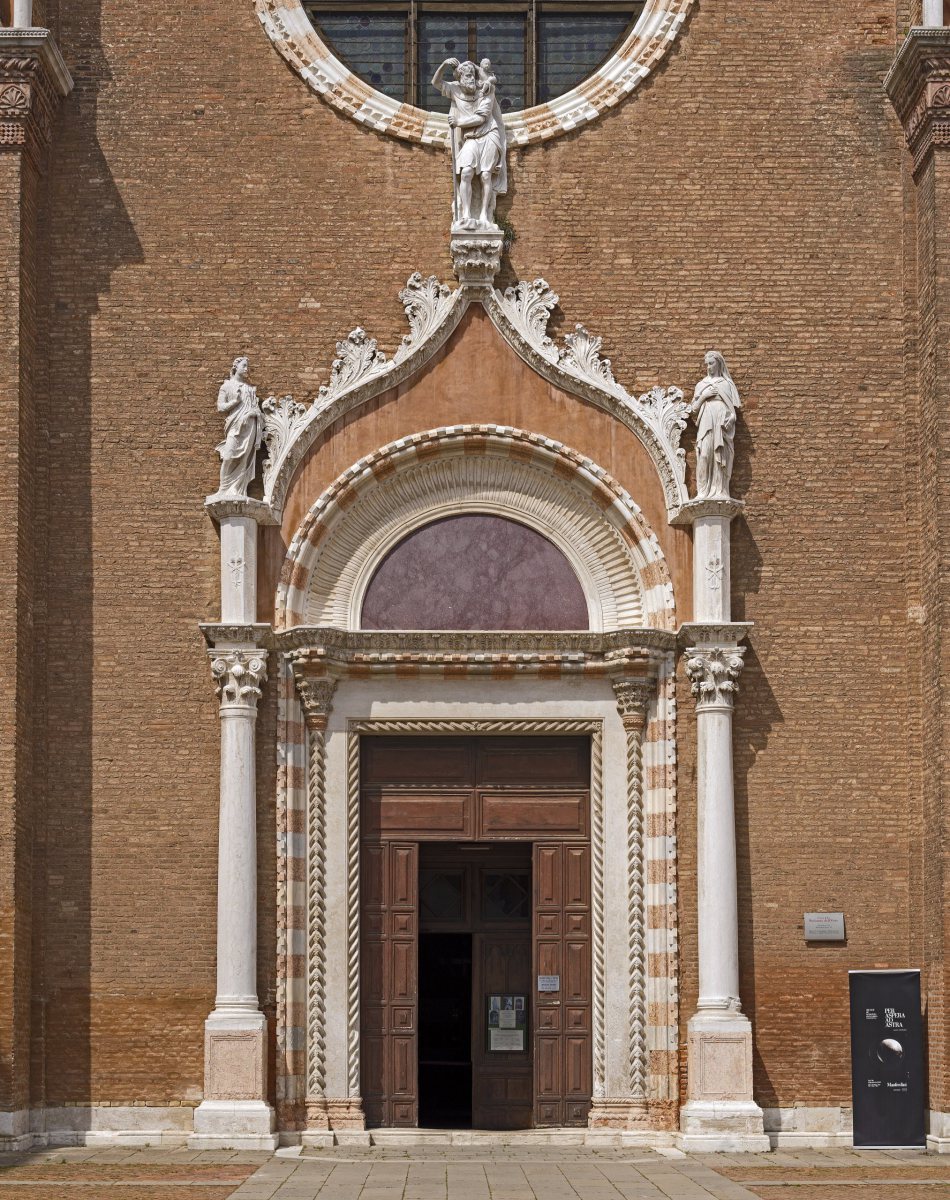
Madonna dell'Orto, portal
The Madonna dell’Orto stands at the northern end of Cannaregio, in a part of Venice that is quieter and more open towards the lagoon. Its wide brick façade dominates a campo that still preserves part of its old terracotta pavement laid in a herringbone pattern between bands of Istrian stone.
The church was built in the 14th century by the Humiliati (Umiliati) and initially placed under the patronage of Saint Christopher, protector of travellers, ferrymen and merchants, in an area then marked by commercial activities. Its current name comes from a statue of the Virgin and Child that the sculptor Giovanni de Santi had installed in the vegetable garden of his neighbouring house. Considered miraculous, it quickly attracted the faithful and processions. It was finally transferred to the church in 1377 and is now in the San Mauro chapel.
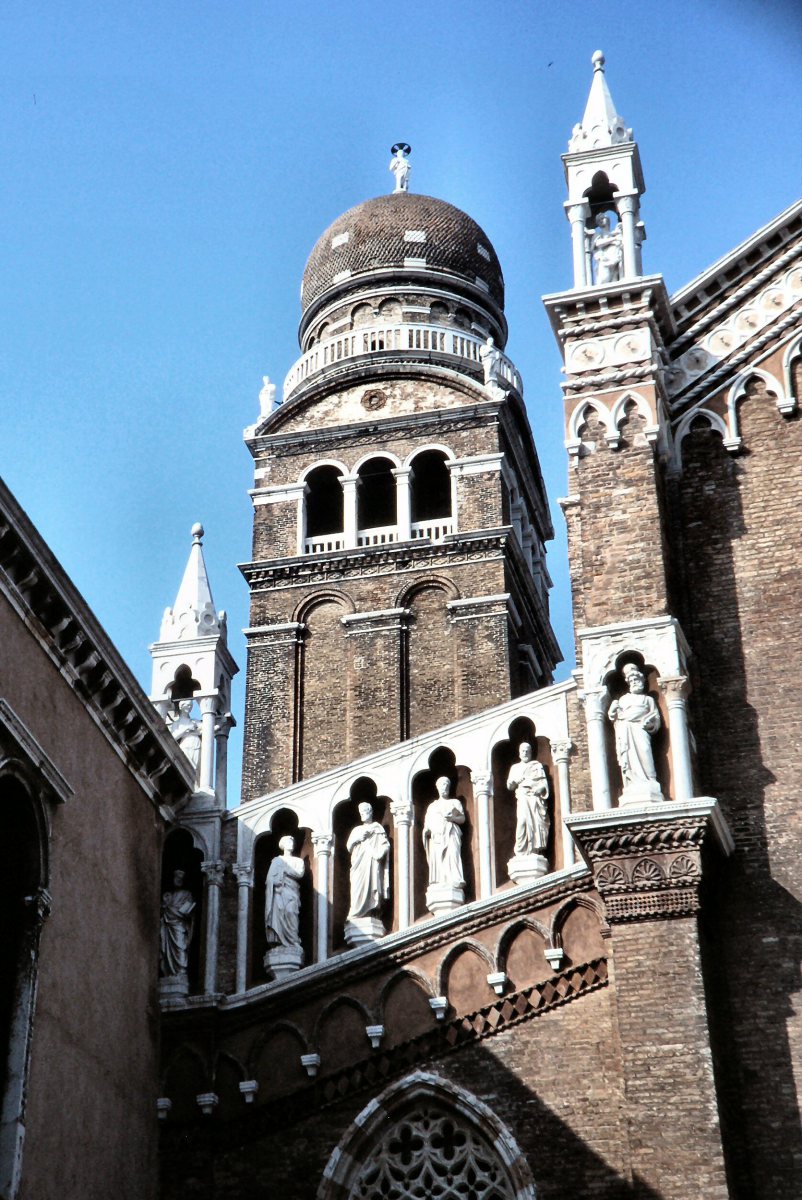
Madonna dell'Orto,
campanile
The building is among the most significant examples of Venetian Gothic. The tripartite façade combines brick with white stone frames, a large rose window and niches housing the statues of the apostles. The transformations carried out during the 15th century, however, introduced forms that were already Renaissance, particularly visible around the portal.
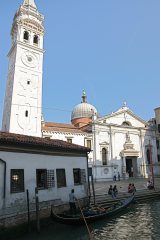
On the left side stands the remarkable bell tower, about 55 metres high, whose silhouette dominates this northern part of Cannaregio. Its square shaft ends in a more elaborate upper section, with a cylindrical drum and a dome of Oriental inspiration, also marking the transition between Gothic and Renaissance. Probably completed around 1503, it bears at the top and around the drum the statues of the Redeemer and the four Evangelists.
Inside, three naves lead to the deep chancel and the apse.
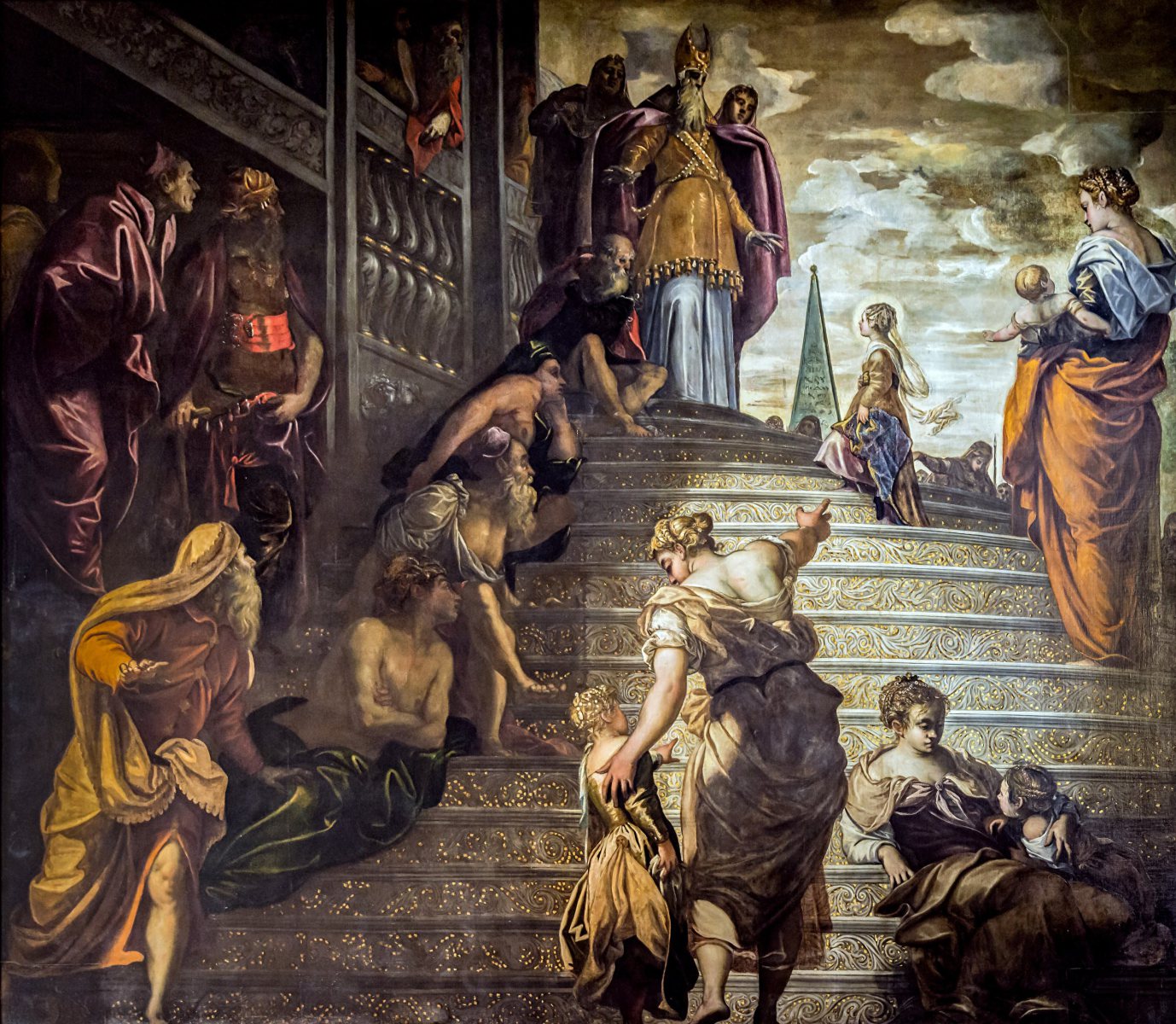
The visit is above all inseparable from Jacopo Tintoretto. The painter had his workshop a few streets away and worked in the church for about thirty years. In the chancel, the immense canvases of the Adoration of the Golden Calf and the Last Judgment, painted around 1562-1563, exploit the full height of the walls with dizzying compositions of light, crowd and movement. The Presentation of the Virgin at the Temple of 1552-1553, built around a great ascending staircase, and the Miracle of Saint Agnes, around 1577, complete this exceptional set.
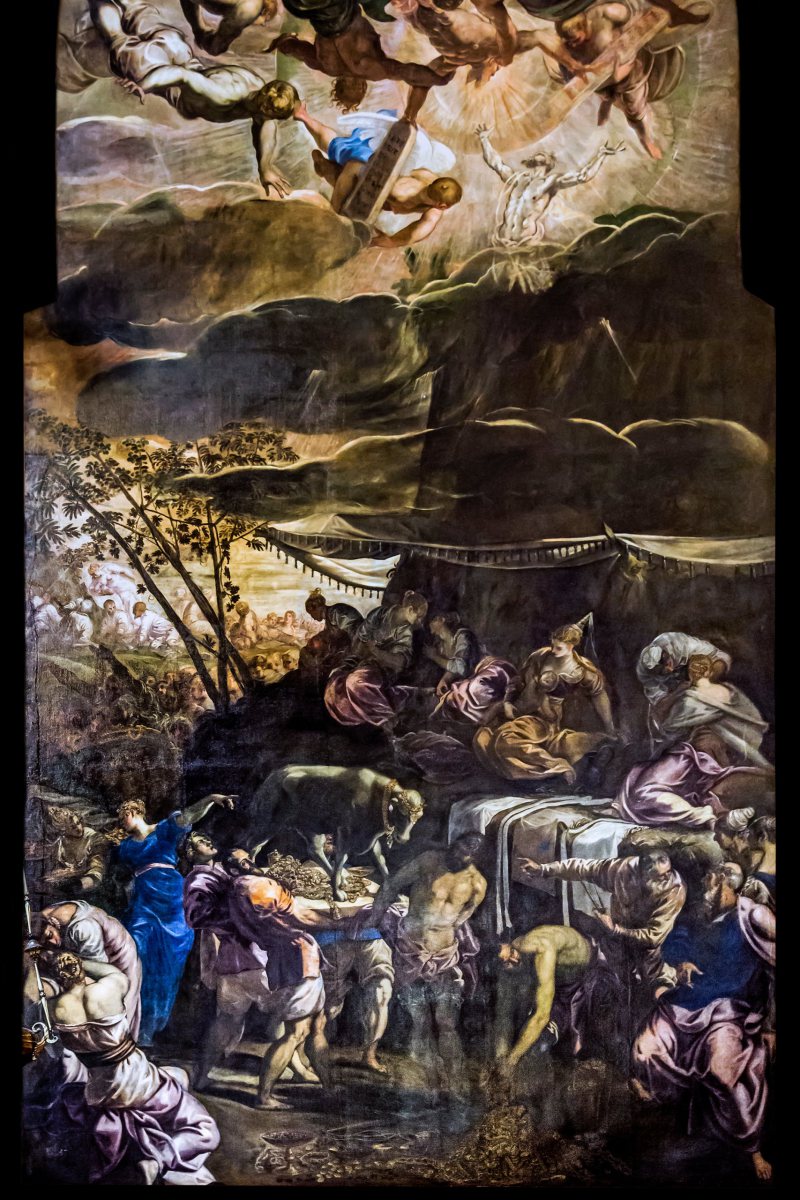
The Adoration of the Golden Calf (Tintoretto, 1563)
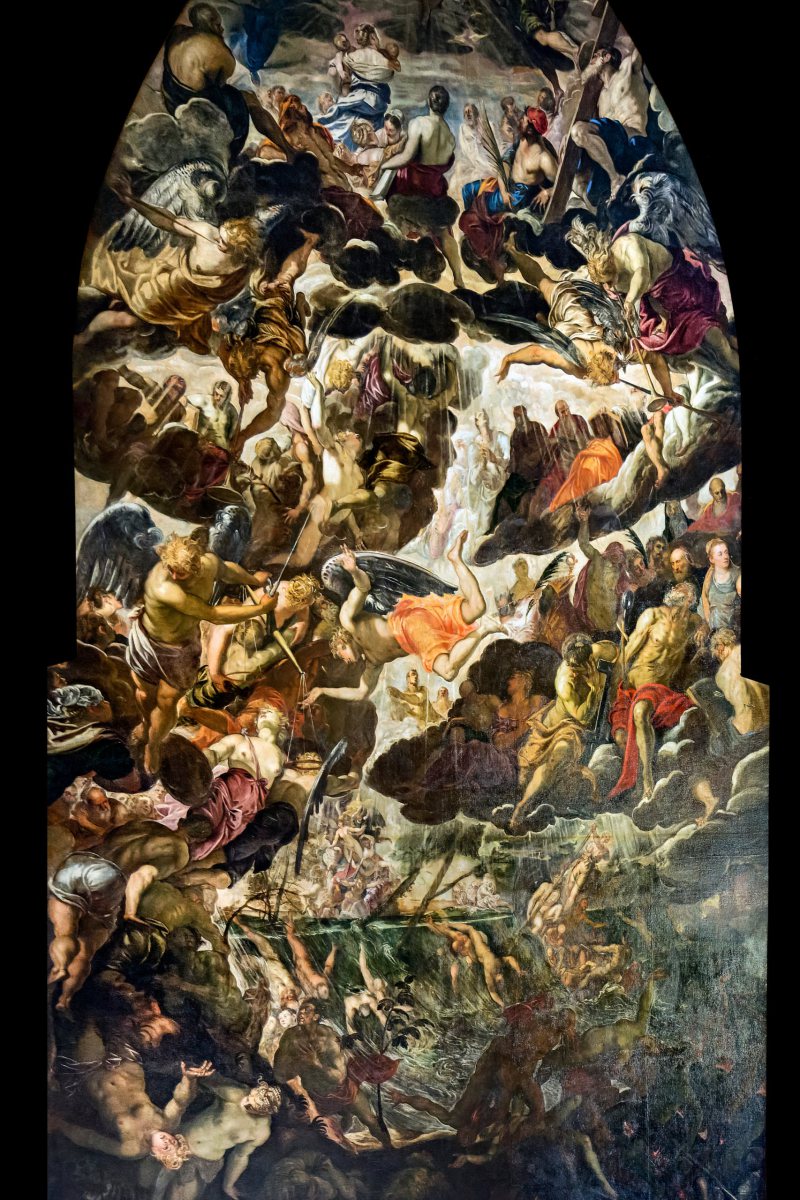
The Last Judgment (Tintoretto, 1560-62)
Presentation of the Virgin at the Temple, Tintoretto (1552-1553)
The church, however, is not limited to his memory: it notably preserves an important altarpiece by Cima da Conegliano as well as a large organ built in 1878 by Pietro and Nipoti Bazzani. This instrument with 38 stops, spread over two manuals and a pedalboard, is among the largest organs in Venice; curiously, part of the instrument had originally been designed for the Gran Teatro La Fenice.
Madonna dell’Orto thus brings together architecture, painting, music and family memory in a monument that remains intimately linked to its neighbourhood.
Sources and further information
Chorus Venezia - Madonna dell’Orto ; Chorus Venezia - The statue of Madonna dell’Orto ; Chorus Venezia - The Last Judgment by Tintoretto ; Chorus Venezia - Tomb of Tintoretto and his family ; Venezia Unica - Madonna dell’Orto.
Map and route
Near Madonna dell’Orto and places in the district
In the Cannaregio sestiere

Nearby places to stay
Sur le même thème