Campo dei Mori Square
A small campo in Cannaregio known for its statues embedded in the walls and the memory of the Mastelli merchants.
Campo dei Mori, statues and legends of Cannaregio
The Campo dei Mori is a small square in Cannaregio, a few steps from the Madonna dell'Orto church. People come here less for a central monument than for a series of singular details: statues set into the facades, ancient walls, narrow passageways, and a neighborhood atmosphere. It is precisely this almost domestic character that makes it interesting.
The name of the campo is traditionally associated with the Mastelli family, wealthy merchants originally from Morea, the old name of the Peloponnese, who settled in Venice in the Middle Ages. Three brothers, Rioba, Sandi, and Afani, are traditionally linked to the curious stone figures visible around the square. Their exact identification remains uncertain, however: the statues seem to have been made long after the time when the three merchants supposedly arrived in Venice.
These figures dressed in Oriental style bear witness, in any case, to the imagination associated with trade between Venice and the Eastern Mediterranean. A fourth figure, slightly apart, is sometimes presented as a servant. Nearby is also the Palazzo Mastelli del Cammello, the former family residence whose canal facade bears an astonishing bas-relief depicting a man leading a camel.
Sior Antonio Rioba, a statue that could speak
The most famous figure is Sior Antonio Rioba, located at the corner of the campo. His original nose having disappeared in the 19th century, it was replaced by a piece of metal that became one of his distinguishing features. Popular tradition even credits him with good-luck properties if you touch him.
Another, far less charitable legend also developed around the Mastelli. The three brothers allegedly tried to deceive a pious Venetian woman during a commercial transaction; she supposedly invoked divine justice, and the merchants were immediately turned to stone. The story obviously has nothing historic about it, but it wonderfully explains how Venice turned former foreign merchants into characters of its urban folklore.
The Campo dei Mori can be visited in a few minutes, but it deserves taking the time to observe the facades and sculptures rather than simply walking through it. It reveals a Venice made of small signs, nicknames, oral traditions, and memories of Mediterranean trade that have survived far from the great official monuments.
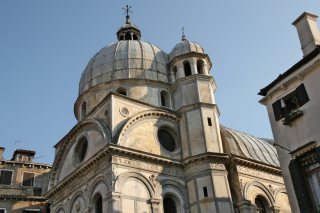
The visit naturally combines with the house of Tintoretto, located nearby, then with the church of Madonna dell'Orto. Together, they form one of the most interesting walks in northern Cannaregio, combining religious heritage, ancient dwellings, and popular legends.
Sources and further information
Venezia Unica - Cannaregio ; Le Routard - Campo dei Mori ; Corriere del Veneto - Sior Antonio Rioba.
Map and route
Near Campo dei Mori and places in the district
 Church
Madonna dell’Orto
94 m
Street / Area
Quays of the Ormesini and Misericordia
179 m
Church
Madonna dell’Orto
94 m
Street / Area
Quays of the Ormesini and Misericordia
179 m
In the Cannaregio sestiere