Santa Maria dei Miracoli Church
A small Venetian Renaissance church, entirely clad in polychrome marble.
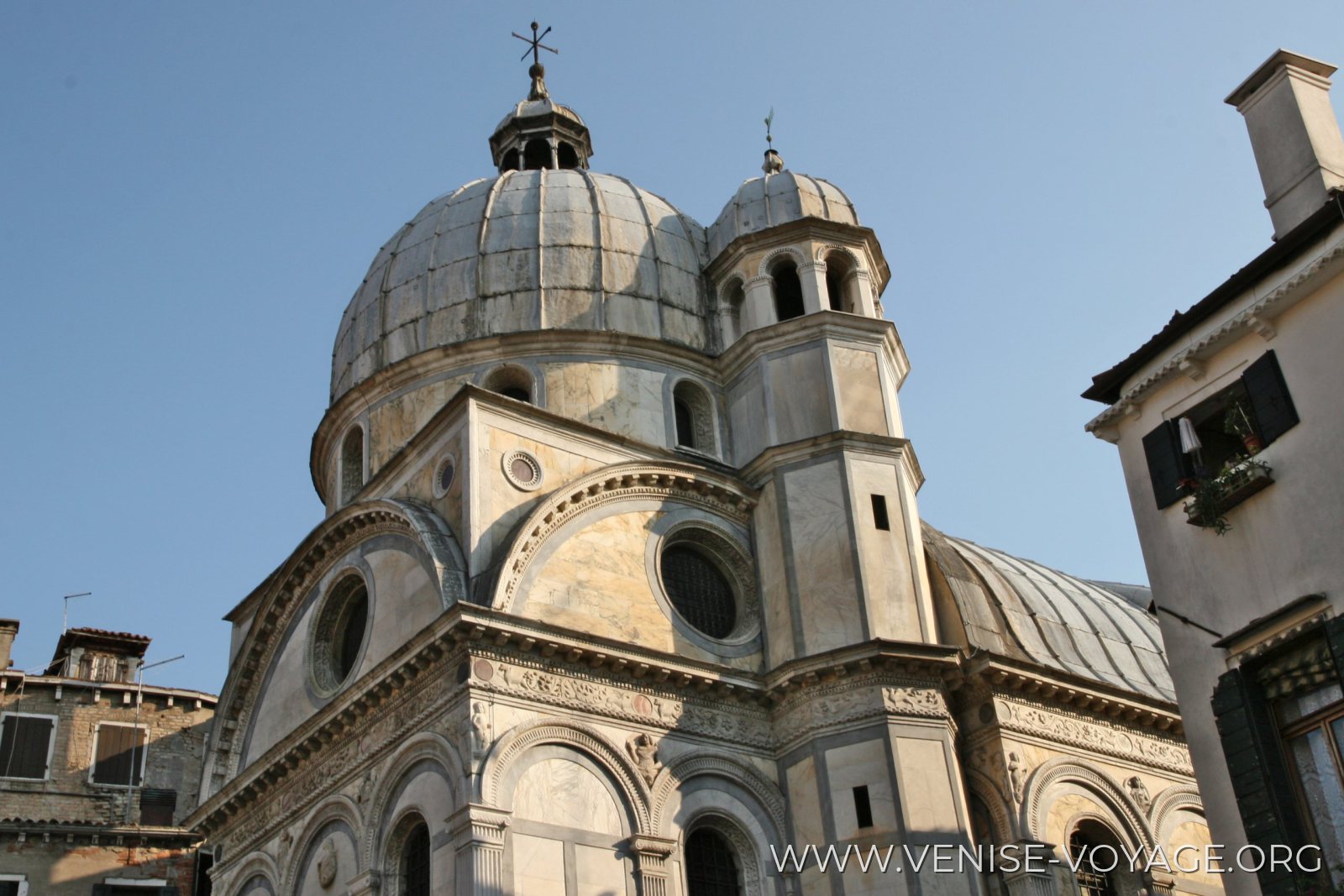
Santa Maria dei Miracoli, a marble jewel box
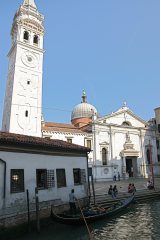
In the sestiere of Cannaregio, near the Rio dei Miracoli, Santa Maria dei Miracoli appears at the bend of the alleys. Its modest dimensions enhance the surprise effect: with its facades clad in light and colored marbles, the church looks like a precious casket set between the houses and the canal.
It was built between 1481 and 1489 on a design by Pietro Lombardo, with the participation of his workshop. Its construction responded to the devotion aroused by an image of the Virgin and Child, previously placed in a niche on the street and to which miracles were attributed. The venerated image is still on the main altar.
Unlike many Venetian churches transformed over the centuries, Santa Maria dei Miracoli was designed and decorated over a short period. It thus preserves a rare stylistic unity and constitutes a particularly coherent testimony of the early Venetian Renaissance.
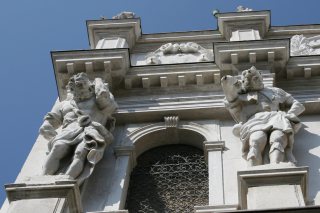
Outside, pilasters, blind arcades, cornices, discs and geometric inlays structure the surfaces. Polychrome marbles, red porphyry and green serpentine compose a décor where architecture and sculpture respond to each other. The large semi-circular crowning of the facade accentuates its unique character.
Santa Maria dei Miracoli
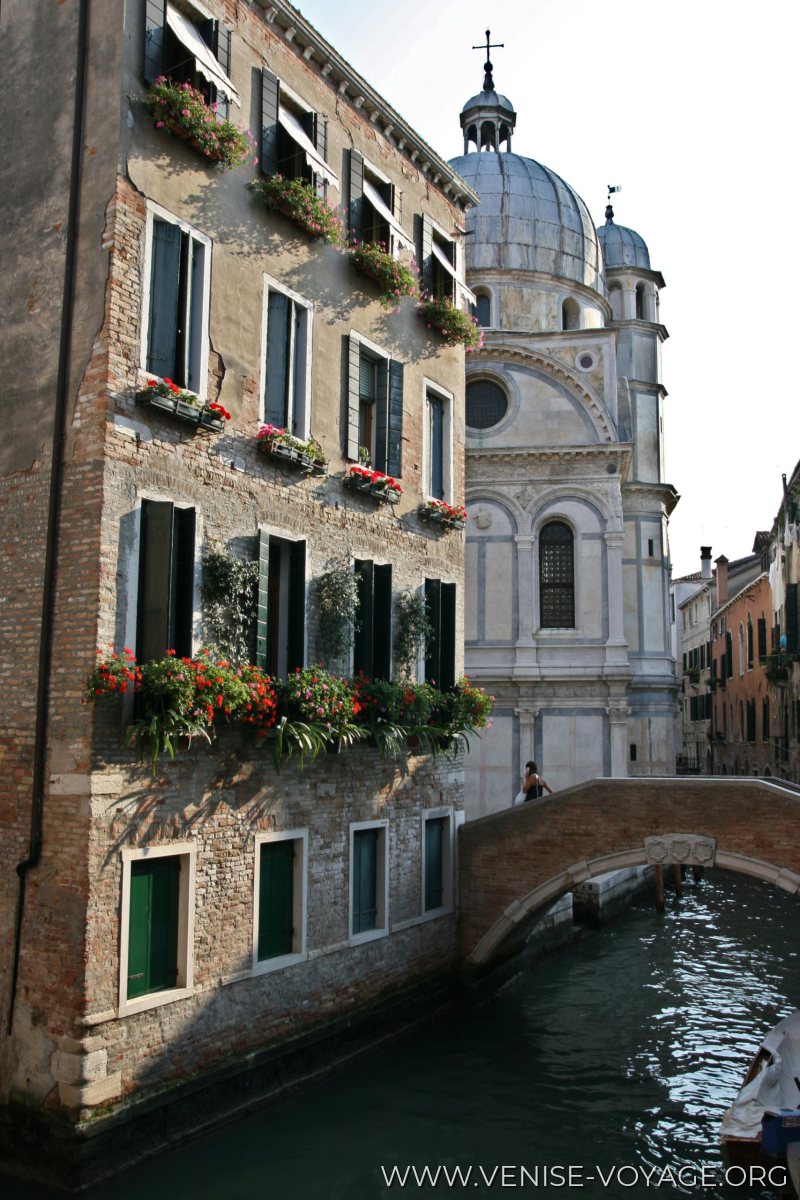
Santa Maria dei Miracoli
An interior sculpted in marble
The single nave leads to a highly raised presbytery, accessible by a wide marble staircase flanked by two ambos. Balustrades, reliefs and inlays give the whole an almost sculptural precision. Above the entrance remains the ancient gallery of the Poor Clares of the neighboring convent, formerly connected to it by a raised passage now disappeared.
The great barrel vault also deserves attention: its gilded wooden coffered ceiling houses fifty painted panels representing prophets and patriarchs, attributed to Pier Maria Pennacchi and his collaborators. The four Evangelists sculpted in the pendentives complete the decoration of the presbytery.
The current appearance also owes much to the restoration carried out from 1987 to 1997. The marbles, weakened in particular by humidity and salts, were cleaned, desalinated and consolidated. The visit remains short but dense: facade, choir staircase, reliefs, ceiling and light on the marbles reveal an intimate Venetian Renaissance, very different from the great basilicas of the city.
Sources and further information
Chorus Venezia - Santa Maria dei Miracoli ; Save Venice - Santa Maria dei Miracoli ; UNESCO - restoration of Santa Maria dei Miracoli.
Map and route
Near Santa Maria dei Miracoli and places in the district
 Monument
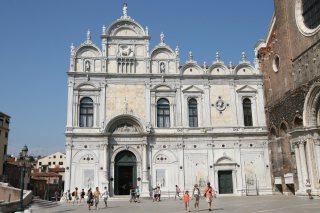
Scuola Grande di San Marco
180 m
Monument
Scuola Grande di San Marco
180 m
 Church
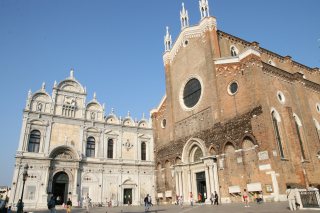
Basilica of Santi Giovanni e Paolo
251 m
Church
Basilica of Santi Giovanni e Paolo
251 m
 Church
Ospedaletto (Santa Maria dei Derelitti)
290 m
Church
Ospedaletto (Santa Maria dei Derelitti)
290 m
In the Cannaregio sestiere

Nearby places to stay
Sur le même thème