Basilica of Santi Giovanni e Paolo Church
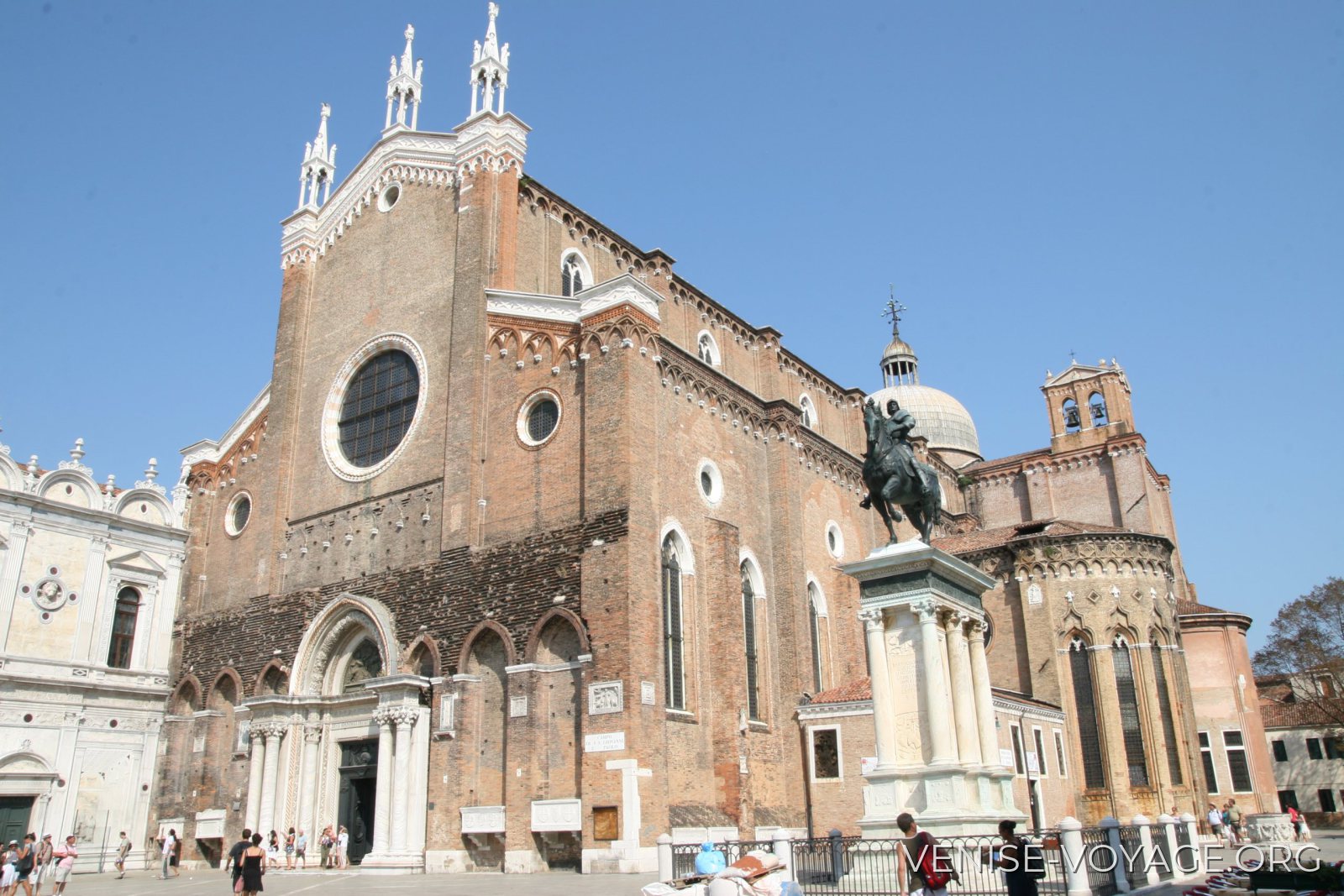
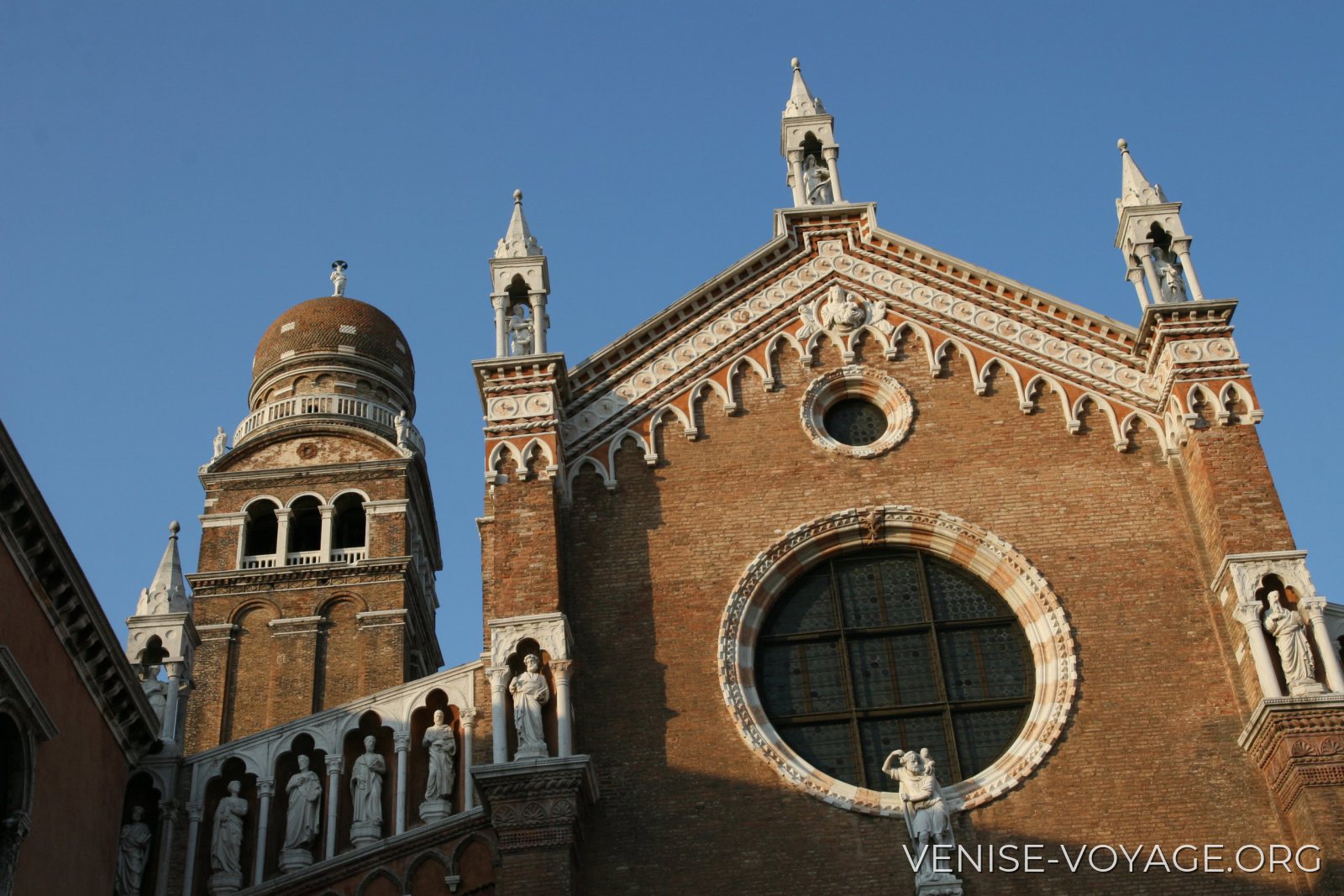
This large Dominican basilica, often called San Zanipolo, is known for the tombs of the doges. Outside, it forms with the Scuola Grande and the statue of Colleoni an exceptional urban ensemble: the Gothic brick facade, the Renaissance decor of the Scuola, and the bronze by Verrocchio. These three monuments surrounding the campo illustrate several centuries of Venetian political, religious, and artistic power.
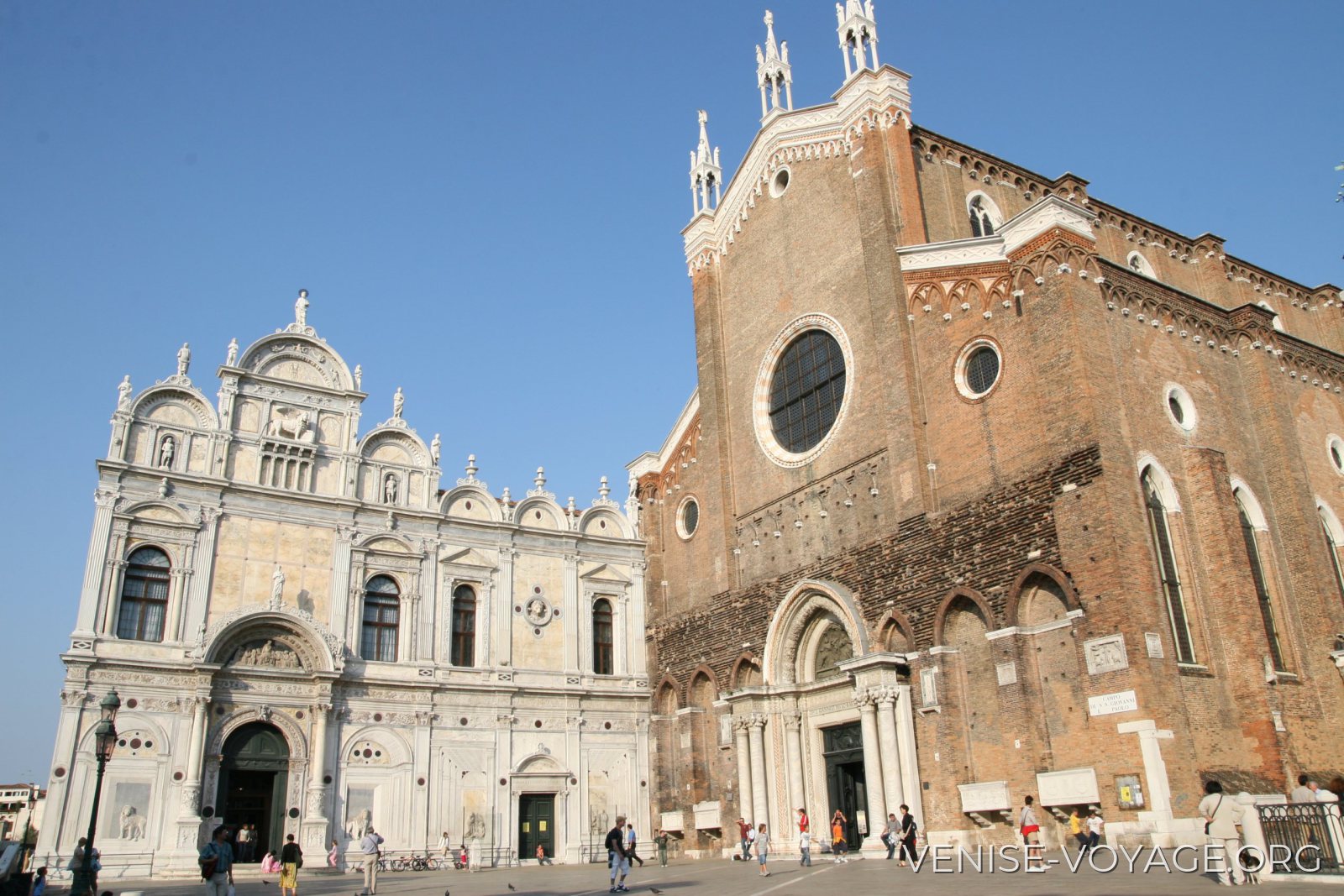
Santi Giovanni e Paolo, grandeur of Dominican Gothic
The basilica of Santi Giovanni e Paolo dominates one of the most beautiful campi of Castello. The Venetians commonly call it San Zanipolo, a Venetian contraction of the name of the two saints to whom it is dedicated. By its dimensions, its brick architecture, and the role it played in the ceremonies of the Republic, it ranks among the great religious monuments of Venice, with a much more austere presence than that of St Mark's Basilica.
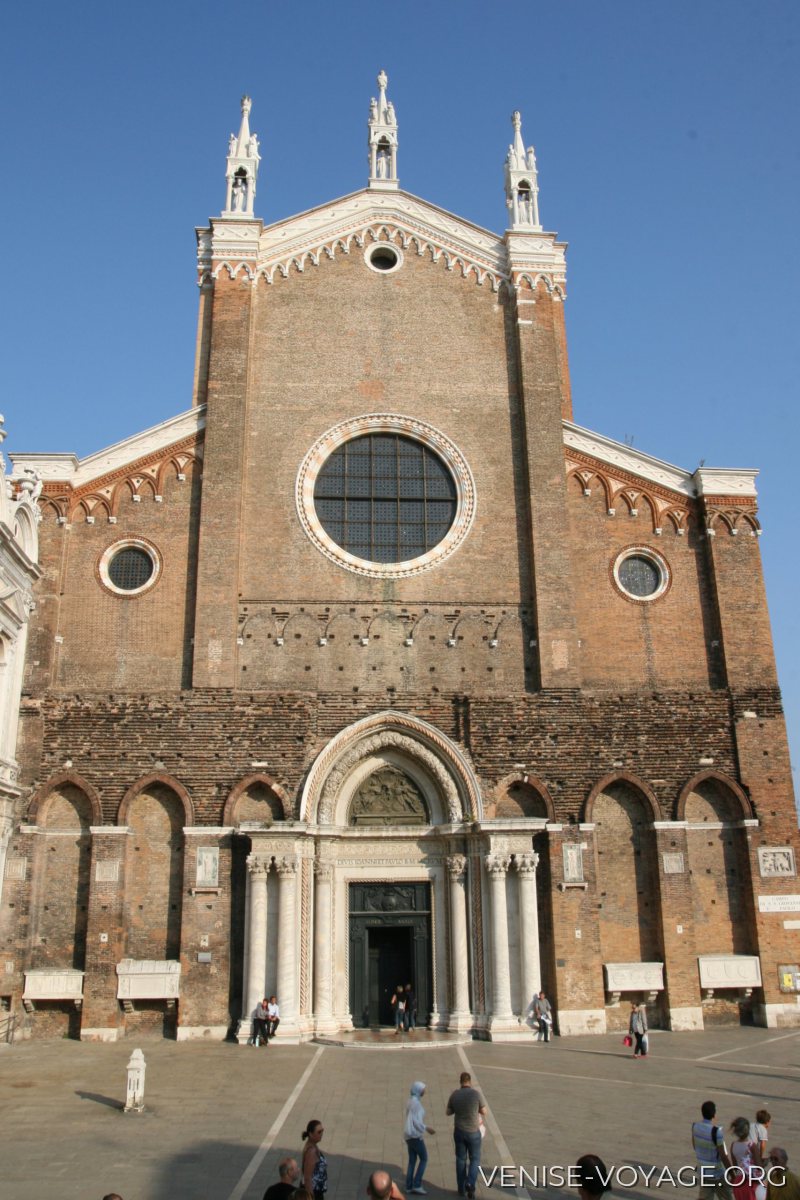
e Paolo
The Dominicans settled here in the 13th century, when Doge Jacopo Tiepolo granted them a still largely marshy plot of land. A first church was quickly built, but the growing importance of the convent and the choice of many doges to establish their burial place there led to its enlargement. The major works were completed in the 14th century and the basilica was finally consecrated in 1430.
The building belongs to the Venetian Gothic of the mendicant orders, designed to accommodate large assemblies and to favor preaching. Behind a relatively sober facade, punctuated by a marble portal and a large rose window, the interior surprises with its vastness: about 102 meters in length, three tall naves separated by powerful columns and pointed arches that lead the eye toward the vast choir.
Brick dominates the exterior, but the interior plays more on light, height, and contrast with the marble monuments accumulated over the centuries. The large polychrome Gothic stained-glass window of the transept, made in the 16th century with Murano glass, is considered the largest of its kind preserved in Venice.
The pantheon of the doges of Venice
San Zanipolo was long considered the main church of representation of the Republic after St Mark's. The patrician families had increasingly ambitious funerary monuments built there, gradually transforming its walls into a veritable sculpted history of Venetian power.
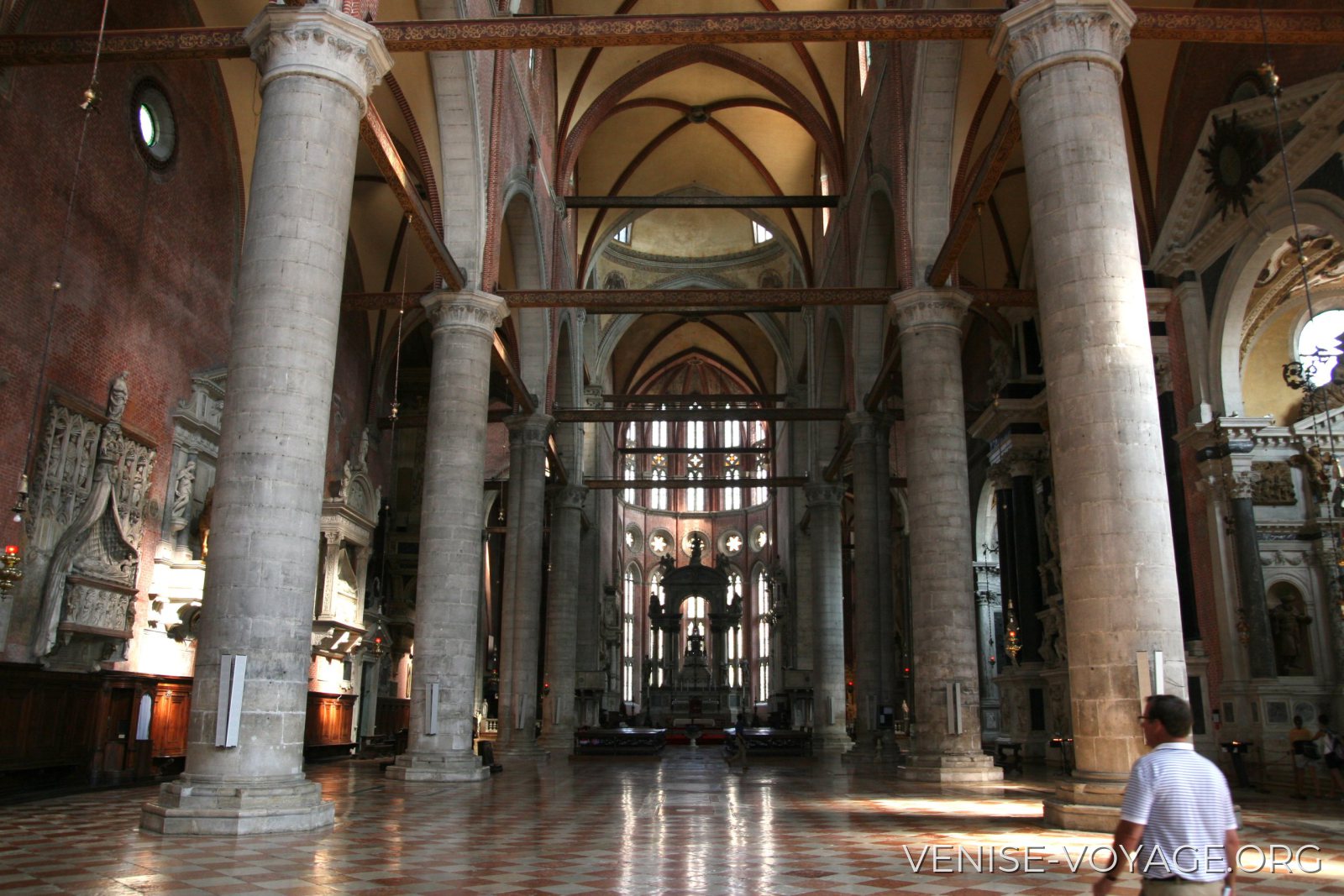
The basilica preserves at least 150 funerary slabs and 37 monumental tombs, 25 of which are dedicated to doges between the 13th and 18th centuries. Among others, one encounters the monuments of Jacopo Tiepolo, Andrea Vendramin, Leonardo Loredan, Michele Morosini, and Sebastiano Venier, commander of the Venetian fleet during the Battle of Lepanto in 1571. The counter-facade itself is occupied by the imposing monuments of several members of the Mocenigo family.
This accumulation is not only a matter of funerary memory. The tombs were also public demonstrations of family prestige, mixing portraits, allegorical virtues, ancient references, and symbols of the Republic. Their succession thus allows one to follow several centuries of evolution of Venetian sculpture, from Gothic to Renaissance and then to Baroque.
Among the other illustrious figures associated with the basilica are the painters Giovanni and Gentile Bellini. Also preserved here are the remains of Marcantonio Bragadin, the Venetian defender of Famagusta, executed by the Ottomans in 1571 after the capture of the city. His fate made him one of the great heroic figures of Venetian military memory.
Paintings, chapels, and treasures of San Zanipolo
The tombs should not make one forget the works of art. Among the most important are the polyptych of Saint Vincent Ferrer by Giovanni Bellini, the Alms of Saint Antoninus by Lorenzo Lotto, and several large compositions by Paolo Veronese. The basilica also preserves an ancient Byzantine icon of the Madonna della Pace and numerous sculptures and paintings commissioned by confraternities or powerful Venetian families.
The Rosary Chapel is one of the richest ensembles. Its current decor includes in particular a cycle by Paolo Veronese devoted to the Virgin. This abundance, however, is the result of a reconstruction: a major part of the earlier decor disappeared in a fire in the 19th century.
The visit benefits from alternating between these particular works and the general perception of the building. The vast interior space, the rows of tombs, and the large bays give the basilica a monumentality very different from that of the more decorative churches of Venice. San Zanipolo is at once a Dominican church, a museum of funerary sculpture, and a place where the Republic durably staged its own memory.
Gallery
Sources and additional information
Basilica of Santi Giovanni e Paolo - history ; Basilica of Santi Giovanni e Paolo - art and funerary monuments ; Venezia Unica - Basilica of Santi Giovanni e Paolo.
Map and route
Near the Basilica of Santi Giovanni e Paolo and places in the district
 Church
Ospedaletto (Santa Maria dei Derelitti)
56 m
Monument
Statue of Colleoni
78 m
Church
Ospedaletto (Santa Maria dei Derelitti)
56 m
Monument
Statue of Colleoni
78 m
 Monument
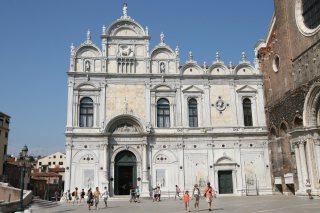
Scuola Grande di San Marco
90 m
Monument
Scuola Grande di San Marco
90 m
 Church
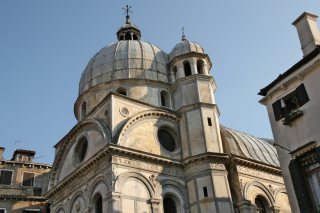
Santa Maria dei Miracoli
251 m
Church
Santa Maria dei Miracoli
251 m
In the Castello sestiere