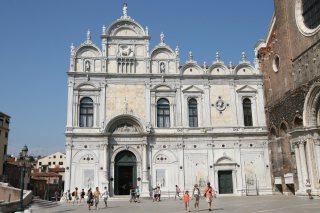
Scuola Dalmatà San Giorgio degli Schiavoni Museum
Ancient Dalmatian confraternity of Castello, famous for the cycle painted by Vittore Carpaccio.
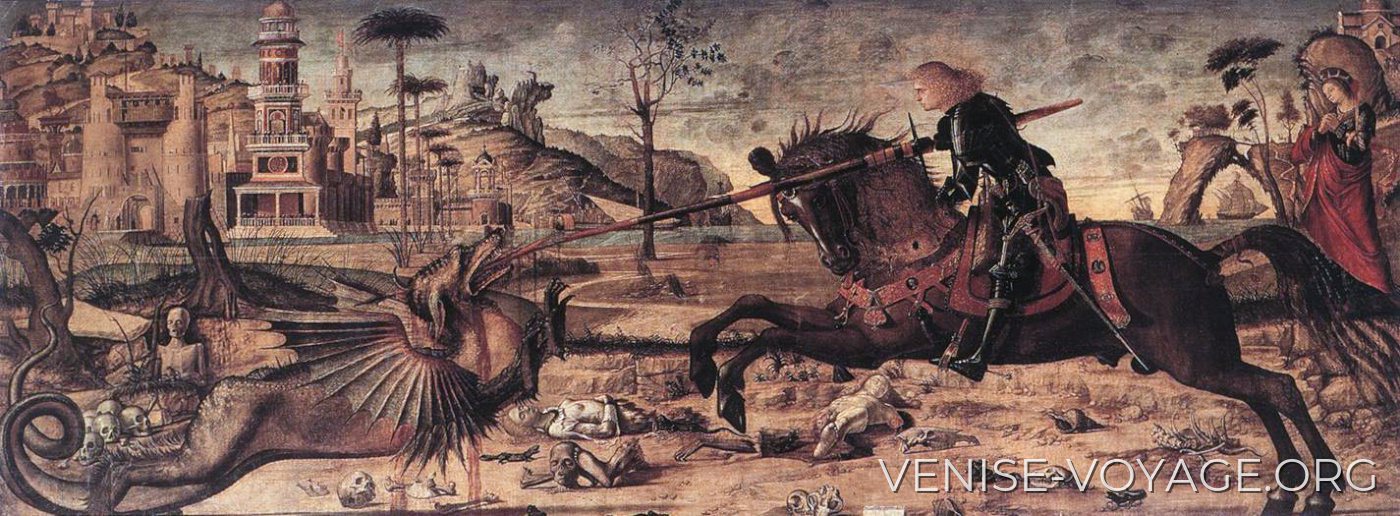
Scuola Dalmata, Carpaccio in its original setting
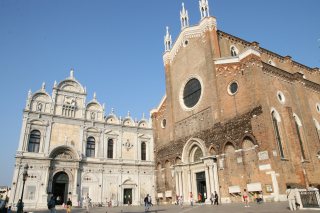
The Scuola Dalmata dei Santi Giorgio e Trifone, also called Scuola di San Giorgio degli Schiavoni, is located in the sestiere of Castello, not far from San Zaccaria and the Arsenal. This ancient confraternity brought together the Dalmatians established in Venice or passing through the city, a community closely linked to the maritime history of the Republic.
Founded in 1451 with the authorization of the Council of Ten, it served as a place of worship, assistance, and meeting for sailors, artisans, and merchants coming from the eastern shore of the Adriatic. Redesigned in the 16th century, its facade notably bears a relief of Saint George slaying the dragon, protector of the confraternity.
Carpaccio in the very place where it was commissioned
The lower room preserves an exceptional cycle painted by Vittore Carpaccio at the beginning of the 16th century, devoted mainly to Saint George, Saint Tryphon, and Saint Jerome. The large canvases still surround the visitor in the relatively intimate space for which they were designed.
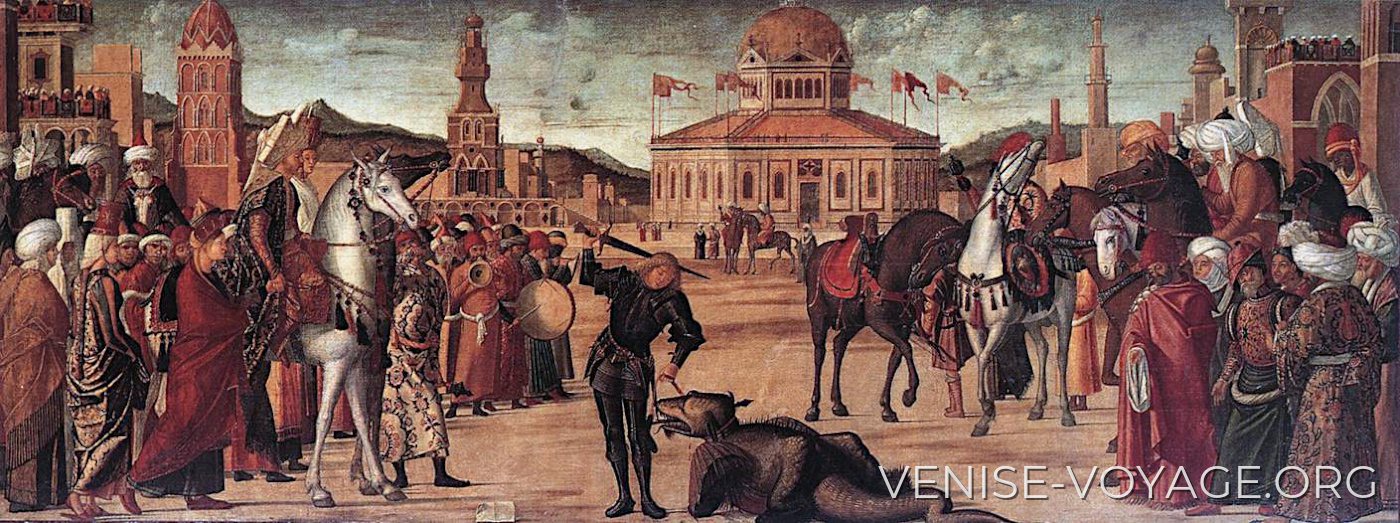
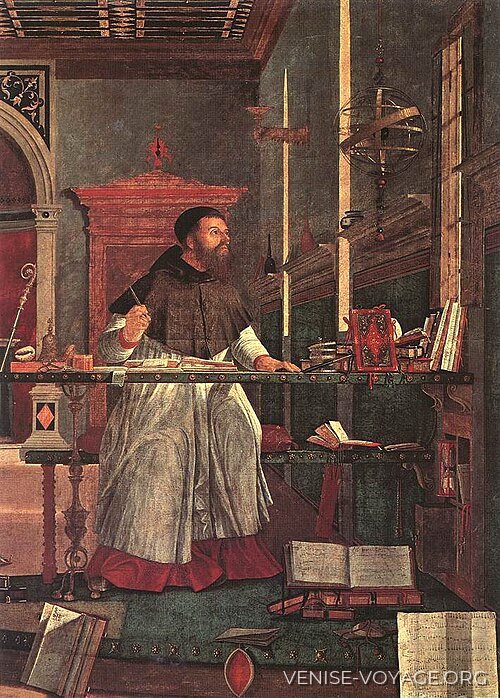
Here Carpaccio deploys a narrative art of great precision: imaginary architectures, costumes, animals, secondary gestures, and oriental horizons compose a Venice open to the Adriatic and the Orient. Saint George and the Dragon and Saint Augustine in His Study are among the most famous scenes.
Each composition can be read as a spectacular narrative, then observed in its smallest details. The legendary episodes thus take on the appearance of almost familiar scenes, populated with characters absorbed in their occupations, sometimes unsettling animals, and objects described with remarkable precision.
The scuola also allows us to understand the role of integrated foreign communities in Venice. They had their statutes, their patron saints, their mutual aid networks and their places of representation, while fully participating in the economic, religious, and maritime life of the city.
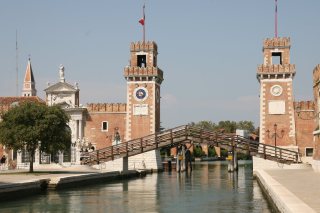
The visit is short, but essential for lovers of Venetian painting. It complements very well San Zanipolo, San Francesco della Vigna, and a route towards the Arsenal. Here, Carpaccio is not discovered in a vast gallery, but just a few meters away, in the true setting of his narratives.
Sources and further information
Scuola Dalmata dei Santi Giorgio e Trifone - official website ; Scuola Dalmata - history of the confraternity ; Scuola Dalmata - works and rooms ; Venezia Unica - Scuola Dalmata.
Map and route
Near the Scuola Dalmatà San Giorgio degli Schiavoni and places in the district
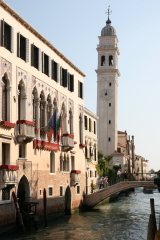 Church
 of San Giorgio dei Greci
164 m
Church
Church of San Giovanni in Bragora
226 m
Church
Church of San Giorgio dei Greci
164 m
Church
Church of San Giovanni in Bragora
226 m
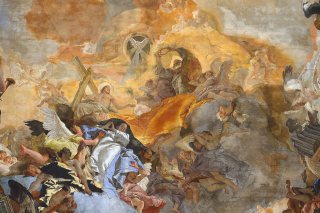 Church
 of the Pietà
259 m
Church
Church of the Pietà
259 m
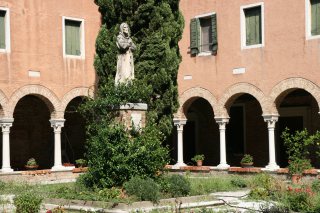 Church
San Francesco della Vigna
272 m
Church
San Francesco della Vigna
272 m
In the Castello sestiere