Ca’ Vendramin Calergi Palace
Grand palace of the Venetian Renaissance in the Cannaregio district, now home to the casino and linked to Richard Wagner's last days. Its aristocratic façade stretches along the Grand Canal.
Ca’ Vendramin Calergi, Renaissance on the Grand Canal
Ca’ Vendramin Calergi stands directly on the Grand Canal, in the Cannaregio district, near San Marcuola. Its large, rigorously ordered façade of light stone contrasts with the Gothic palaces with more open bays often associated with Venice. It bears witness to the arrival, at the end of the 15th century, of a new architectural language inspired by the Renaissance and classical antiquity.
The palace was commissioned by the wealthy patrician Andrea Loredan at the end of the 15th century. Its design is generally attributed to Mauro Codussi, one of the architects who contributed most to introducing Renaissance forms into Venetian architecture. Codussi died in 1504 and did not see the completion of the building, finished a few years later and traditionally associated with the Lombardo workshop.
A new façade in Renaissance Venice
The composition remains faithful to the principle of the Venetian palace open to the water, but it largely abandons the Gothic vocabulary. The two noble floors are punctuated by columns and pilasters of classical inspiration, large arched windows, and powerful horizontal lines that give the façade an almost monumental regularity. The double bays surmounted by arches nevertheless retain a certain Venetian lightness: the palace does not simply copy Florence or Rome; it adapts the Renaissance to local customs.
The building was also conceived as a demonstration of its owners’ rank. Andrea Loredan belonged to one of the great families of the Republic, and the palace once housed an important collection of works of art. Over the centuries, it changed hands several times, notably passing to the Calergi and then the Vendramin families, whose names eventually formed the one by which it is known today.
In the 19th century, the palace experienced a new brilliant period. It belonged in particular to Marie-Caroline de Bourbon-Siciles, Duchess of Berry, who maintained an important social and artistic life there. The interiors still preserve decorations, paintings, and woodwork bearing witness to the successive transformations of this aristocratic residence.
But its most famous occupant remains Richard Wagner. The German composer stayed in Venice several times and rented part of Ca’ Vendramin Calergi during his last visit. In the city, he sought the calm that the great European capitals could hardly provide him. He died in the palace on 13 February 1883, at the age of 69.
Since the mid-20th century, Ca’ Vendramin Calergi has housed the Casino of Venice (Casinò di Venezia). This use naturally limits free visits to the palace, even though some spaces are accessible through special activities and the Wagner Museum. The building also retains a garden, a relatively rare feature that is not very visible from the Grand Canal.
Even without entering, the façade is worth observing from the opposite bank or, better yet, from a vaporetto on the Grand Canal. Its symmetry, its large bays, and the superimposition of architectural orders help us understand how much this palace heralded a new way of building aristocratic residences in Venice.
In Cannaregio, Ca’ Vendramin Calergi finally reminds us that the district is not limited to the Ghetto or to its popular and commercial sectors. Along the Grand Canal also stretches a true aristocratic façade, of which this great Venetian Renaissance palace is one of the most accomplished examples.
Sources and additional information
Casino of Venice - Ca’ Vendramin Calergi ; Venezia Unica - Cannaregio ; Venice Tourism - Ca’ Vendramin Calergi.
Map and route
Near the Ca’ Vendramin Calergi and places in the district
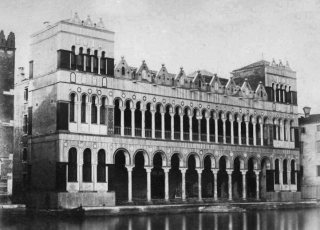 Museum
Fontego dei Turchi
96 m
Museum
Fontego dei Turchi
96 m
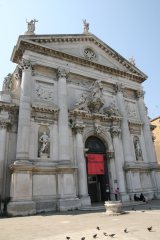 Church
San Stae
140 m
Church
San Zan Degolà
174 m
Church
San Stae
140 m
Church
San Zan Degolà
174 m
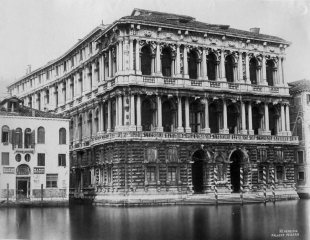 Museum
Ca’ Pesaro
211 m
Museum
Ca’ Pesaro
211 m
In the Cannaregio sestiere


Nearby places to stay
Sur le même thème