San Stae Church
Church in Santa Croce overlooking the Grand Canal, known for its Baroque facade and its 18th-century paintings. San Stae easily fits into a walk between Ca' Pesaro, the Fontego dei Turchi, the Mocenigo Palace and San Giacomo dall'Orio. Through its architecture and collections, it gives the district a particularly strong artistic presence on the Grand Canal.
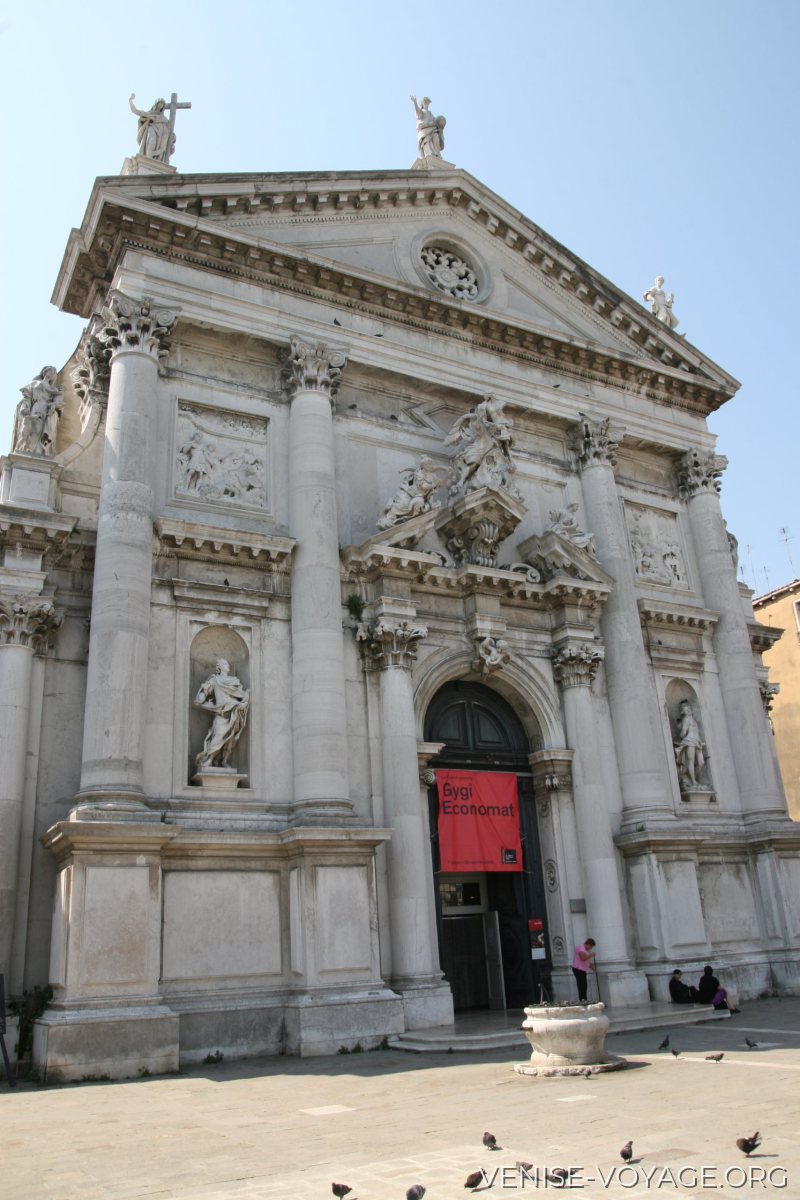
San Stae, Baroque on the Grand Canal
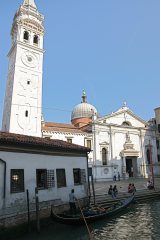
The San Stae church stands out with its facade directly facing the Grand Canal, at the edge of a small campo open to the water. In the sestiere of Santa Croce, it is one of the places where religious architecture was clearly designed to be admired from boats as much as from the city's streets.
Its name is the Venetian form of San Eustachio, Saint Eustace, a Roman officer converted to Christianity according to tradition. A church existed here from the Middle Ages, but the current building is the result of an almost complete reconstruction begun in 1678. The project was entrusted to Giovanni Grassi, an otherwise poorly documented architect, who designed a sober and coherent interior marked by the influence of Palladio.
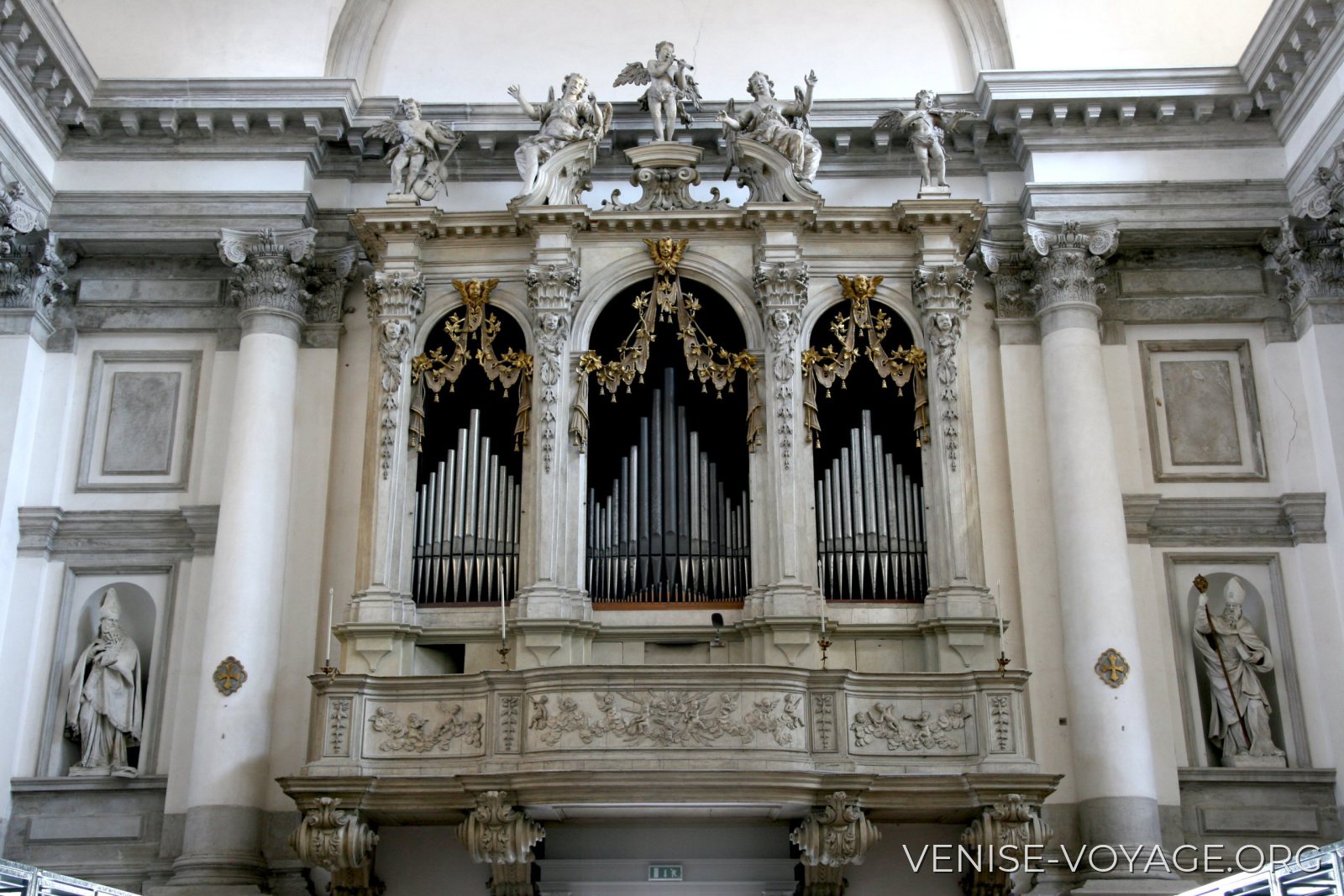
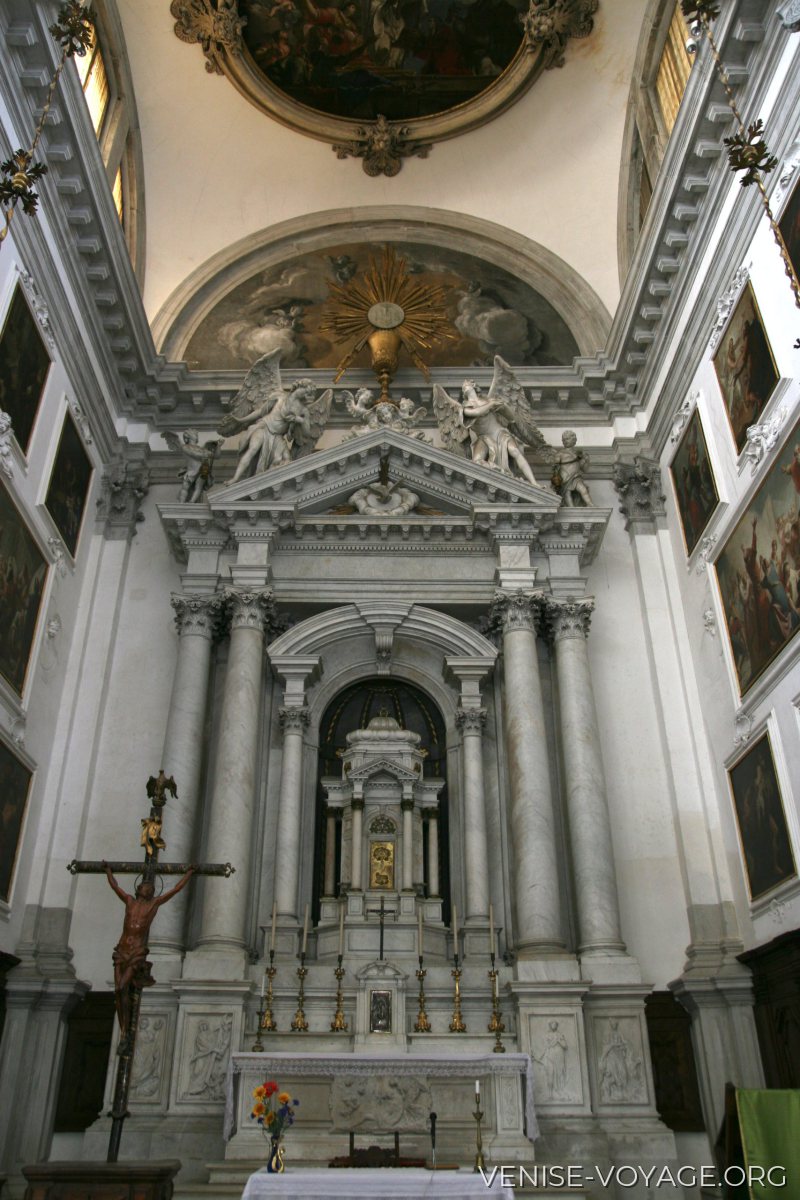
The single nave is lined with three chapels on each side and leads to a presbytery particularly rich in paintings. This clear organization avoids the impression of accumulation that certain Baroque interiors can produce: the altars, sculptures and paintings remain legible and integrate into an architecture with balanced proportions.
A facade designed as a stage on the Grand Canal
The monumental facade was added in 1709 thanks to the bequest of Alvise II Mocenigo, Doge of Venice from 1700 to 1709. An architecture competition was organized and won by Domenico Rossi, whose project was preferred over several other proposals. The works were completed around 1710.
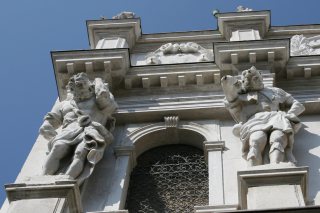
Rossi composed a white stone facade structured by columns, niches, a large pediment and abundant sculpted decoration. Several important artists took part, including Giuseppe Torretto, Antonio Tarsia, Pietro Baratta and Antonio Corradini. The figures of saints, angels and reliefs give the whole an almost theatrical depth, reinforced by the changing reflections of the canal.
This facade is therefore not a simple cladding added to the church: it asserts its presence in the ceremonial landscape of the Grand Canal. From a vaporetto, it appears between the palaces as a true public stage, intended to proclaim at once the faith, the generosity of the patron and the artistic prestige of Venice.
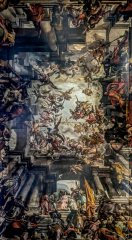
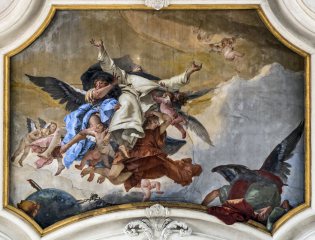
The interior preserves one of the most interesting collections for understanding Venetian painting of the early 18th century. Around the presbytery are arranged twelve small canvases devoted to the Apostles, commissioned from several artists then coming into their own. This choice today makes it possible to compare, in the same space, very different styles.
Among the major works are the Martyrdom of Saint Bartholomew, painted in 1722 by the young Giambattista Tiepolo, the Martyrdom of Saint James by Giambattista Piazzetta and the Liberation of Saint Peter by Sebastiano Ricci. The church also preserves works by Antonio Balestra, Jacopo Amigoni, Francesco Migliori and Giuseppe Angeli.
At the center of the pavement, a large funerary slab marks the burial of the Mocenigo family, recalling the close link between the church and this powerful patrician dynasty. The decoration of San Stae thus combines devotion, family memory and artistic patronage, three dimensions often inseparable in the churches of the Republic of Venice.
The visit remains relatively brief, but particularly dense. From the campo or the vaporetto, one first observes the facade and its dialogue with the water; inside, the eye can then focus on the chapels, the presbytery and the paintings, in a building less vast and less cluttered than several more famous Baroque churches.
Gallery
Sources and additional information
Map and route
Near San Stae and places in the district
 Museum
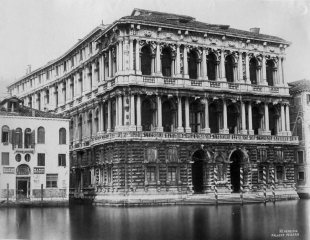
Ca’ Pesaro
73 m
Museum
Ca’ Pesaro
73 m
 Museum
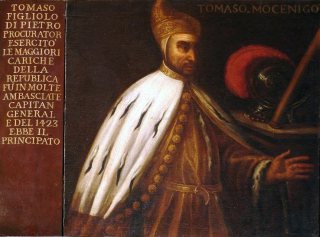
Mocenigo Palace-Museum
116 m
Palace
Ca’ Vendramin Calergi
140 m
Museum
Mocenigo Palace-Museum
116 m
Palace
Ca’ Vendramin Calergi
140 m
 Museum
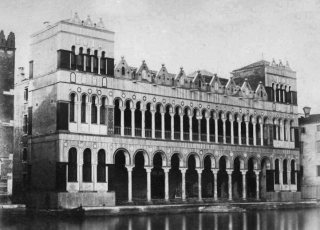
Fontego dei Turchi
175 m
Museum
Fontego dei Turchi
175 m
In the Santa Croce sestiere

Nearby places to stay
Sur le même thème