Fontego dei Turchi Museum
Former warehouse-residence of Ottoman merchants, restored in the 19th century and now a natural history museum. The visit combines the building's commercial and cosmopolitan past with the natural sciences.
Fontego dei Turchi, trade and natural history
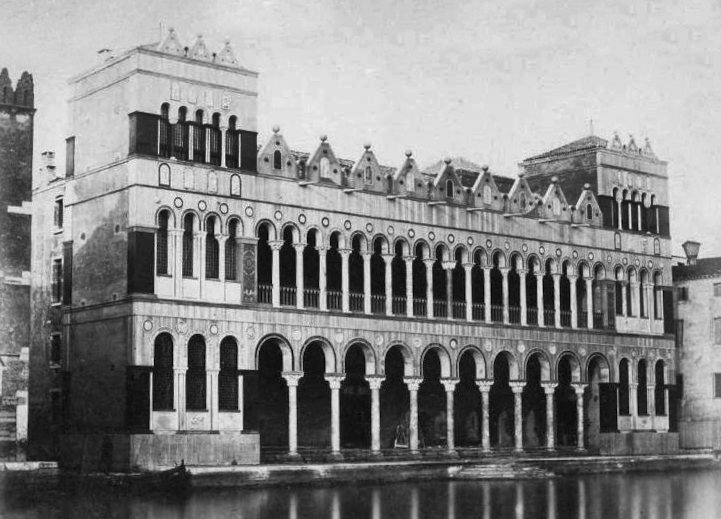
The Fontego dei Turchi borders the Grand Canal in the Santa Croce sestiere, near San Stae. Its long white arcaded facade recalls the ancient Venetian case-fondaco, which combined residence, warehouses and commercial spaces. Its current appearance, however, is largely the result of a 19th-century reconstruction and does not exactly correspond to that of the medieval palace.
From the Pesaro palace to the Ottoman fondaco
The first building was constructed in the first half of the 13th century by Giacomo Palmieri, an ancestor of the Pesaro family. Sold to the Republic of Venice in 1381, it notably served as a prestigious residence for sovereigns and foreign guests. In 1621, the Serenissima assigned it to merchants from the Ottoman Empire: it then became the Fontego dei Turchi, a function it maintained until the 19th century.
Like the other fondachi, the building allowed foreign merchants to lodge, store their goods and carry out their transactions. Ottoman merchants brought mainly wax, oil, wool, hides and then tobacco. The palace also had a Muslim prayer room and spaces for ablutions.
A palace largely recreated in the 19th century
Very deteriorated in the 19th century, the Fontego became city property in 1859. From 1860, Federico Berchet directed a considerable reconstruction: the wall was removed, and the two towers and crenellations were recreated, inspired notably by old representations of Venice. The current facade thus combines preserved medieval elements and a 19th-century historicist interpretation.
The Natural History Museum
After hosting the Museo Correr, the palace became in 1923 the seat of the Natural History Museum of Venice, now dedicated to Giancarlo Ligabue. Its collections, with over two million specimens, cover zoology and paleontology in particular. Among the most spectacular pieces are a skeleton of Ouranosaurus nigeriensis and remains of Sarcosuchus imperator brought back from the Sahara.
Sources and further information
Museo di Storia Naturale – history and architecture of the Fontego dei Turchi ; Museo di Storia Naturale – history of the museum ; Treccani – foreign communities and hospitality structures in Venice ; Venezia Unica – Santa Croce.
Map and route
Near Fontego dei Turchi and places in the district
 Church
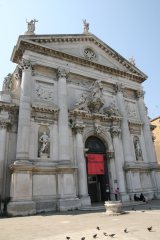
San Stae
175 m
Church
San Stae
175 m
 Museum
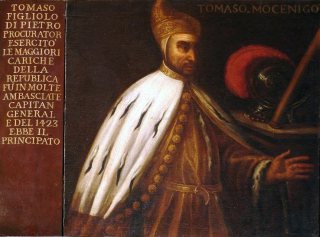
Mocenigo Palace-Museum
191 m
Museum
Mocenigo Palace-Museum
191 m
In the Santa Croce sestiere