Glass Museum Museum
Housed in the Palazzo Giustinian, the Glass Museum traces eight centuries of Murano's glassmaking history.
The Glass Museum, Murano's Memory
Located in the Palazzo Giustinian, the Museo del Vetro traces the history of Murano's glassmaking art. A former Gothic patrician residence, the palace became in 1689 the residence of Marco Giustinian, Bishop of Torcello, who had it redesigned by Antonio Gaspari. Its grand salon retains on the ceiling the Triumph of Saint Lawrence Giustiniani by Francesco Zugno.
The museum was founded in 1861, at a time when Murano sought to revive an industry weakened since the fall of the Republic of Venice. Mayor Antonio Colleoni and Abbé Vincenzo Zanetti created a museum-archive devoted to the history of the island and its glassworks. As early as 1862, Zanetti added a school where artisans studied drawing and antique pieces, making the museum a key player in the 19th-century revival of Murano glass.
Visiting the Museum
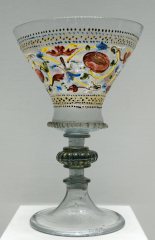
The visit follows a chronological itinerary. After archaeological glass from the Roman era, the rooms span about seven centuries of production, from the 14th century to today. The 15th and 16th centuries occupy a central place: the workshops perfected crystalline glass, enameled decorations, and filigree. Among the major pieces is the famous Coppa Barovier, dated to around 1470-1480 and decorated with polychrome enamels. The collections then follow the 19th-century revival and Murano's opening to modern design. Vittorio Zecchin, Carlo Scarpa, Flavio Poli, Archimede Seguso, and Fulvio Bianconi illustrate the 20th-century collaborations between master glassmakers, artists, and architects. The visit thus provides an understanding of the evolution of forms and techniques.
Info: admission fee. The combined “Island Museums” ticket also gives access to the Burano Lace Museum and the Torcello Museum. Hours vary by season and should be checked before your visit.
Map and route
Near the Glass Museum and places in the district
 Church
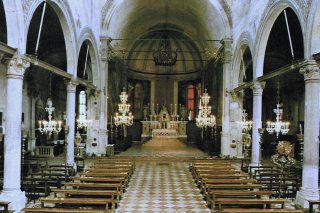
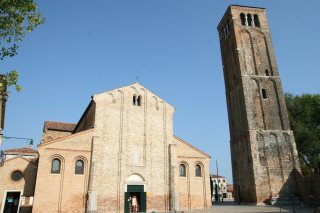
Basilica of Saint Mary and Saint Donatus
96 m
Attraction
Ancient Conterie
152 m
Church
Basilica of Saint Mary and Saint Donatus
96 m
Attraction
Ancient Conterie
152 m
 Street / Area
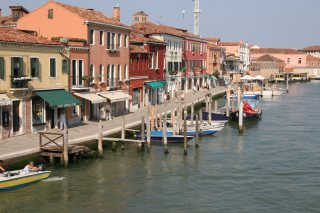
Grand Canal of Murano
186 m
Street / Area
Grand Canal of Murano
186 m
On the island of Murano