Ca’ Rezzonico Museum
A Grand Canal palace turned into a Venetian 18th-century museum, with frescoes, furnishings, and period paintings.
Ca’ Rezzonico, 18th-century palace
Ca’ Rezzonico stands on the Grand Canal, in the heart of Dorsoduro. One of the great Baroque palaces of Venice, it now houses the Venetian 18th-century Museum, dedicated to an era when the political power of the Republic was declining, but the city remained a major artistic centre and a sought-after stop for European travellers.
It is the combination of palace, décor and collections that gives Ca’ Rezzonico its particular interest. More than a fine-arts museum, the place offers an immersion into Venetian society of the Settecento: its dwellings, tastes, leisure activities and ways of representing itself, but also some glimpses of its daily life.
It is thus one of the best companions to the palaces, churches and paintings of the Venetian Golden Age for this period of the Venetian Republic.
From Longhena to the Rezzonico
The palace was begun in the mid-17th century for the Bon family, who entrusted the project to Baldassare Longhena, architect of the Salute and Ca’ Pesaro. The ambition of the construction site, however, exceeded the family’s means: at Longhena’s death in 1682, the building was still unfinished and work was soon interrupted.
This rise culminated in 1758 when Carlo Rezzonico, son of Giambattista and then bishop of Padua, was elected pope under the name Clement XIII. The family fortune, however, was short-lived: the male line of the Rezzonico died out as early as 1810.
In 1750, the palace was bought by Giambattista Rezzonico, from a wealthy family recently admitted to the Venetian nobility. Giorgio Massari resumed the construction, largely respecting Longhena’s project, while notably adding the grand state staircase and the spectacular ballroom. The work was completed in a few years, at a time when the Rezzonico were experiencing particularly rapid social advancement.
The palace then passed through several hands. It notably housed the English writer Robert Browning, who died there in 1889, and was rented in the 1920s by the American composer Cole Porter. Gradually stripped of its furnishings, it was finally bought by the City of Venice in 1935 to house the municipal collections devoted to the 18th century. The museum opened its doors in 1936.
Staging 18th-century Venice
Ca’ Rezzonico does not function as a simple picture gallery. Paintings, sculptures, furniture, porcelain, tapestries and everyday objects are presented in rooms with painted ceilings, to recreate the world of a great Venetian residence. Several of the interiors, however, come from other palaces: the museum thus recreates an 18th-century atmosphere rather than preserving the Rezzonico’s historic furnishings intact.
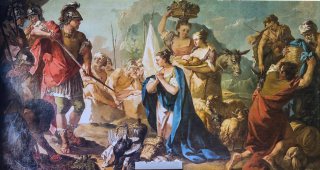
The first floor, accessible via Massari’s grand staircase, brings together the state rooms. The ballroom, the rococo furniture and the ceilings by Giambattista Tiepolo fully express the aristocratic taste for illusionistic perspectives, allegories and social staging. The Nuptial Allegory, painted in 1757 on the occasion of the marriage of Ludovico Rezzonico and Faustina Savorgnan, belongs directly to the history of the palace.
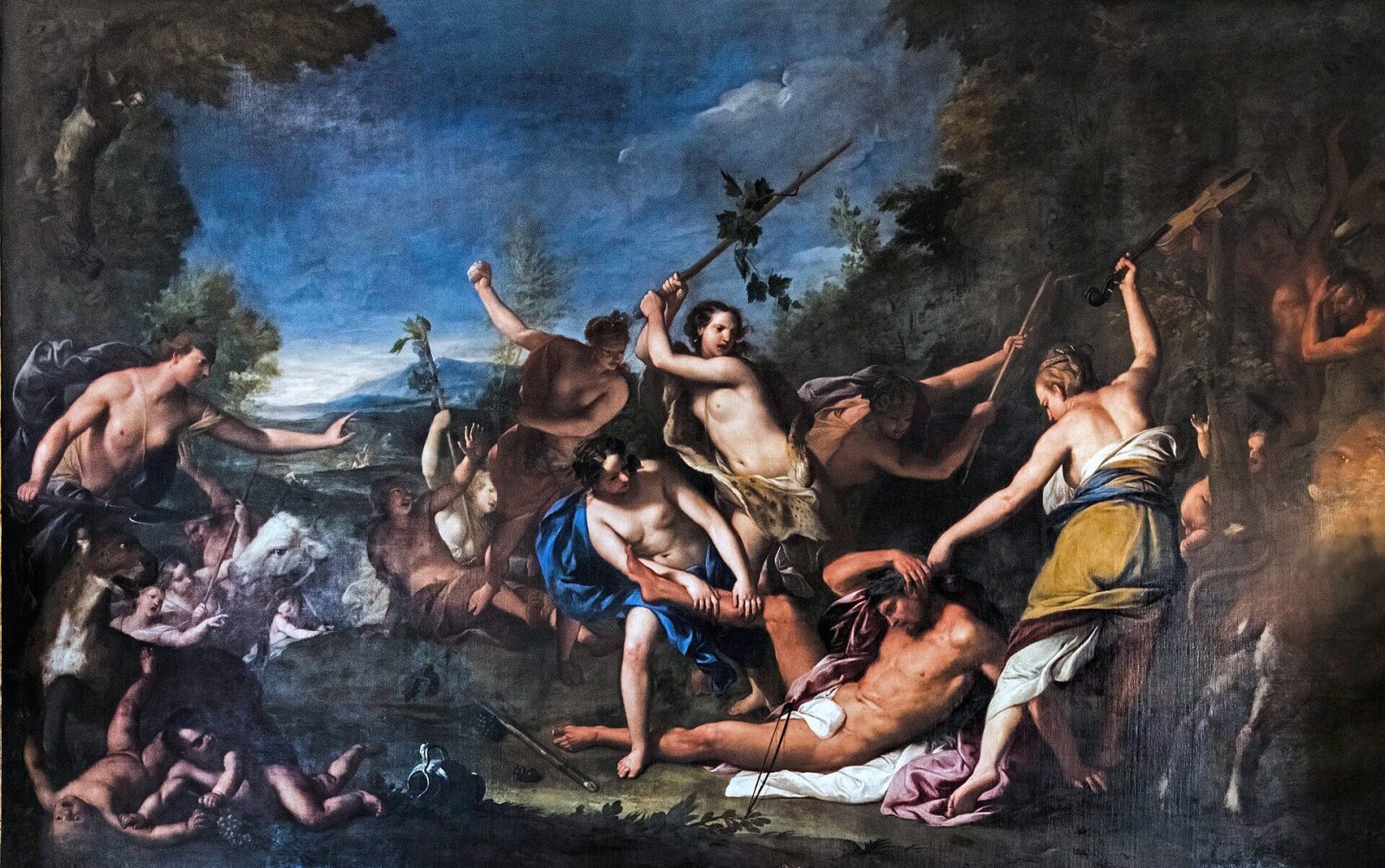
Orpheus Massacred by the Bacchantes Gregorio Lazzarini (c. 1698)
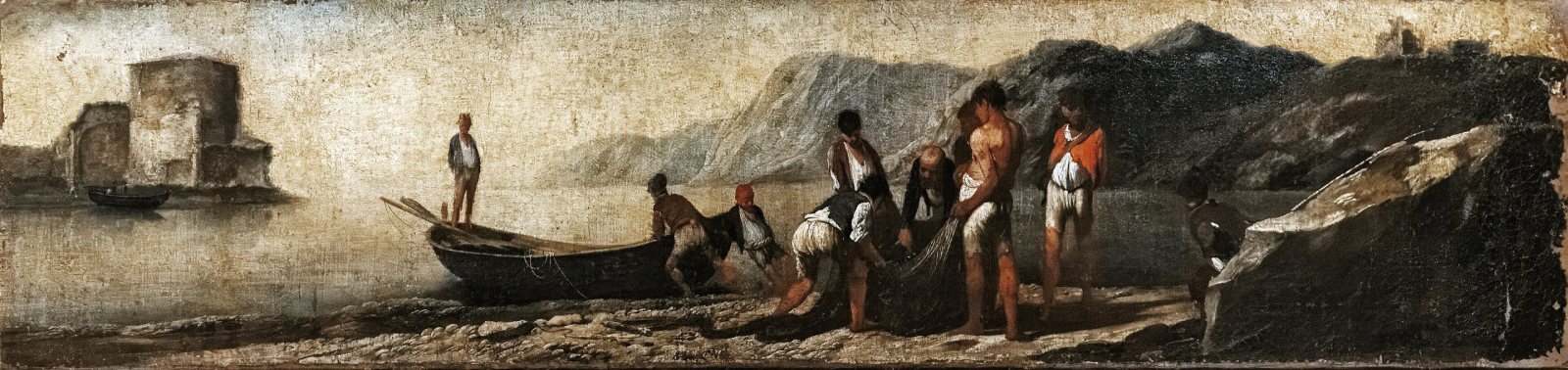
Sea port with boat and fishermen by Antonio Travi (17th century)
From Tiepolo to everyday life
The route, however, shows a much more varied 18th century. The luminous compositions of Tiepolo are echoed by the small scenes of Pietro Longhi, who observes aristocrats, masks, conversations, shows and entertainments with an almost documentary attention. His famous Rhinoceros even recalls the passage through Venice, during the carnival of 1751, of Clara, an Indian rhinoceros then exhibited throughout Europe.
Canaletto, Francesco and Antonio Guardi, Rosalba Carriera, and also Giandomenico Tiepolo complete this panorama. The frescoes of the latter, from the family villa at Zianigo, peopled in particular with Punchinellos, bring at the end of the route a more ironic look at a society that had reached the final years of the Republic, which disappeared in 1797.
The visit also moves away from the exclusive aristocratic salons with the reconstruction of the old Venetian pharmacy Ai Do San Marchi, formerly located at San Stin. Furniture, jars and fittings provide a more concrete insight into urban life and 18th-century craftsmanship.
Sources and further information
- Ca’ Rezzonico - Building and history - history of the palace, official MUVE website.
- Ca’ Rezzonico - Layout and collections - museum itinerary and collections.
- Ca’ Rezzonico - First floor - state rooms and interiors of the first floor.
- Ca’ Rezzonico - Second floor - Longhi, Guardi and Giandomenico Tiepolo.
Map and route
Near the Ca’ Rezzonico and places in the district
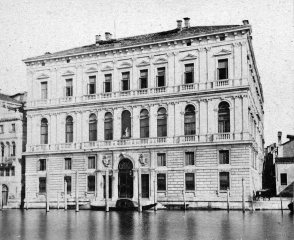 Palace
Palazzo Grassi
85 m
Palace
Palazzo Grassi
85 m
 Palace
Ca' Foscari
105 m
Palace
Ca' Foscari
105 m
 Square
Campo San Barnaba and Ponte dei Pugni
138 m
Square
Campo San Barnaba and Ponte dei Pugni
138 m
 Church
San Vidal Church
230 m
Church
San Vidal Church
230 m
In the Dorsoduro sestiere