Island of San Giorgio Maggiore Island
An island facing San Marco, known for Palladio's basilica, its campanile and the Giorgio Cini Foundation. San Giorgio Maggiore suits an excursion from San Marco, covering nearly a thousand years of Venetian history in a small space. And above all, the island offers an open view over Venice.
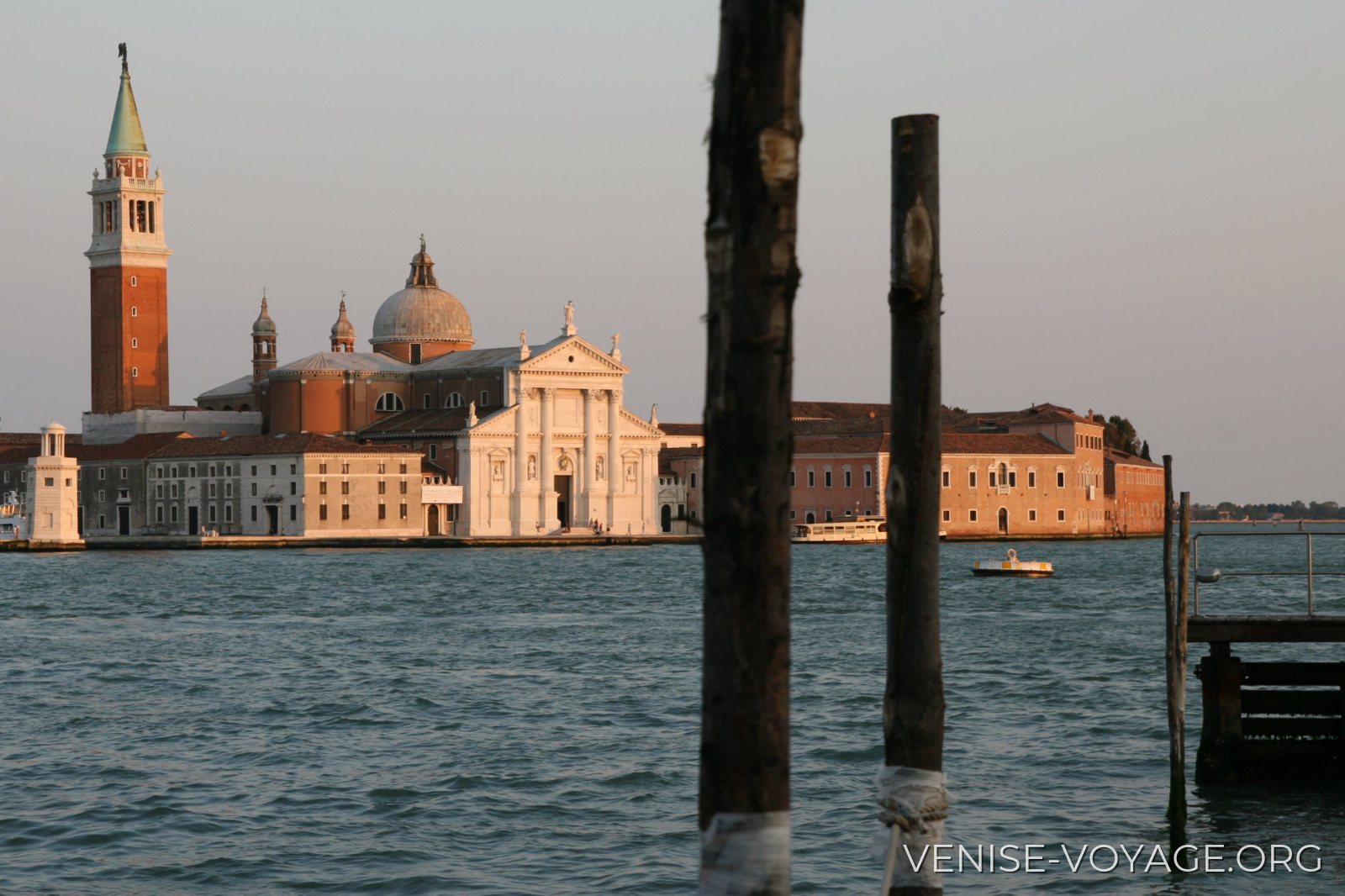
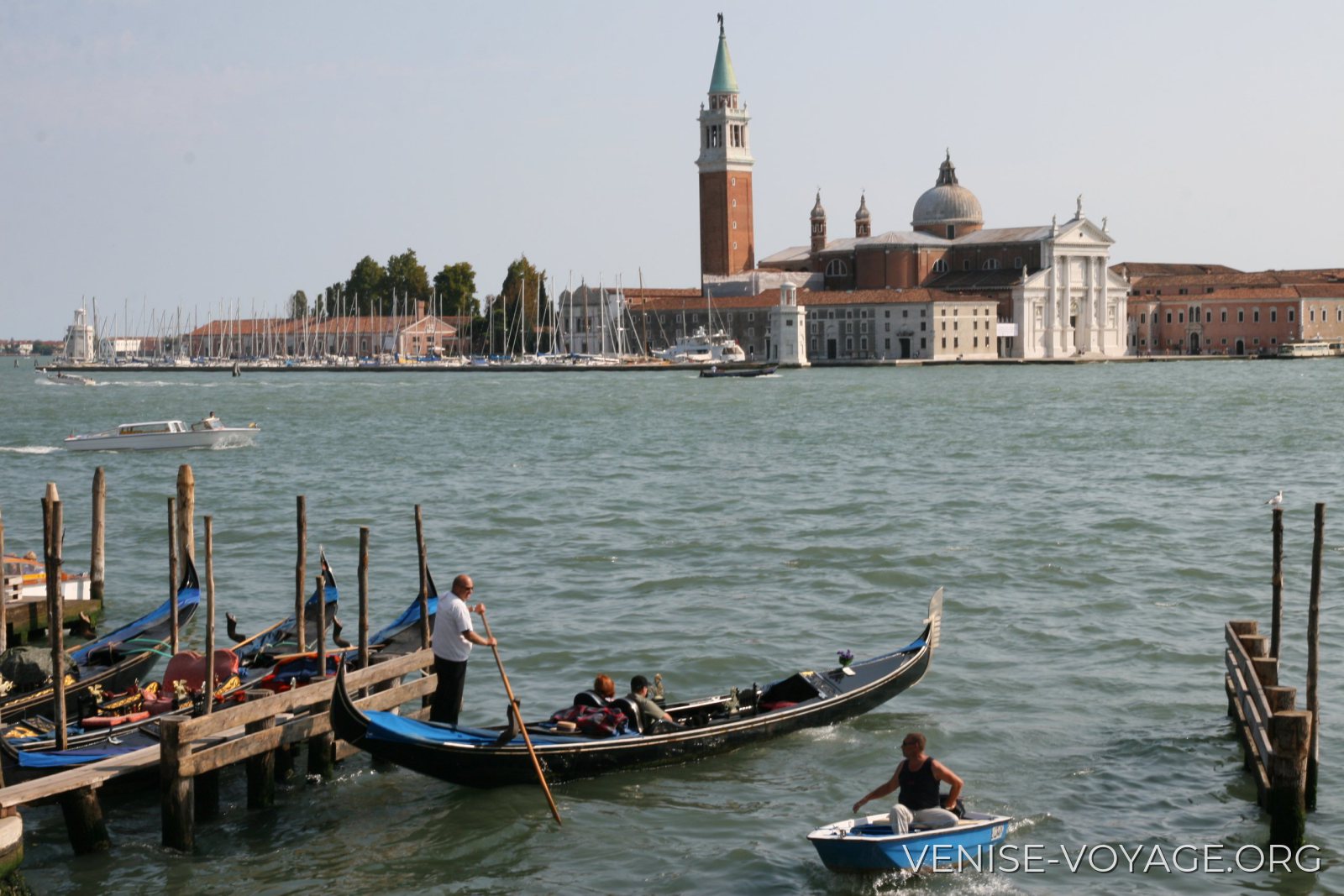
The island of San Giorgio Maggiore, Venice seen from across the water
The island of San Giorgio Maggiore lies in the St Mark's Basin, directly facing the Piazzetta and the Doge's Palace. Small in size, it nonetheless holds a considerable place in the Venetian landscape: its white marble basilica, dome and campanile form, seen from the San Marco waterfront, one of Venice's most famous silhouettes. In just a few minutes by vaporetto, you move from the monumental heart of the city to a much quieter island, where space and greenery take on an unusual presence.
The island was already frequented in antiquity and was once known as Insula Memmia. A first church dedicated to St George was built here in the 9th century. In 982, Doge Tribuno Memmo gave the island to the monk Giovanni Morosini so that he could found a Benedictine monastery. This gradually became an important religious, economic and cultural centre, closely tied to the Republic of Venice.
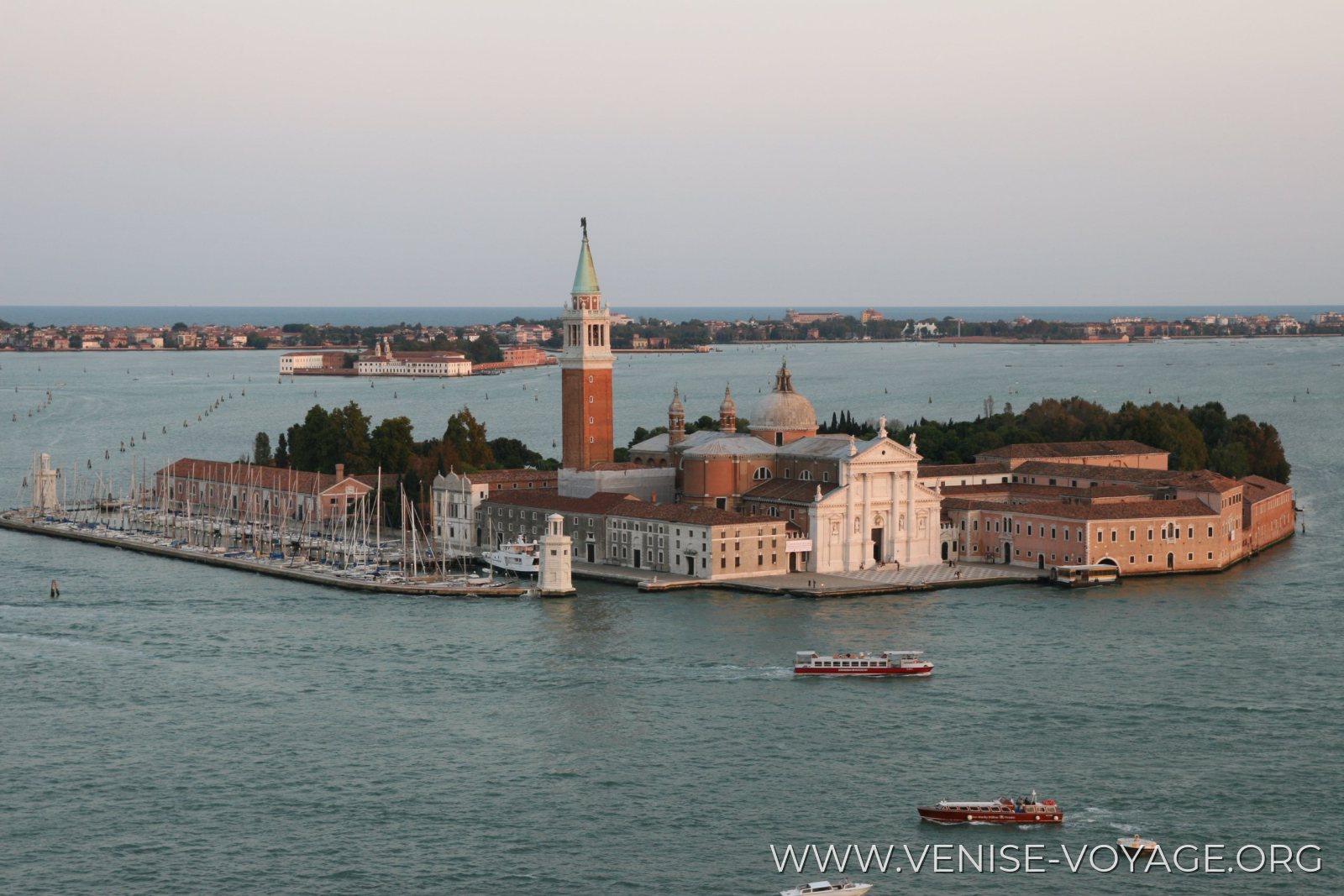
Island of San Giorgio Maggiore
Palladio's basilica and the masterpieces of San Giorgio
In the 16th century, the monastery undertook a thorough rebuilding of its monumental complex. Andrea Palladio was commissioned to design the new basilica, begun in 1566. He also designed the refectory and one of the cloisters. The church façade, completed after his death in the early 17th century, skilfully layers several forms drawn from the ancient temple, adapted to the volumes of a Christian church. Seen from San Marco, its whiteness stands out against the monastery's brickwork and plays a full part in composing the view across the basin.
The interior is the opposite of the decorative profusion found in many Venetian churches: spacious, bright and highly ordered, it rests on classical proportions, broad white surfaces, and an architecture that gives the artworks room to breathe. The choir holds two of Tintoretto's last great religious paintings, The Last Supper and The Israelites Gathering Manna in the Desert, also known as The Gathering of the Manna, painted between 1592 and 1594. Recently restored, they returned to their place in the basilica in 2026.
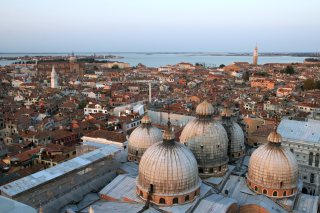
The campanile of San Giorgio Maggiore is the visit's other great highlight. The current tower was rebuilt at the end of the 18th century after its predecessor collapsed in 1774. From the top, the view takes in St Mark's Square, the Doge's Palace, the entrance to the Grand Canal, the Giudecca, the Salute and much of the lagoon. This distance completely changes one's perception of Venice: monuments and neighbourhoods stop being a succession of façades and regain their place within a wider geographical whole.
From Benedictine monastery to the Giorgio Cini Foundation
The island's history did not end with the Renaissance. After the fall of the Republic in 1797 and the upheavals of the Napoleonic era, the monastery was suppressed in the early 19th century and much of the complex was put to military use. This long occupation caused significant damage to the buildings and led to the dispersal of part of their heritage.
A new chapter began in 1951, when Vittorio Cini founded the Giorgio Cini Foundation in memory of his son Giorgio, who had died two years earlier. The aim was to restore the former monastery and bring the island back into Venice's cultural life. The Foundation has since become a major international research centre devoted to art history, music, theatre, the history of Venice and cultural heritage.
Visiting the complex reveals spaces generally unsuspected from San Marco: cloisters, former monastic halls, libraries, gardens and a wooded park. Several parts bear the mark of great architects, from Palladio to Baldassare Longhena. The island also hosts exhibitions, concerts and contemporary works, notably in the Squero auditorium, a former boat workshop opening directly onto the lagoon.
The park is also home to the Vatican Chapels, created in 2018 for the Holy See's first participation in the Venice Architecture Biennale. Ten international architects each designed a small, independent structure, which have since become permanent installations. The visit thus adds a rather unexpected contemporary dimension to an island long shaped by Benedictine monastic life.
San Giorgio Maggiore is particularly well suited to a short excursion from San Marco, but deserves more than a simple there-and-back trip to the campanile. The basilica, Tintoretto's works, the former monastic buildings and the spaces of the Cini Foundation together cover nearly a thousand years of Venetian history within a very small area. And above all, the island offers something visitors often lack when immersed in the narrow streets of Venice: the distance needed to see the city as a whole.
Sources and further information
Abbey of San Giorgio Maggiore - official site; Giorgio Cini Foundation - the island of San Giorgio Maggiore; Giorgio Cini Foundation - history and activities; Louvre Museum - The Wedding at Cana.
Map and route
In the San Marco sestiere