Correr Museum Museum
Museum on St Mark's Square devoted to the history of Venice, the arts and the city's civic collections.
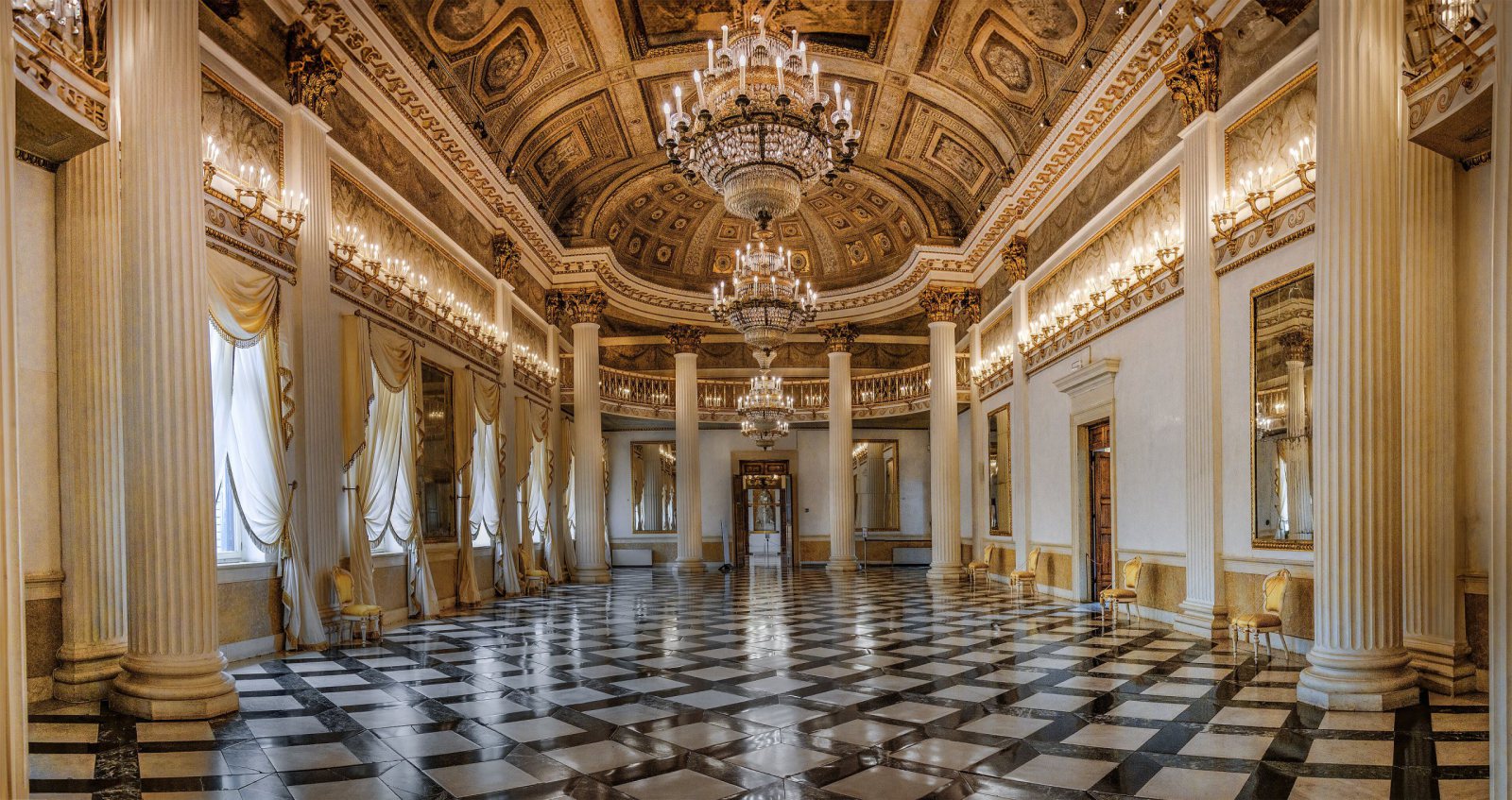
Correr Museum, the history and arts of Venice
The Correr Museum occupies the Napoleonic wing and part of the Procuratie Nuove, at the far end of St Mark's Square. Less immediately spectacular than the basilica or the Doge's Palace, it makes an excellent complement to them: its collections place Venice's monuments, institutions and images within the broader history of the city and the Republic.
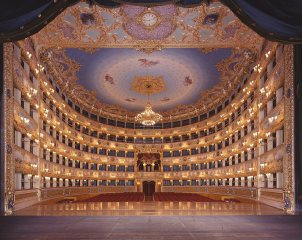
The collections were moved in 1887 to the Fontego dei Turchi, today the Natural History Museum, before reaching their current home on St Mark's Square in 1922. The setting is itself historic: the Napoleonic wing was fitted out in the 19th century within the former royal palace, after the fall of the Republic. The monumental staircase, the neoclassical drawing rooms and the ballroom recall a period very different from the Venice of the doges.
From Venetian institutions to Canova and Carpaccio
Ballroom, Correr Museum
A key part of the route is devoted to Venetian civilisation. Maps, coins, weapons, objects, documents and images shed light on the institutions of the Serenissima, the city's urban development, its maritime, military and commercial power, but also aspects of everyday life. These rooms give a concrete dimension to a history often seen only through its palaces and churches.
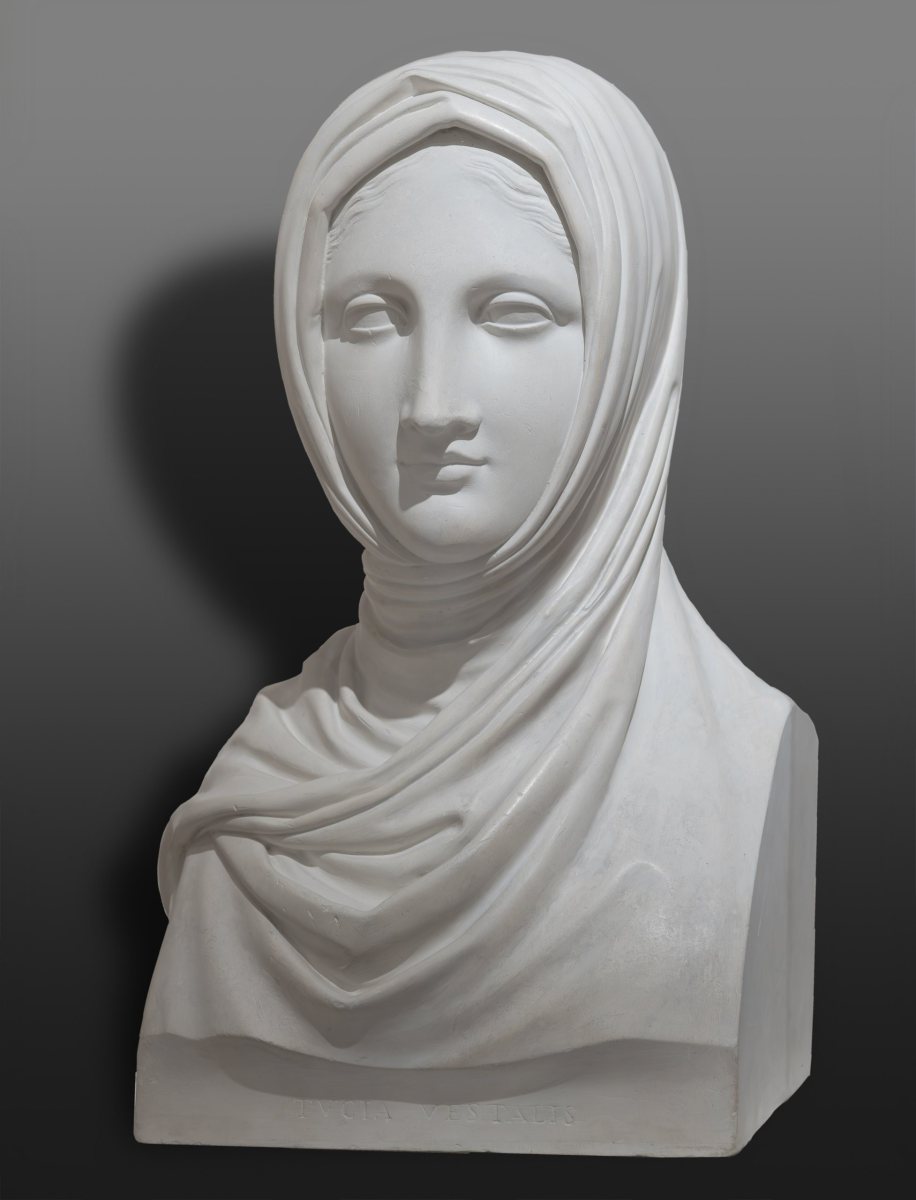
Tucia Vestalis
Antonio Canova (1818-19)
_Tucia_Vestalis_-_Antonio_Canova_-_1818-19_-_Museo_Correr.jpg)
The neoclassical rooms also house an important collection devoted to Antonio Canova, including Orpheus and Eurydice, early sculptures set within the spectacular decor of the ballroom. The contrast between these 19th-century spaces and the collections from the Republic is a reminder that the Correr also tells the story of Venice's transformation after 1797.
The picture gallery is another of the museum's major draws. It traces several centuries of painting, from Gothic and Byzantine traditions to the early Renaissance, with works by Lorenzo Veneziano, Cosmè Tura, Antonello da Messina, Giovanni and Gentile Bellini, Vittore Carpaccio and Lorenzo Lotto. Among the best-known pieces are Antonello da Messina's Pietà, Carpaccio's Two Venetian Ladies and several paintings by Giovanni Bellini. Part of this display still bears the mark of the architect Carlo Scarpa, who redesigned several of the museum's rooms in the 20th century.
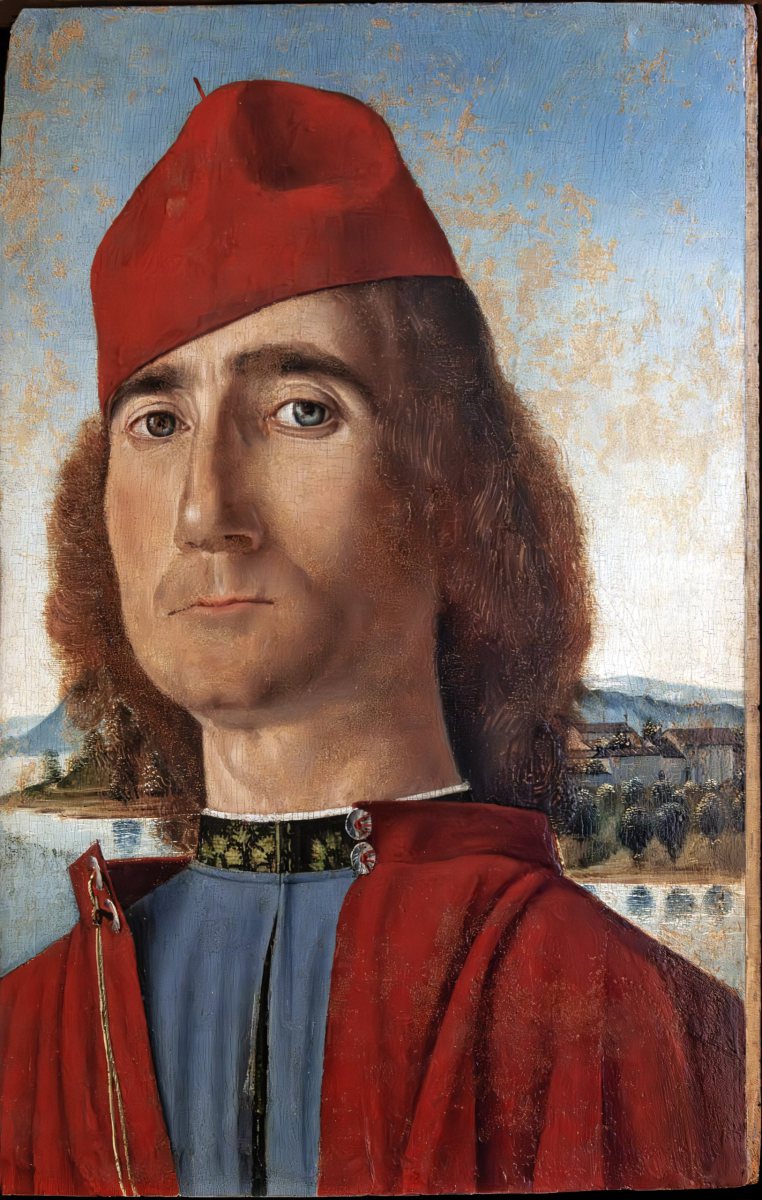
Portrait of a Man with a Red Cap
(Vittore Carpaccio, 1490-95)
The museum also holds the famous bird's-eye view of Venice engraved by Jacopo de' Barbari in the early 16th century, an exceptional document for understanding the shape of the city during the Renaissance. Bronzes, ivories, maiolica and other decorative arts round out a collection far more varied than the label "history museum" might suggest.
For a first visit, it is worth being selective rather than rushing through every room. The sections devoted to the history of the Serenissima, to Canova and to Venetian painting are the best starting points. The route can also be extended to the National Archaeological Museum and the monumental halls of the Biblioteca Marciana, part of the same museum complex.
Sources and further information
Museo Correr - MUVE; Museo Correr - history of the museum and building; Museo Correr - routes and collections; Museo Correr - picture gallery.
Map and route
Near Correr Museum and places in the district
 Square
St Mark's Square
68 m
Square
St Mark's Square
68 m
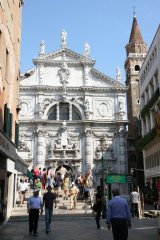 Church
 of San Moisè
132 m
Garden
Giardini Reali
147 m
Church
Church of San Moisè
132 m
Garden
Giardini Reali
147 m
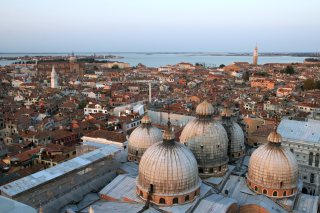 Monument
St Mark's Campanile
161 m
Monument
St Mark's Campanile
161 m
In the San Marco sestiere