Campo and church of Santo Stefano Square
A large campo between the Accademia, the Palazzo Grassi and the church of Santo Stefano, alive with everyday Venetian life, and a gathering point away from the small streets and canals.
Campo Santo Stefano, San Marco's great breathing space
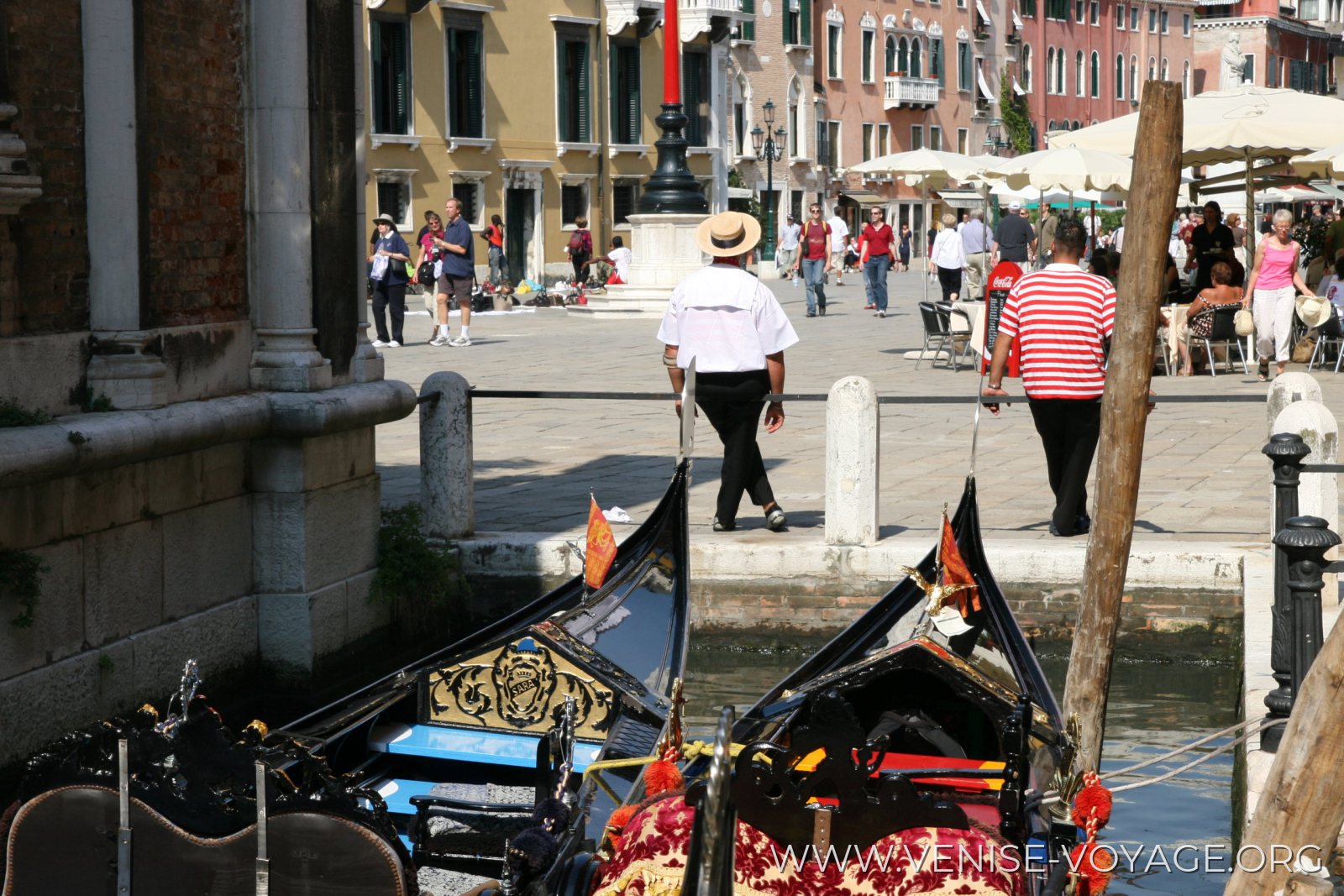
Campo Santo Stefano is one of the largest open spaces in the San Marco sestiere. Set between the Accademia Bridge, the Palazzo Grassi and the routes leading to La Fenice and St Mark's Square, it forms a natural crossroads at the heart of Venice. After the narrow streets and small bridges nearby, its elongated open space offers an unusual break in the very dense urban fabric of the historic centre.
Campo Santo Stefano
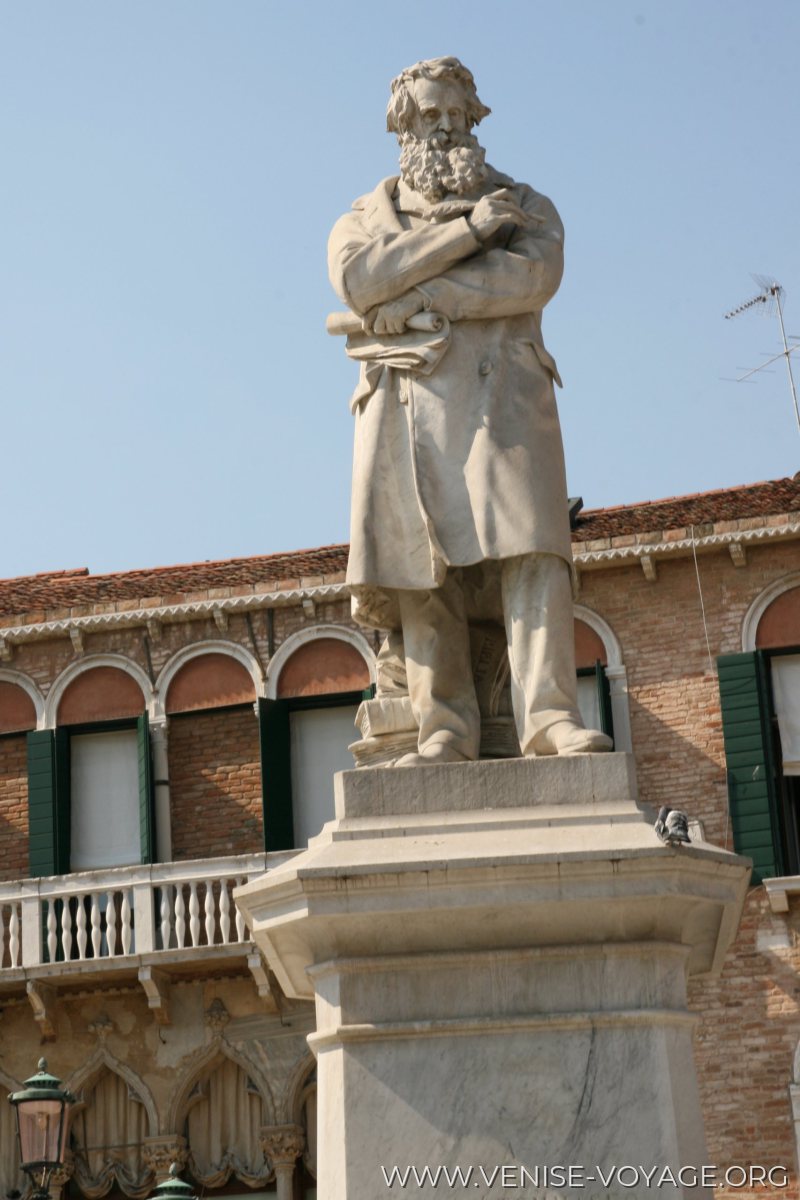
Monument to Tommaseo
The campo is lined with palaces, cafés, shops and the church of Santo Stefano. Its irregular shape and the differing alignments of its façades reflect the gradual formation of this urban space, around the church, patrician properties and old routes. It remains today an important thoroughfare between the Grand Canal and the centre of San Marco.
At its centre has stood, since 1882, the monument to Niccolò Tommaseo, a writer, linguist and patriot, a leading figure of the 1848 Venetian uprising against Austrian rule. Created by the sculptor Francesco Barzaghi, the statue is the campo's main visual landmark and recalls the role Santo Stefano played in the city's public life in the 19th century.
A square long used for gatherings
Given its size, Campo Santo Stefano hosted festivals, spectacles, markets and public gatherings. The cacce dei tori in particular drew large crowds here before they disappeared in the early 19th century. Markets and occasional events still take place on the campo today, while its cafés and outdoor tables keep it a meeting place.
The church of Santo Stefano
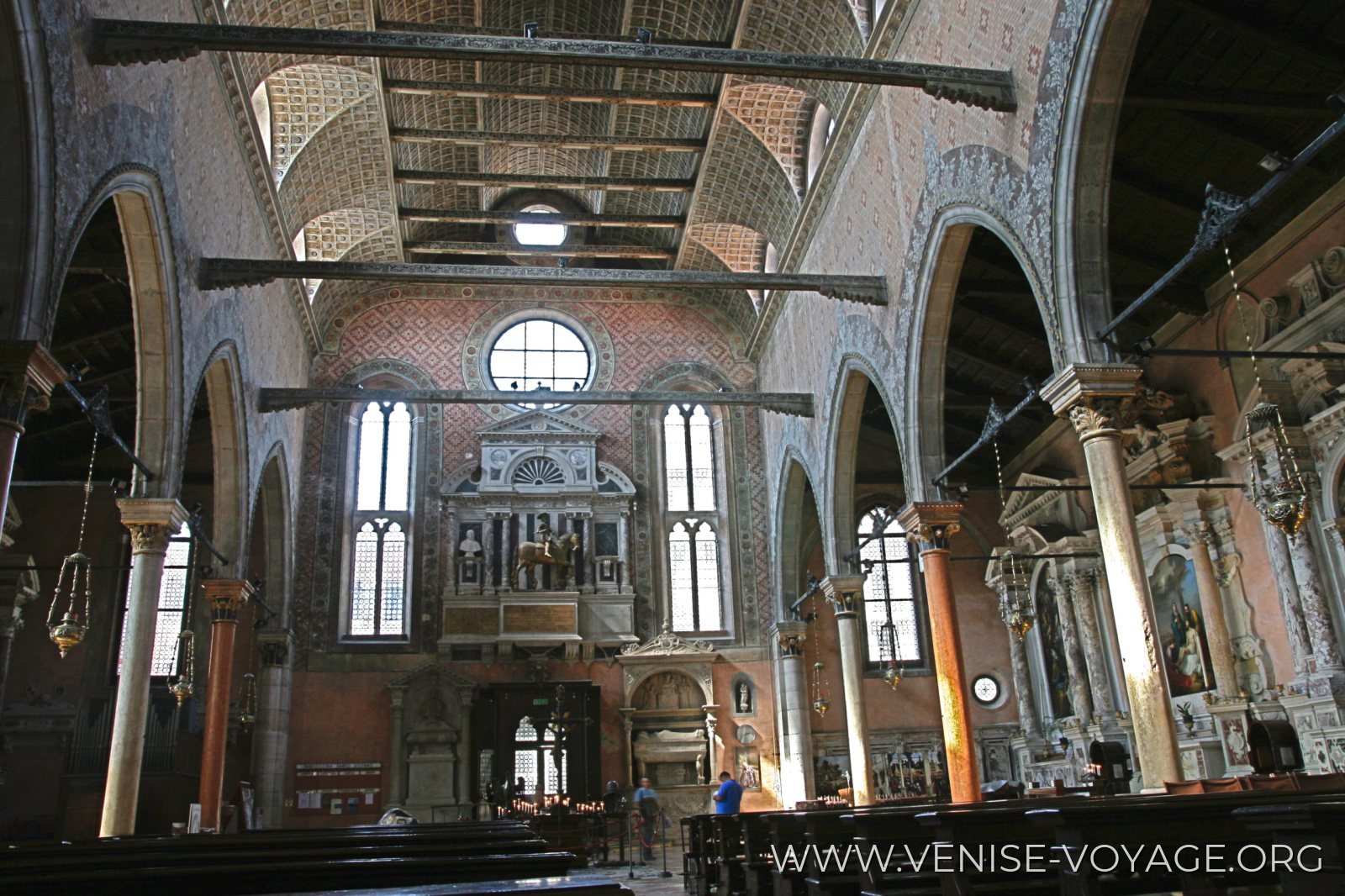
Santo Stefano
The church of Santo Stefano is one of Venice's principal conventual churches. Built by the Augustinian hermits in the 13th century and then rebuilt in the 14th, it was further enriched over time and is a fine example of Venetian Gothic. Its brick façade is especially notable for its marble portal, carved by Bartolomeo Bon.
The interior, with three naves separated by slender columns and pointed arches, is dominated by a spectacular wooden ceiling shaped like a ship's keel. The presbytery preserves an inlaid wooden choir from 1488, while the sacristy holds several paintings by Tintoretto, including The Last Supper, The Resurrection and Christ Washing the Feet of the Apostles. A small cloister, reached from the sacristy, also preserves several sculptures and monuments from the church.
Around the campo
The campo is also surrounded by several important buildings. The Palazzo Loredan is the historic seat of the Istituto Veneto di Scienze, Lettere ed Arti, while the monumental Palazzo Pisani next door has housed the Benedetto Marcello Conservatory since 1897. To the south, Santo Stefano links up with San Vidal and the Palazzo Cavalli-Franchetti before quickly reaching the Grand Canal and the Accademia Bridge.
For visitors, Campo Santo Stefano makes a particularly interesting stop between Palazzo Grassi, the Accademia, La Fenice and St Mark's Square. Despite this central location, the campo keeps an atmosphere that feels less monumental and more everyday than the area around San Marco. In the morning or at the end of the day, when the crowds thin out, its long façades, café terraces and church can be fully appreciated at their true scale.
Sources and further information
Comune di Venezia - Santo Stefano; Chorus Venezia - Chiesa di Santo Stefano; Comune di Venezia - history of the bull hunts; Conservatorio Benedetto Marcello - Palazzo Pisani.
Map and route
Near the Campo and church of Santo Stefano and places in the district
 Church
San Vidal Church
89 m
Church
San Vidal Church
89 m
 Palace
Palazzo Cavalli-Franchetti
160 m
Bridge
Accademia Bridge
182 m
Palace
Palazzo Cavalli-Franchetti
160 m
Bridge
Accademia Bridge
182 m
 Palace
Palazzo Grassi
194 m
Palace
Palazzo Grassi
194 m
In the San Marco sestiere