San Pietro di Castello Church
Former cathedral of Venice, located in one of the calmest and most eastern sectors of Castello. The large campo, the old patriarchal dependencies and the proximity of Sant’Elena form an open landscape, rare in the historic city. The site can be characterized as the ancient religious center of Venice, before St Mark’s, and one notes that the geography of Venetian power has shifted profoundly over the centuries.
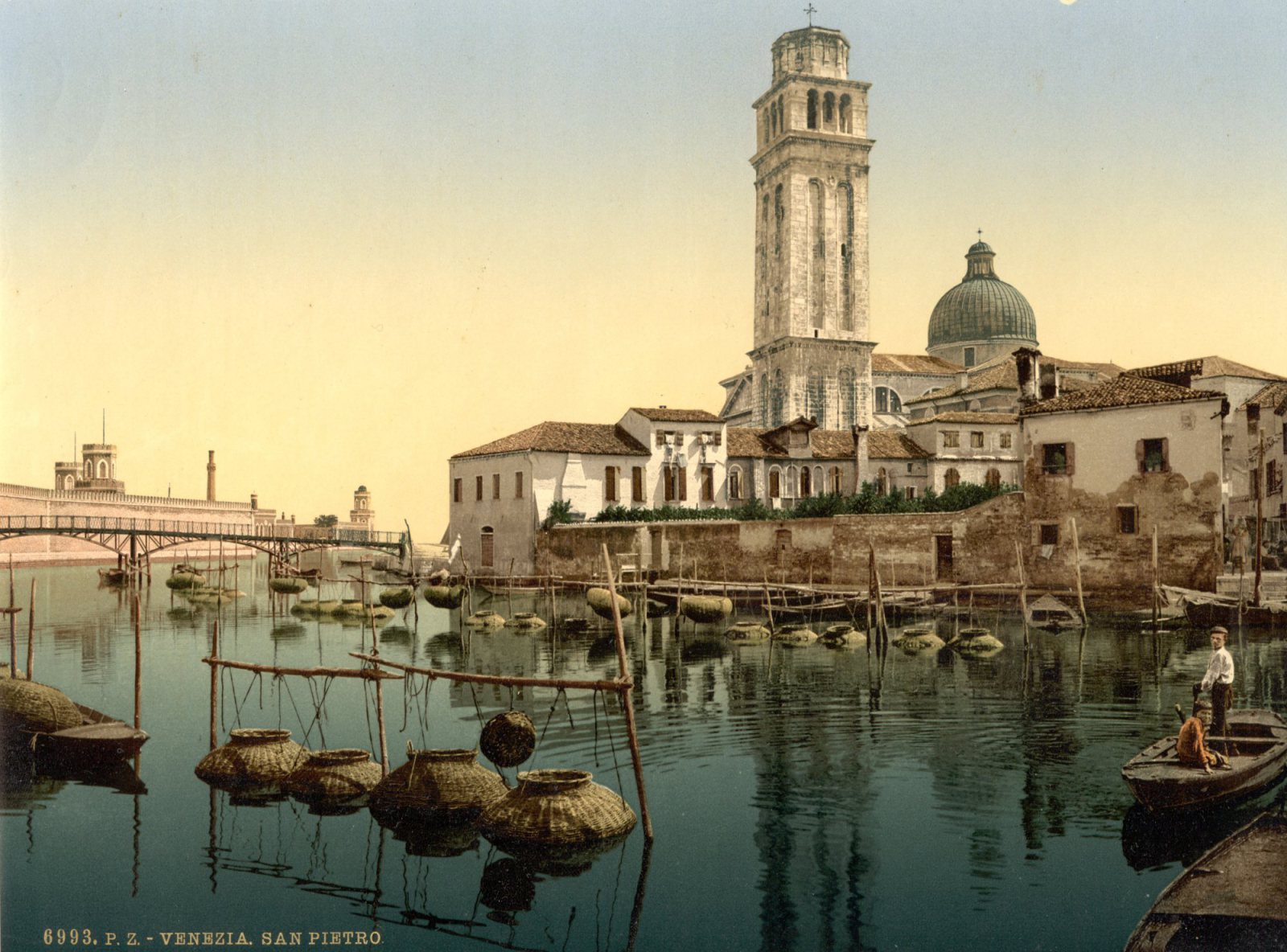
San Pietro di Castello, the ancient cathedral of Venice
San Pietro di Castello occupies a peaceful little island at the eastern end of the sestiere of Castello. Separated from the rest of Venice by a canal and surrounded by a vast campo, the place now seems almost peripheral. Yet for over a millennium, it was one of the city’s principal religious centers.
The island was formerly known as Olivolo. A first church dedicated to the Byzantine saints Sergius and Bacchus is attested there as early as the 7th century. It was replaced in the 9th century by a building consecrated to the apostle Peter, in an area that was among the oldest inhabited centers of the Venetian lagoon.
San Pietro became the seat of the bishop of Olivolo, then of Castello, before hosting in 1451 the new Patriarchate of Venice. Meanwhile, St Mark’s Basilica officially remained the doge’s private chapel: prestigious, central and closely linked to political power, but it was not yet the city’s cathedral.
The situation changed after the fall of the Republic. The transfer of the patriarchal seat to St Mark’s was decided under the Napoleonic administration in 1807, then confirmed and actually implemented in 1821. San Pietro then lost its function as a cathedral, which partly explains the current contrast between the historical importance of the monument and the quietness of its surroundings.
Architecture and remarkable works of San Pietro di Castello
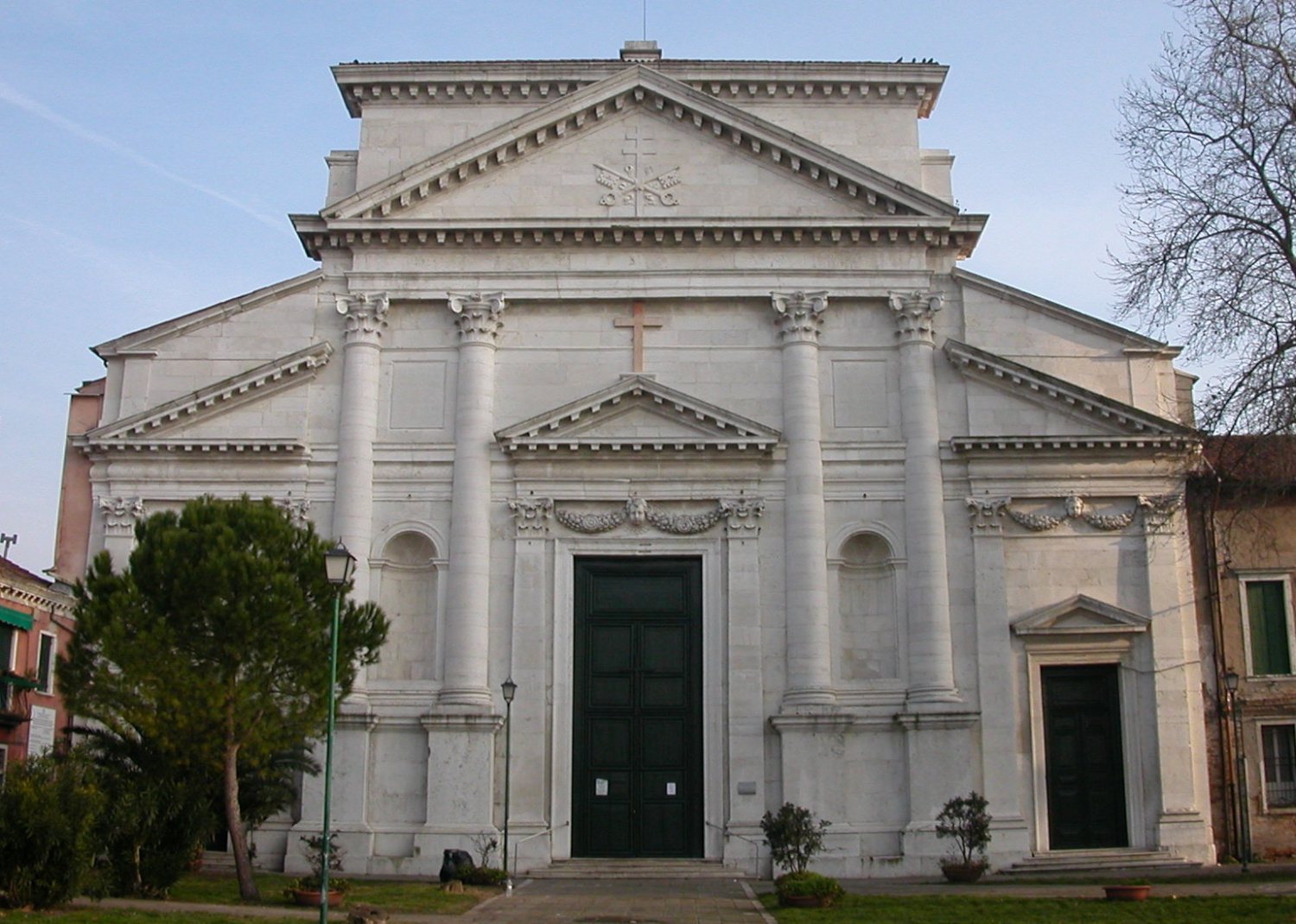
The current church mainly results from transformations carried out between the end of the 16th and the beginning of the 17th century. Andrea Palladio proposed a new facade project as early as 1556, but it was only executed after his death, with several modifications, by Francesco Smeraldi. Its large classical forms and light stone announce the Palladian facades of San Giorgio Maggiore and the Redentore.
The Istrian stone campanile, built between 1482 and 1490 by Mauro Codussi, predates this reconstruction. Entirely clad in white stone, unlike most Venetian brick bell towers, it is one of the most recognizable elements of the complex, despite the visible inclination of its structure.
The interior, organized in a Latin cross with three naves and a large dome, mainly retains a 17th-century decoration. The high altar in polychrome marbles was made in 1649 from a design by Baldassare Longhena. It houses the relics of Saint Lawrence Giustiniani, first patriarch of Venice, who died in 1456.
Among the other important works are the Vendramin Chapel, also designed by Longhena, a painting by Luca Giordano and a mosaic made by Arminio Zuccato from a drawing by Tintoretto. These elements remind us that San Pietro, despite its current remoteness from the main tourist routes, long enjoyed the prestige and resources attached to its status as a cathedral.
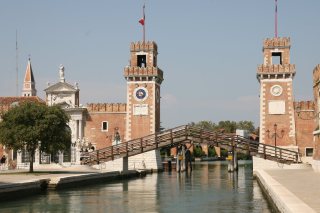
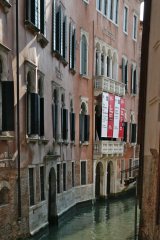
A visit to San Pietro di Castello is worthwhile for the basilica as much as for the path that leads there. Coming from the Arsenal or Via Garibaldi, you cross a Venice that is progressively more residential, made of small canals, laundry hanging from windows and squares frequented mainly by residents.
Sources and additional information
Chorus Venezia – San Pietro di Castello ; Patriarcato di Venezia – history of the patriarchate ; Venezia Unica – Castello.
Map and route
In the Castello sestiere